

Dang Gui (Chinese Angelica Root)
Radix Angelicae Sinensis Chinese Angelica Root
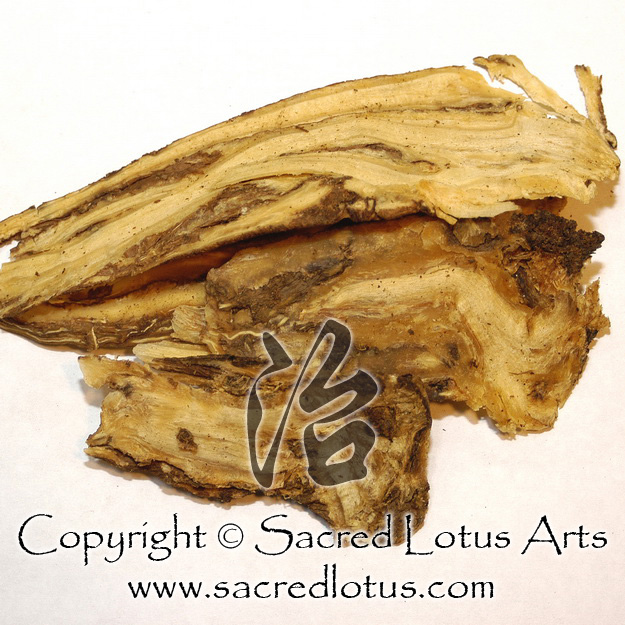
Materia Medica Data
- Category
- Herbs that Tonify Blood
- Temperature
- Warm
- Nature & Flavour
- Sweet, Spicy, Bitter, Warm
- Channels Entered
- HT, LIV, SP
- Latin (pharmaceutical)
- Radix Angelicae Sinensis
- Chinese
- 当归
- Tone Marks
- dāng guī
- Translation
- State of Return
Chinese Herb Actions
What is Dang Gui used for in Chinese medicine?
Dang Gui (Chinese Angelica Root) is a premier Blood tonic that also moves Blood, alleviates pain, and moistens the intestines — used for Heart-and-Liver Blood-deficiency patterns (pale face, dry/brittle nails, dry hair, palpitations, blurred vision, tinnitus), Cold-type gynecological Blood-and-Qi stagnation (irregular menses, amenorrhea, dysmenorrhea), Blood-deficient dry intestines with chronic constipation, and traumatic injury or non-healing sores.
Its main traditional actions:
- Tonifies the Blood — for Heart and Liver Blood deficiency presenting with a pale face, dry/brittle/pale nails, dry hair, palpitations, blurred vision, and tinnitus.
- Moves the Blood, alleviates pain, and regulates menstruation — for Blood-and-Qi stagnation due to Cold-type menstrual disorders, with symptoms such as irregular menses, amenorrhea, or dysmenorrhea.
- Moistens the intestines and moves the bowels — for Blood-deficient dry intestines and chronic constipation, commonly seen in the elderly, postpartum, or in chronic illness.
- Reduces swelling, generates flesh, and alleviates pain — for sores, abscesses, or traumatic injury, where moving the Blood and breaking Blood stagnation has a positive effect.
Source: Sacred Lotus legacy content, reviewed against Chen & Chen, Chinese Medical Herbology and Pharmacology, and Bensky, Chinese Herbal Medicine: Materia Medica (3rd ed.). Traditional-use framing; not medical advice.
Chinese Herb Dosage
What is the typical dosage of Dang Gui?
About 4.5–15 g in decoction — Bensky’s Materia Medica (3rd ed.) gives 4.5–15 g, while Chen & Chen give a closely overlapping 5–15 g. The lower end is typical for gentle Blood tonification; higher amounts are used when a stronger Blood-moving or intestine-moistening effect is wanted.
Source: Bensky, Chinese Herbal Medicine: Materia Medica (3rd ed.); Chen & Chen, Chinese Medical Herbology and Pharmacology. Reference only — not a prescription.
Chinese Herb Combinations:
- Dang Gui (Radix Angelicae Sinensis)
- Mo Yao (Resina Myrrhae)
- Ru Xiang (Resina Olibani)
- Zi Ran Tong (Pyritum)
Combined Indications:
- Strains and Fractures
Chinese Herb Contraindications & Cautions
Are there cautions for Dang Gui? Is it safe in pregnancy?
Dang Gui is traditionally used with caution in pregnancy and while breastfeeding, and is not suited to every constitution. Sacred Lotus legacy notes flag caution in patients with loose stool, diarrhea, abdominal distention, or Spleen deficiency (its moistening, laxative quality can aggravate these), and advise against its use where there are heat signs due to Yin deficiency or in Excess conditions. Women with hormone-sensitive cancers (such as breast, uterine, or ovarian cancer) or with endometriosis or uterine fibroids are also flagged for caution.
- Pregnancy / lactation — the U.S. National Library of Medicine’s LactMed monograph on Dong Quai notes insufficient data on its excretion into human milk or effects on the nursing infant, and recommends caution.
- Loose stool, diarrhea, abdominal distention, Spleen deficiency — use with care.
- Heat from Yin deficiency, or Excess conditions — traditionally avoided.
- Hormone-sensitive conditions — caution flagged for breast/uterine/ovarian cancer, endometriosis, and uterine fibroids.
- Anticoagulant therapy — see Drug Interactions below.
Note: the hormone-sensitive caution above reflects a long-standing concern about possible estrogenic activity, but the one placebo-controlled human trial specifically testing this (Hirata et al. 1997, below) found dong quai used alone produced no significant estrogenic effect on vasomotor symptoms, endometrial thickness, or vaginal cytology versus placebo. We keep the traditional caution as a precaution (a single negative trial does not rule out an effect, especially since Dang Gui is traditionally compounded with other herbs rather than used alone), but flag the discrepancy for practitioner awareness.
Source: Sacred Lotus legacy content; LactMed (Dong Quai) monograph, PMID 30000896; Hirata et al. 1997, PMID 9418683 (see Research below). Traditional-use framing, not medical advice.
Chinese Herb Toxicity & Overdose
Low. This herb has a very low toxicity. Overdose symptoms may include drowsiness and fatigue, itching, or abdominal pain.
Source: Sacred Lotus legacy content; materia medica consensus. Reference note, not a safety guarantee.
Herb-Drug Interactions
Dang Gui may potentiate anticoagulant (“blood-thinning”) medications such as warfarin. This traditional caution is corroborated by a published case report in which a patient stabilized on warfarin developed a markedly elevated INR and prothrombin time after starting dong quai, which resolved after it was discontinued. Practitioner supervision and monitoring are advised for anyone on warfarin or other anticoagulant/antiplatelet therapy who is considering Dang Gui.
Source: Sacred Lotus legacy content; Page & Lawrence, “Potentiation of warfarin by dong quai,” Pharmacotherapy 1999, PMID 10417036 (single case report).
Western / Biomedical Research
Chinese Herb Clinical Studies & Research
Provided as research context — a summary of published biomedical study, not a therapeutic or medical claim.
Is there modern research on Dang Gui (Angelica sinensis)?
Yes — human clinical evidence is limited and mixed, while a substantial preclinical and phytochemical literature documents its chemistry. The best-known human trial found no detectable estrogenic effect from the herb used alone, and most pharmacological support to date comes from laboratory and animal research rather than clinical trials.
- Menopausal symptoms (human RCT) — a randomized, double-blind, placebo-controlled trial in 71 postmenopausal women gave dong quai alone (4.5 g/day) or placebo for 24 weeks; there was no significant difference versus placebo in vasomotor (hot-flash) symptoms, endometrial thickness, or vaginal cytology maturation index — i.e., no detectable estrogenic effect from Dang Gui as a single agent. Note that TCM tradition rarely uses Dang Gui alone for menopausal complaints; it is typically compounded with other herbs (see Key Formulas above), so this trial does not test traditional formula-based use.
- Chemistry & pharmacology (review) — a 2016 review in the Journal of Ethnopharmacology surveys Dang Gui’s botanical profile, ethnopharmacology, and phytochemistry, documenting key constituents (ligustilide and related phthalides, ferulic acid, polysaccharides) and preclinical pharmacological activities reported for them (e.g., hematologic, anti-inflammatory, antioxidant); clinical translation of these findings remains limited.
- Anticoagulant interaction (case report) — see Drug Interactions above.
- Safety monograph — the U.S. National Library of Medicine’s LactMed database maintains a reference monograph on Dong Quai covering pregnancy/lactation safety data (see Cautions above).
Overall, human clinical evidence for Dang Gui remains limited; most mechanistic support is preclinical.
Sources: PMID 9418683 (Hirata et al. 1997, randomized placebo-controlled trial, Fertility and Sterility); PMID 27211015 (Wei et al. 2016, phytochemistry/pharmacology review, Journal of Ethnopharmacology); PMID 10417036 (Page & Lawrence 1999, case report, Pharmacotherapy); PMID 30000896 (LactMed, Dong Quai monograph). Research context, not a therapeutic claim.
Chinese Herb Notes
What are the different forms of Dang Gui, and what formulas is it used in?
Different parts and preparations of the root shift its balance between tonifying and moving the Blood, and it anchors many of TCM’s best-known Blood formulas. Sacred Lotus legacy notes distinguish two parts of the root plus a common processing method:
- Dang Gui Tou (the head of the root) — has a stronger tonifying action and moves Blood upward.
- Dang Gui Shen (the body of the root) — has a stronger action in nourishing and invigorating the Blood.
- Dry-frying (cháo) — increases its warmth, which can be used to tonify Blood without causing loose stool or diarrhea.
Key formulas: Dang Gui is a chief or supporting herb in many classical formulas in the Sacred Lotus database, including Si Wu Tang (Four Substance Decoction, the foundational Blood tonic, with Shu Di Huang, Bai Shao, and Chuan Xiong), Dang Gui Bu Xue Tang (Tangkuei Decoction to Tonify the Blood, paired with Huang Qi to generate Blood from Qi), Ba Zhen Tang (Eight Treasure Decoction, combining Si Wu Tang with Si Jun Zi Tang for combined Qi-and-Blood deficiency), Xiao Yao San (Rambling Powder, for Liver-Qi stagnation with Blood/Spleen deficiency), Gui Pi Tang (Restore the Spleen Decoction, for Heart-Spleen Qi-and-Blood deficiency), Wen Jing Tang (Warm the Menses Decoction, for Cold-type gynecological Blood stasis with deficiency), Dang Gui Shao Yao San (Tangkuei and Peony Powder, for Liver-Spleen disharmony), Dang Gui Si Ni Tang (Tangkuei Decoction for Frigid Extremities, Blood deficiency with Cold in the channels), Bu Yang Huan Wu Tang (for Qi-and-Blood stasis, e.g. post-stroke sequelae), and Sheng Hua Tang (Generation and Transformation Decoction, for postpartum Blood stasis). (Traditional formula context, not treatment advice.)
Source: Sacred Lotus legacy content (part/processing notes); Sacred Lotus database formula–herb links.
Sources & References
Compiled and edited by Thomas Dehli, Founder & Editor, Sacred Lotus Updated
The information here is referenced from numerous sources — teachers, practitioners, class notes from Five Branches University, the books below, and the published research literature, with citations given as resolvable PubMed identifiers. Where sources disagree, I have flagged the discrepancies directly. If facts couldn't be verified, I have left them out. How we source our content.
Reference information for students and practitioners — not medical advice. Consult a qualified practitioner. Terms of use.
Chinese Herbs Books & References
 https://amzn.to/3WfB3DK
 https://amzn.to/3DR1VUh
 https://amzn.to/42aMz73
 https://amzn.to/3PuD4bt