
Nuan Gan Jian
Warm the Liver Decoction
- Category
- Formulas that Regulate the Qi
- Subcategory
- Formulas that Promote the Movement of Qi
- Ingredients
- 8 herbs
Actions
What does Nuan Gan Jian do?
Nuan Gan Jian (Warm the Liver Decoction) warms the Liver channel and Kidney to disperse cold, and moves qi to relieve pain. It was designed by the Ming-dynasty physician Zhang Jing-yue (Jing Yue Quan Shu, 1624) for cold that has settled in the Liver channel — the pathway that traces through the lower abdomen and genitals — against a background of underlying Liver-Kidney deficiency, rather than a purely excess cold invasion.
The eight ingredients divide by role:
- Chief: Rou Gui and Xiao Hui Xiang warm the Liver and Kidney and disperse cold that has collected in the lower abdomen and groin.
- Deputies: Wu Yao and Chen Xiang move qi, direct it downward, and relieve pain; Dang Gui and Gou Qi Zi nourish Liver blood and Kidney essence, addressing the underlying deficiency that let cold lodge in the channel.
- Assistant: Fu Ling strengthens the Spleen and drains dampness, keeping the rich, warming herbs from becoming stagnant.
- Envoy: Sheng Jiang disperses residual cold and harmonizes the other herbs.
Source: Sacred Lotus sources & references + Bensky & Barolet, Formulas & Strategies (chief/deputy/assistant/envoy analysis, Formulas that Regulate the Qi chapter). Traditional-use framing; not medical advice.
Indications
What is Nuan Gan Jian used for?
Nuan Gan Jian treats cold-stagnation in the Liver channel with an underlying Liver-Kidney deficiency — classically hernial disorder (shan qi) with lower abdominal and groin pain that radiates toward or centers on the testicle.
- Pain pattern: lower abdominal, groin, or testicular pain and cold sensation that worsens with cold exposure and eases with warmth.
- Associated signs: a cold feeling in the lower body, and in some presentations testicular swelling or hardness without heat or redness — distinguishing it from a damp-heat pattern.
Tongue and pulse: pale tongue, especially at the root and sides; submerged, tight pulse.
Source: Sacred Lotus sources & references on pattern/tongue/pulse + Bensky & Barolet, Formulas & Strategies. Traditional-use framing; not medical advice.
Western Uses:
What is Nuan Gan Jian used for in modern practice?
In modern practice Nuan Gan Jian is referenced for cold-pattern lower-abdominal and groin discomfort — traditionally applied where the presentation lines up with inguinal hernia, testicular or epididymal aching, and cold-type (yang-deficient) dysmenorrhea, always framed by a cold sensation that is relieved by warmth rather than by heat or acute inflammation.
These biomedical correlates describe the formula’s traditional pattern-based use, not a claim that it treats any diagnosed disease. A modified version has been studied for unstable angina (see research); direct clinical evidence for the classical formula itself remains limited. Sudden or severe scrotal/groin pain and swelling can signal a surgical emergency (e.g. strangulated hernia, testicular torsion) and belongs with immediate medical care, not herbal treatment.
Source: traditional-use correlates summarized from Bensky & Barolet, Formulas & Strategies and contemporary TCM clinical references; reference only, not a treatment claim.
Ingredients
8 substances in Nuan Gan Jian — each links to its full herb monograph.
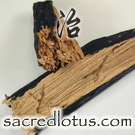 Chen Xiang3 gRegulate the Qi
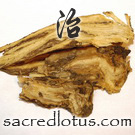 Dang Gui6-9 gTonify Blood
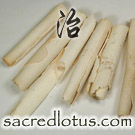 Fu Ling6 gRegulate Water and Drain Dampness
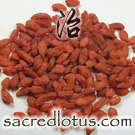 Gou Qi Zi9 gTonify Blood
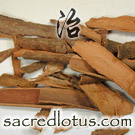 Rou Gui3-6 gWarm the Interior and Expel Cold
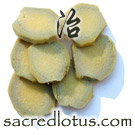 Sheng Jiang3-5 slicesWarm, Spicy Herbs that Release the Exterior
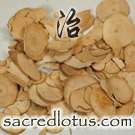 Wu Yao6 gRegulate the Qi
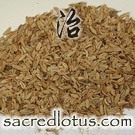 Xiao Hui Xiang6 gWarm the Interior and Expel Cold
Preparation & dosage
How is Nuan Gan Jian prepared?
Nuan Gan Jian is prepared as a decoction, traditionally simmered with fresh ginger slices and taken warm. Zhang Jing-yue’s original instructions call for the herbs decocted in water down to about 70% of the starting volume, taken warm before or between meals.
Source: Bensky & Barolet, Formulas & Strategies; Jing Yue Quan Shu preparation instructions as transmitted in contemporary formula references.
Decoction with 3-5 slices fresh Sheng Jiang. Reference relative amounts: Gou Qi Zi 9 g; Xiao Hui Xiang, Wu Yao, Fu Ling 6 g; Dang Gui 6-9 g; Rou Gui 3-6 g; Chen Xiang 3 g. Reference only.
Safety — read before use
What are the cautions for Nuan Gan Jian?
Nuan Gan Jian is a warming formula for cold-deficiency, so it is inappropriate for heat or damp-heat patterns. Signs such as scrotal redness, heat, and swelling, or a rapid pulse with a yellow tongue coating, point to damp-heat or Liver fire and call for a different approach entirely.
- Avoid in heat patterns: including Liver-fire or damp-heat hernial pain, and in yin-deficiency heat (night sweats, dry mouth, red tongue).
- Not for acute emergencies: sudden, severe scrotal or groin pain and swelling can indicate a strangulated or incarcerated hernia or testicular torsion — these require immediate medical evaluation, not herbal treatment.
- Pregnancy: contains warming, blood-nourishing/moving herbs (Rou Gui, Dang Gui) — use only under professional guidance.
Source: Bensky & Barolet, Formulas & Strategies (cautions for warming Liver-channel formulas). Traditional-use framing; not medical advice.
Originally Appeared In:
- Collected Treatises of Jing Yue (Jing Yue Quan Shu)
Notes:
How is Nuan Gan Jian different from Tian Tai Wu Yao San?
Both formulas treat cold-type hernial pain (shan qi) in the Liver channel, but Nuan Gan Jian is built for a deficient constitution while Tian Tai Wu Yao San is built for excess cold-stagnation. Choose between them based on whether an underlying Liver-Kidney deficiency is present.
- vs Tian Tai Wu Yao San: Tian Tai Wu Yao San is a purely qi-moving, cold-dispersing formula for excess-type cold hernia in an otherwise robust patient; Nuan Gan Jian adds Dang Gui and Gou Qi Zi to nourish Liver blood and Kidney essence for a patient whose cold pain arises from underlying deficiency.
- vs Dang Gui Si Ni Tang: Dang Gui Si Ni Tang targets cold obstructing the channels more generally (cold limbs, generalized channel-cold pain), while Nuan Gan Jian is focused on the Liver channel’s lower-abdominal and genital pathway.
Common modifications: add Wu Zhu Yu or Gan Jiang for more intense cold; add Fu Zi or Ba Ji Tian where Kidney yang deficiency is pronounced; add Yan Hu Suo or Chuan Xiong for cold-type dysmenorrhea with dark, clotted flow.
Source: Bensky & Barolet, Formulas & Strategies (related-formula comparisons); contemporary TCM clinical references for modifications.
Clinical Studies & Research:
Is there modern research on Nuan Gan Jian?
Direct clinical research on the classical formula is limited; the clearest published trial studied a modified capsule form for an unrelated cardiac indication. A randomized study of 66 patients found a Modified Nuan Gan Jian capsule reduced anginal episodes, improved ECG findings, lowered myocardial oxygen consumption, and shifted the thromboxane/prostacyclin balance compared with controls over three weeks — an application built on the formula’s warming, qi-moving action rather than its classical hernial-pain indication.
- Unstable angina (modified formula, clinical): randomized comparison of Modified Nuan Gan Jian capsule vs. control in 66 cases, showing fewer anginal episodes and improved ECG findings (PMID 15688691).
Sources: PubMed 15688691. Research context, not a therapeutic claim; this trial used a modified formula for a condition outside the formula’s traditional indication, and direct evidence for the classical hernial-pain use remains limited.
Sources & References
Compiled and edited by Thomas Dehli, Founder & Editor, Sacred Lotus Updated
The information here is referenced from numerous sources — teachers, practitioners, class notes from Five Branches University, the books below, and the published research literature, with citations given as resolvable PubMed identifiers. Where sources disagree, I have flagged the discrepancies directly. If facts couldn't be verified, I have left them out. How we source our content.
Reference information for students and practitioners — not medical advice. Consult a qualified practitioner. Terms of use.
Chinese Formulas Books & References
 https://amzn.to/4fYI3f8
 https://amzn.to/4j55NRA
 https://amzn.to/4gMROyv
 https://amzn.to/4h7msSK