
Jin Ling Zi San
Melia Toosendan Powder
- Category
- Formulas that Regulate the Qi
- Subcategory
- Formulas that Promote the Movement of Qi
- Ingredients
- 2 herbs
Actions
What does Jin Ling Zi San do?
Jin Ling Zi San spreads Liver qi, clears heat, and stops pain. It is a small, tightly focused two-herb formula for pain arising from Liver-qi constraint that has begun to transform into heat — the classic "wood turning to fire" pattern where prolonged emotional stagnation generates a burning, intermittent pain along the Liver channel.
The two ingredients divide by role, in equal parts:
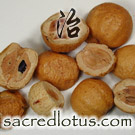
- Chief: Chuan Lian Zi (Fructus Meliae Toosendan) — bitter and cold; drains Liver fire and moves qi to relieve pain, addressing the heat that has developed from the underlying constraint.
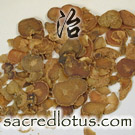
- Deputy: Yan Hu Suo (Corydalis Rhizome) — spicy, bitter, and warm; strongly invigorates blood and moves qi, a potent analgesic that offsets Chuan Lian Zi’s coldness and reinforces the pain-relieving action.
Together the cold, heat-clearing chief and the warm, blood-moving deputy balance each other so the formula treats both the heat and the qi/blood stagnation driving the pain, without being purely cooling or purely warming.
Source: this site’s own composition record + Bensky & Barolet / Chen & Chen, Chinese Herbal Medicine: Formulas & Strategies (chief/deputy analysis). Traditional-use framing; not medical advice.
Indications
What is Jin Ling Zi San used for?
Jin Ling Zi San treats pain from Liver-qi constraint transforming into heat — hypochondriac, epigastric, abdominal, or hernial pain that characteristically comes and goes rather than staying constant.
Its classic clinical picture:
- Pain pattern: intermittent hypochondriac, epigastric, abdominal, or hernial pain, often worse with emotional stress and aggravated by warmth or heat.
- Accompanying signs: irritability and a bitter taste in the mouth, both classic markers of Liver qi turning to fire.
Tongue and pulse: the tongue is red with a yellow coating; the pulse is wiry and rapid — wiry reflecting Liver-qi constraint, rapid reflecting the heat.
Source: this site’s own pattern/tongue/pulse record + Bensky & Barolet / Chen & Chen, Chinese Herbal Medicine: Formulas & Strategies. Traditional-use framing; not medical advice.
Western Uses:
What is Jin Ling Zi San used for in modern practice?
In modern practice Jin Ling Zi San is referenced for intermittent, stress-aggravated pain along the flanks, upper abdomen, or groin. Practitioners have traditionally applied its Liver-qi/heat pattern to presentations such as menstrual (dysmenorrhea-type) pain, epigastric pain associated with gastritis or peptic ulcer, hypochondriac pain associated with hepatitis or cholecystitis, and hernial or intercostal pain — contexts where the pain is intermittent, stress-linked, and accompanied by irritability and a bitter taste.
These biomedical correlates are offered as a reference to the formula’s traditional use, not as a claim that it treats any disease. The two-herb formula itself has not been the subject of dedicated clinical trials; its individual ingredients (particularly Yan Hu Suo) are more thoroughly studied (see research). A related four-herb patent medicine derived from this formula (Jinhong Pian) has been studied for chronic gastritis, but that is a distinct, expanded formulation, not the classical original. Any use for a diagnosed condition belongs with a qualified practitioner and appropriate medical care.
Source: traditional-use correlates summarized from Bensky & Barolet / Chen & Chen, Chinese Herbal Medicine: Formulas & Strategies; reference only, not a treatment claim.
Ingredients
2 substances in Jin Ling Zi San — each links to its full herb monograph.
Preparation & dosage
How is Jin Ling Zi San prepared?
Traditionally, Jin Ling Zi San is prepared as a powder ("san"), not a decoction — equal amounts of Chuan Lian Zi and Yan Hu Suo are ground together into a fine powder and taken in doses of roughly 9 g (traditionally described as "3 qian"), typically with warm wine or warm water, two to three times a day.
In contemporary practice the same two herbs are also commonly decocted together rather than powdered, generally at similar or slightly higher gram amounts of each herb; because Chuan Lian Zi is slightly toxic, dosing and duration should stay conservative and follow a qualified practitioner’s guidance.
Source: Bensky & Barolet / Chen & Chen, Chinese Herbal Medicine: Formulas & Strategies (traditional powder preparation and dosing). Reference only, not medical advice.
Traditional preparation: equal parts Chuan Lian Zi and Yan Hu Suo ground to a fine powder, ~9 g (3 qian) per dose with warm wine or water, 2-3x/day. Modern decoction: Chuan Lian Zi 4.5-9 g, Yan Hu Suo 4.5-9 g, equal amounts, in water. Avoid high-dose or prolonged use of Chuan Lian Zi due to mild toxicity. Reference only.
Safety — read before use
What are the cautions for Jin Ling Zi San?
Chuan Lian Zi is classified as slightly toxic, so this formula requires attention to dose and duration. Its toxic principle, toosendanin, can produce gastrointestinal irritation and, at high or prolonged doses, liver injury; modern references generally cap Chuan Lian Zi around 4.5–9 g in decoction and caution against extended use. Stir-frying (processing) the herb is traditionally used to reduce its toxicity while preserving its pain-relieving action.
- Avoid in Spleen/Stomach yang or cold deficiency — Chuan Lian Zi’s cold, bitter nature can further injure a weak, cold Middle Jiao, per this site’s own record caution on file for this herb.
- Pregnancy: Yan Hu Suo invigorates blood and is contraindicated during pregnancy per this site’s own record caution on file for this herb; the formula as a whole should be avoided or used only under professional guidance.
- Dose and duration: because of Chuan Lian Zi’s mild toxicity, avoid high-dose or long-term self-use; overdose has been associated with nausea, vomiting, abdominal pain, and (in severe cases) toxic liver injury in the broader Melia genus.
Source: this site’s own herb-level cautions for Chuan Lian Zi and Yan Hu Suo + Bensky & Barolet / Chen & Chen, Chinese Herbal Medicine: Formulas & Strategies; toxicity mechanism cross-checked against PubMed 36558960, PubMed 38460807. Traditional-use framing; not medical advice.
Originally Appeared In:
- Collection of Writings on the Mechanism of Illness, Suitability of Qi, and the Safeguarding of Life as Discussed in the Basic Questions (Su Wen Bing Ji Qi Yi Bao Ming Ji)
Notes:
Where does Jin Ling Zi San come from, and how does it compare to similar formulas?
Jin Ling Zi San was recorded by Liu Wansu (a leading physician of the Jin-Yuan medical schools) in the Su Wen Bing Ji Qi Yi Bao Ming Ji (compiled circa 1186 CE), where it is described for "heat-type reversal heart[-region] pain that comes and goes and has not resolved over a long time." It is one of the smallest formulas in the qi-regulating category — just two herbs — making it a common base that is added to or combined with larger formulas rather than used alone for complex presentations.
- vs. plain Yan Hu Suo alone: Yan Hu Suo by itself moves qi and blood to stop pain but has no heat-clearing action; Chuan Lian Zi is added specifically because the pain has a heat component (bitter taste, irritability, red tongue with yellow coat).
- vs. Si Ni San / Chai Hu Shu Gan San: those larger Liver-qi-spreading formulas address constraint more broadly across the chest and flanks; Jin Ling Zi San is narrower and more purely aimed at pain with a clear heat sign, and is frequently combined into or added onto such formulas when heat is prominent.
Common modification: because Chuan Lian Zi’s toxicity limits dose and duration, clinicians commonly process it (stir-fried) or substitute/add other qi-moving, pain-relieving herbs for longer-term use.
Source: classical attribution corroborated across multiple Chinese-language TCM references (multiple online sources) and multiple online sources + Bensky & Barolet / Chen & Chen, Chinese Herbal Medicine: Formulas & Strategies (formula category and comparisons).
Clinical Studies & Research:
Is there modern research on Jin Ling Zi San?
The two-herb formula itself has not been the subject of dedicated clinical trials, but its individual ingredients are substantially studied. Research on Yan Hu Suo (Corydalis) has clarified an analgesic mechanism distinct from opioids, while research on Chuan Lian Zi (Melia toosendan) has both confirmed traditional pain-relieving/anti-inflammatory activity and characterized the liver-toxicity risk behind its "slightly toxic" classification.
- Yan Hu Suo analgesia (mechanistic): alkaloids isolated from Corydalis yanhusuo, including tetrahydropalmatine, act as dopamine D1-receptor antagonists, identified via a CRE-luciferase reporter assay — part of the evidence base for its traditional use in pain relief (PMID 30308941).
- Chuan Lian Zi analgesic/anti-inflammatory activity (preclinical): an ethanolic extract of Melia toosendan fruit and two isolated limonoids showed anti-inflammatory and analgesic activity in mouse models, supporting the traditional pain-relieving use (PMID 18384989).
- Chuan Lian Zi hepatotoxicity (preclinical): toosendanin, the toxic constituent of Melia toosendan, has been shown to damage liver cells by disrupting lysosomal function and blocking autophagy (PMID 36558960), and by a separate STAT3/CTSC-linked pathway with elevated liver enzymes in animal models (PMID 38460807) — mechanistic support for the formula’s dose/duration caution.
- Melia genus human poisoning (clinical case series): a Taiwan poison-center case series of Melia azedarach (a related species) ingestion documented neurological symptoms with supportive care and full recovery in all patients (PMID 18763152) — relevant context for genus-level toxicity, though not the same species used in this formula.
Sources: PubMed 30308941; PubMed 18384989; PubMed 36558960; PubMed 38460807; PubMed 18763152. Research context, not a therapeutic claim; no dedicated clinical trial of the two-herb formula was found.
Sources & References
Compiled and edited by Thomas Dehli, Founder & Editor, Sacred Lotus Updated
The information here is referenced from numerous sources — teachers, practitioners, class notes from Five Branches University, the books below, and the published research literature, with citations given as resolvable PubMed identifiers. Where sources disagree, I have flagged the discrepancies directly. If facts couldn't be verified, I have left them out. How we source our content.
Reference information for students and practitioners — not medical advice. Consult a qualified practitioner. Terms of use.
Chinese Formulas Books & References
 https://amzn.to/4fYI3f8
 https://amzn.to/4j55NRA
 https://amzn.to/4gMROyv
 https://amzn.to/4h7msSK