
Tian Tai Wu Yao San
Top Quality Lindera Powder
- Category
- Formulas that Regulate the Qi
- Subcategory
- Formulas that Promote the Movement of Qi
- Ingredients
- 8 herbs
Actions
What does Tian Tai Wu Yao San do?
Tian Tai Wu Yao San (Top-Quality Lindera Powder) promotes the movement of qi, dispels cold, and stops pain, targeting cold that has invaded and stagnated in the Liver channel. Because the Liver channel wraps around the external genitals and traverses the lower abdomen, cold-stagnation along its course produces the classic pattern this formula treats: shan (hernial) disorder, felt as pain low in the abdomen that radiates to the testicle.
The eight ingredients divide by role:
- Chief: Wu Yao moves qi and disperses cold specifically in the Liver channel and lower abdomen/genital region, relieving pain at its source.
- Deputies: Mu Xiang, Xiao Hui Xiang, and Qing Pi support Wu Yao by moving qi, warming and dispersing cold, and breaking up stagnation along the Liver channel and lower jiao.
- Assistants: Gao Liang Jiang adds strong warmth to disperse cold; Bing Lang directs qi downward and breaks up stagnation, guiding the formula’s action to the lower body; Chuan Lian Zi moves Liver-channel qi and relieves hernial pain.
- Envoy: Ba Dou is dry-fried together with Chuan Lian Zi solely to offset Chuan Lian Zi’s cold, bitter nature and sharpen its qi-moving, pain-relieving effect — Ba Dou itself, one of the most drastic purgatives in the materia medica, is then discarded and is not part of the dose taken.
Source: this site’s own composition record + Bensky & Barolet, Formulas & Strategies (chief/deputy/assistant/envoy analysis, cross-referenced against multiple online sources derived from the same text). Traditional-use framing; not medical advice.
Indications
What is Tian Tai Wu Yao San used for?
Tian Tai Wu Yao San treats shan (hernial) disorder caused by cold stagnating in the Liver channel — classically an excess pattern, acute-to-subacute lower-abdominal and genital pain brought on by cold rather than by underlying deficiency.
- Core presentation: pain in the lower abdomen that radiates to the testicle, or a testicle that is swollen, hard, and painful; alternatively a dull, dragging, cold-type pain.
- Aggravating/relieving factors: pain is typically brought on or worsened by cold and eases with warmth, consistent with a cold-stagnation mechanism.
- Extended use: the same Liver-channel cold-stagnation pattern is also applied to cold-type dysmenorrhea and lower-abdominal cramping, since the Liver channel and Ren Mai traverse the same territory.
Tongue and pulse: pale tongue with a white coat; pulse deep (submerged) and slow, or wiry.
Source: this site’s own pattern/tongue/pulse record + Bensky & Barolet, Formulas & Strategies. Traditional-use framing; not medical advice.
Western Uses:
What is Tian Tai Wu Yao San used for in modern practice?
In modern practice Tian Tai Wu Yao San is referenced for cold-type lower-abdominal and testicular/scrotal pain — presentations practitioners have traditionally mapped to conditions such as inguinal hernia-associated pain, orchitis or epididymitis discomfort, hydrocele-related heaviness, and cold-type primary dysmenorrhea, where Western medicine recognizes localized pain, swelling, or cramping in the same anatomical territory.
These biomedical correlates describe the formula’s traditional use only, not a claim that it treats any diagnosed disease. Shan (hernial) disorder in Chinese medicine is a functional pain pattern and does not equate to a surgical inguinal hernia; any suspected hernia, testicular mass, or acute scrotal pain needs prompt medical evaluation. Direct clinical-trial evidence on the compound formula is not available (see research); supporting data are preclinical and ingredient-level.
Source: traditional-use correlates summarized from Bensky & Barolet, Formulas & Strategies, and formula reference sites; reference only, not a treatment claim.
Ingredients
8 substances in Tian Tai Wu Yao San — each links to its full herb monograph.
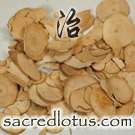 Wu Yao15 gRegulate the Qi
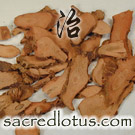 Gao Liang Jiang15 gWarm the Interior and Expel Cold
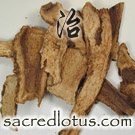 Mu Xiang15 gRegulate the Qi
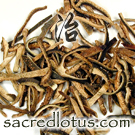 Qing Pi15 gRegulate the Qi
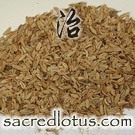 Xiao Hui Xiang15 gWarm the Interior and Expel Cold
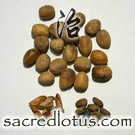 Ba Dou15 g70 piecesHarsh Expellants
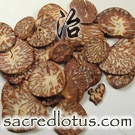 Bing Lang12-15 g2 piecesExpel Parasites
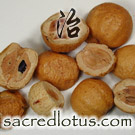 Chuan Lian Zi12-15 g10 piecesRegulate the Qi
Preparation & dosage
How is Tian Tai Wu Yao San prepared?
Classically prepared as a powder (san), with one deliberate processing step: Chuan Lian Zi is dry-fried together with Ba Dou, after which the Ba Dou is discarded and only the processed Chuan Lian Zi is kept. The remaining herbs are then ground together with the processed Chuan Lian Zi into a fine, even powder.
The powder is traditionally taken warm, before meals, chased with a small amount of warmed wine to help disperse cold and move qi; ginger may be added in more severe presentations. The formula can also be prepared as a decoction by omitting the Ba Dou-processing step and adding wine to the decoction instead.
Source: this site’s own preparation notes + Bensky & Barolet, Formulas & Strategies; cross-referenced against multiple online sources.
Powder (san). Reference relative amounts (per this site’s own composition record): Wu Yao, Mu Xiang, Xiao Hui Xiang, Qing Pi, Gao Liang Jiang 15 g each; Bing Lang 12-15 g (2 pieces); Chuan Lian Zi 12-15 g (10 pieces), dry-fried together with Ba Dou 15 g (about 70 pieces), Ba Dou then discarded. Ground into a fine powder; classically dosed at about 3 g per administration, taken warm before meals with a little wine. Reference only; not a prescription.
Safety — read before use
What are the cautions for Tian Tai Wu Yao San?
Tian Tai Wu Yao San is a warm, acrid, qi-moving formula for cold-excess stagnation, so it is unsuitable for heat or damp-heat patterns and is not intended for long-term use once acute pain resolves — its dispersing, qi-breaking herbs can consume qi and yin if used past the acute presentation.
- Ba Dou is a drastic, toxic purgative. It is fried together with Chuan Lian Zi only to modify the latter’s cold property, then physically discarded and excluded from the finished dose. This processing step belongs to a trained pharmacy/practitioner, not home preparation.
- Chuan Lian Zi (Fructus Meliae Toosendan) is mildly toxic in its own right. Its marker compound toosendanin is documented as hepatotoxic in animal studies, and overdose is traditionally associated with nausea and vomiting. Use at standard reference doses, avoid prolonged or high-dose use, and use cautiously in anyone with pre-existing liver disease.
- Bing Lang is cautioned against in loose stool from Spleen deficiency and used carefully in pregnancy.
- Pregnancy: the formula’s downward-directing, qi-breaking herbs (Bing Lang, Chuan Lian Zi) warrant professional guidance before use.
- Differential diagnosis matters: shan/hernial disorder in TCM is a pain pattern, not a diagnosis of surgical inguinal hernia, testicular torsion, or malignancy — these require medical evaluation before or alongside any herbal treatment.
Source: Bensky & Barolet, Formulas & Strategies and multiple online sources (Bing Lang/Chuan Lian Zi cautions) + PubMed 26539117; PMC 12300629 (toosendanin hepatotoxicity). Traditional-use framing; not medical advice.
Originally Appeared In:
- Medical Innovations (Yi Xue Fa Ming)
Notes:
How is Tian Tai Wu Yao San different from Nuan Gan Jian?
Tian Tai Wu Yao San is built for a purely excess, cold-stagnation shan disorder, using only qi-moving and cold-dispersing herbs with no tonifying herb in the formula. Nuan Gan Jian (Warm the Liver Decoction) treats the same territory — cold hernial pain along the Liver channel — but for a mixed presentation where underlying Liver-and-Kidney deficiency (the root) coexists with cold-qi stagnation (the manifestation), so it combines warming/tonifying herbs with qi movers to address both root and manifestation.
- Choose Tian Tai Wu Yao San for an otherwise robust patient with acute, excess-type cold pain and no deficiency signs.
- Choose Nuan Gan Jian when the cold hernial pain is longstanding or recurrent and accompanied by signs of Liver/Kidney deficiency.
Source: comparison summarized from Bensky & Barolet, Formulas & Strategies framework, cross-checked against an independent formula-comparison note (maduixa salvatge, TCM study notes) citing the same excess-vs-root-and-manifestation distinction.
Clinical Studies & Research:
Is there modern research on Tian Tai Wu Yao San?
No direct clinical trials of the compound formula were found; the supporting evidence is preclinical and specific to its individual herbs, several of which show analgesic and anti-inflammatory activity in models relevant to abdominal/visceral pain — consistent with, but not proof of, the formula’s traditional use.
- Wu Yao (Lindera aggregata): isolated compounds from the root showed anti-inflammatory activity, inhibiting inflammatory mediators in laboratory models (PMID 32359855).
- Mu Xiang (Aucklandia lappa): root extract reduced acetic-acid-induced writhing — a visceral abdominal-pain model — in mice, and reduced inflammatory markers in an osteoarthritis model (PMID 33375366).
- Bing Lang (Areca catechu): a hydroalcoholic nut extract showed dose-dependent analgesic activity on hot-plate and formalin tests and reduced carrageenan-induced paw edema in animal studies (PMID 20849907).
- Xiao Hui Xiang (Foeniculum vulgare): a pharmacology review documents antispasmodic, anti-inflammatory, and analgesic activity consistent with its traditional warming, qi-moving use (PMID 25162032).
Sources: PubMed 32359855; PubMed 33375366; PubMed 20849907; PubMed 25162032. Ingredient-level research context, not a therapeutic claim for the compound formula; see cautions for toosendanin (Chuan Lian Zi) hepatotoxicity research (PubMed 26539117; PMC 12300629).
Sources & References
Compiled and edited by Thomas Dehli, Founder & Editor, Sacred Lotus Updated
The information here is referenced from numerous sources — teachers, practitioners, class notes from Five Branches University, the books below, and the published research literature, with citations given as resolvable PubMed identifiers. Where sources disagree, I have flagged the discrepancies directly. If facts couldn't be verified, I have left them out. How we source our content.
Reference information for students and practitioners — not medical advice. Consult a qualified practitioner. Terms of use.
Chinese Formulas Books & References
 https://amzn.to/4fYI3f8
 https://amzn.to/4j55NRA
 https://amzn.to/4gMROyv
 https://amzn.to/4h7msSK