

Xiao Hui Xiang (Fennel Fruit)
Fructus Foeniculi Vulgaris Fennel Fruit
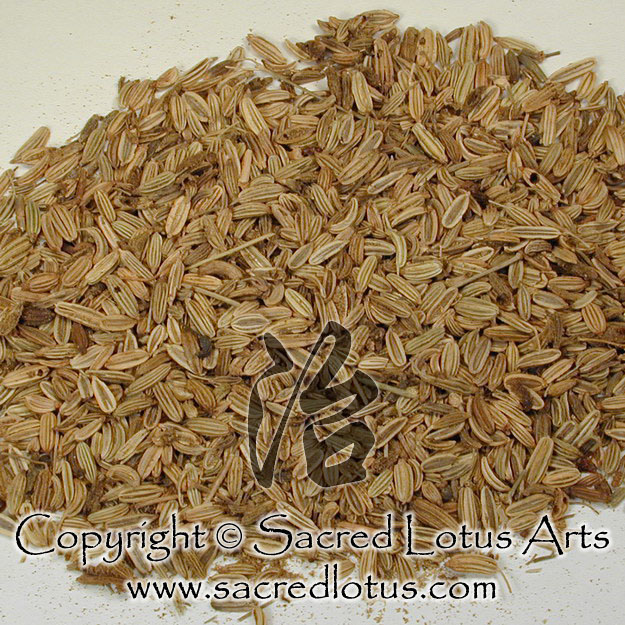
Materia Medica Data
- Temperature
- Warm
- Nature & Flavour
- Spicy, Warm
- Channels Entered
- LIV, KI, SP, ST
- Latin (pharmaceutical)
- Fructus Foeniculi Vulgaris
- Chinese
- 小茴香
- Tone Marks
- xiăo huí xiāng
Chinese Herb Actions
What is Xiao Hui Xiang used for in Chinese medicine?
Xiao Hui Xiang (Fennel Fruit) is used to warm the interior and disperse cold, regulate qi and stop pain, and harmonize the Stomach — chiefly for cold in the Liver channel and lower abdomen: cold hernial pain (shan qi), testicular pain and swelling, and cold-type lower-abdominal or menstrual pain. Spicy and warm, it also settles a cold Stomach with poor appetite, indigestion, nausea, and vomiting.
Its main traditional actions:
- Warms the Liver and Kidney, disperses cold, stops pain — cold hernial disorders (shan qi), testicular pain and swelling, cold lower-abdominal pain, and dysmenorrhea from cold.
- Regulates qi and harmonizes the Stomach — cold Stomach with epigastric or abdominal pain, poor appetite, indigestion, nausea, and vomiting.
Source: owner’s Five Branches notes (Warm the Interior set), reviewed against Bensky, Materia Medica (3rd ed.). Traditional-use framing; not medical advice.
Chinese Herb Dosage
What is the typical dosage of Xiao Hui Xiang?
3–9 g in decoction (owner’s notes: 1–3 qian). The fruit is often dry-fried (chao) to strengthen its warming, pain-relieving action on the lower abdomen. As common culinary fennel, it is a food-grade spice and well tolerated at ordinary amounts.
Source: owner’s Five Branches notes; standard materia medica ranges. Reference only — not a prescription.
Chinese Herb Contraindications & Cautions
Are there cautions or contraindications for Xiao Hui Xiang?
Used with care in yin deficiency with heat. Being spicy and warm, it can aggravate heat and injure fluids where there is no underlying cold. As a culinary spice it is well tolerated, but concentrated medicinal doses are better avoided in pregnancy because fennel has estrogenic activity; occasional allergic reactions are also reported.
Source: owner’s Five Branches notes (contraindication: Yin Xu with Heat); PubMed 23275017 (estrogenic activity, caution in pregnancy, allergic reactions). Not medical advice.
Chinese Herb Toxicity & Overdose
Low — fennel is a common culinary spice regarded as food-grade and safe. Reviews of Foeniculum vulgare report no serious adverse events at normal use apart from occasional allergic reactions. Toxicity concerns attach mainly to the concentrated essential oil rather than the whole fruit used in decoction.
Source: PubMed 23275017 (no serious adverse events except allergic reactions); PubMed 25162032 / PMC 4137549 (comprehensive review). Research context, not a therapeutic claim.
Herb-Drug Interactions
Potential interactions are described for concentrated medicinal doses, not culinary amounts. Fennel inhibits the drug-metabolizing enzyme CYP3A4 in vitro, so it may theoretically raise levels of medications cleared by that pathway, and a significant interaction reducing ciprofloxacin absorption has been reported. Its estrogenic activity also warrants caution alongside hormone-sensitive conditions or therapies. (Flagged for practitioner confirmation.)
Source: PubMed 23275017 (CYP3A4 inhibition; ciprofloxacin interaction; estrogenic activity). Absence of further documented interactions is not proof of safety.
Western / Biomedical Research
Chinese Herb Clinical Studies & Research
Provided as research context — a summary of published biomedical study, not a therapeutic or medical claim.
Is there modern research on Xiao Hui Xiang (fennel)?
Yes. Fennel’s volatile oil is rich in trans-anethole, together with fenchone, flavonoids, and phenolic compounds; anethole underlies its well-documented antispasmodic (smooth-muscle relaxing) action, which fits the traditional use for cramping and pain. In a small randomized trial, oral fennel drops reduced the severity of primary dysmenorrhea versus control, though many participants disliked the taste. Broad preclinical activity (antispasmodic, anti-inflammatory, antimicrobial, estrogenic) is reviewed; robust human clinical evidence remains limited.
Sources: PubMed 25162032 / PMC 4137549 (botany, phytochemistry, pharmacology review — anethole, antispasmodic activity); PubMed 23983742 / PMC 3748568 (randomized trial, primary dysmenorrhea); PubMed 23275017 (pharmacology and safety review). Research context, not a therapeutic claim.
Chinese Herb Notes
How is Xiao Hui Xiang combined and how does it compare to similar warming herbs?
Xiao Hui Xiang anchors formulas for cold hernial and lower-abdominal pain — for example Tian Tai Wu Yao San (Top-Quality Lindera Powder), where it joins Wu Yao, Chuan Lian Zi, Mu Xiang, and Gao Liang Jiang to warm the Liver channel, move qi, and relieve cold shan qi (hernial) pain.
How it differs from its neighbors among the warm-interior herbs:
- vs Ding Xiang (Clove) — both warm the Kidney and Stomach; Ding Xiang better directs rebellious Stomach qi downward (vomiting, hiccups), while Xiao Hui Xiang better reaches the Liver channel for hernial and lower-abdominal cold pain.
- vs Gao Liang Jiang (Galangal) — Gao Liang Jiang focuses on the middle burner for cold epigastric and abdominal pain with vomiting; Xiao Hui Xiang extends to the Liver channel and lower abdomen.
Source: owner’s Five Branches notes (Warm the Interior comparison set: Ding Xiang, Gao Liang Jiang); standard formula literature for Tian Tai Wu Yao San.
Sources & References
Compiled and edited by Thomas Dehli, Founder & Editor, Sacred Lotus Updated
The information here is referenced from numerous sources — teachers, practitioners, class notes from Five Branches University, the books below, and the published research literature, with citations given as resolvable PubMed identifiers. Where sources disagree, I have flagged the discrepancies directly. If facts couldn't be verified, I have left them out. How we source our content.
Reference information for students and practitioners — not medical advice. Consult a qualified practitioner. Terms of use.
Chinese Herbs Books & References
 https://amzn.to/3WfB3DK
 https://amzn.to/3DR1VUh
 https://amzn.to/42aMz73
 https://amzn.to/3PuD4bt