
Radix Auklandiae Lappae Costus Root, Saussurea
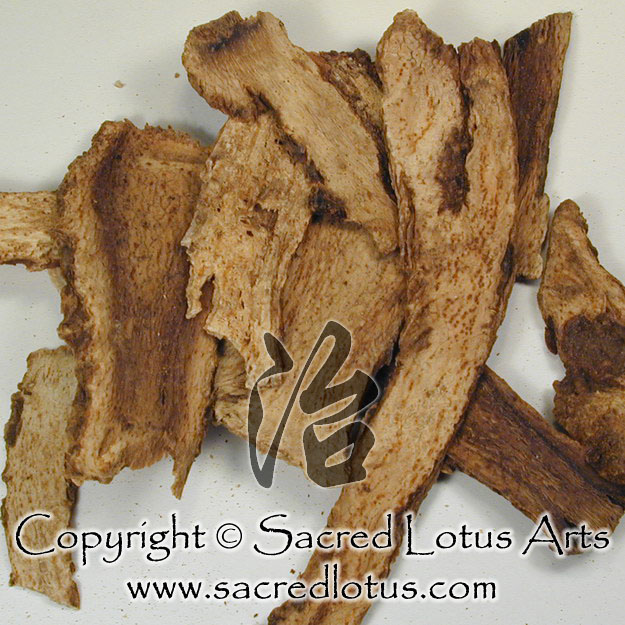
Materia Medica Data
- Category
- Herbs that Regulate the Qi
- Temperature
- Warm
- Nature & Flavour
- Spicy, Bitter, Warm
- Channels Entered
- GB, LI, SP, ST
- Latin (pharmaceutical)
- Radix Auklandiae Lappae
- Chinese
- 木香
- Tone Marks
- mù xiāng
- Translation
- Wood Fragrance
Chinese Herb Actions
What is Mu Xiang used for in Chinese medicine?
Mu Xiang (Costus Root / Aucklandia Root) is an aromatic, warming herb used to move Qi and relieve pain, particularly Spleen–Stomach and Liver–Gallbladder Qi stagnation — for poor appetite, indigestion, food stagnation, epigastric and abdominal fullness, bloating, and pain, plus diarrhea with tenesmus. It also relieves Liver-Qi-stagnation flank pain and distension, and (per the category consensus) is considered one of the leading herbs for abdominal/epigastric pain from Qi stagnation in general.
Its main traditional actions:
- Moves Qi, relieves pain, regulates the Middle Jiao — Spleen/Stomach Qi stagnation: poor appetite, indigestion, food stagnation, epigastric and abdominal fullness, bloating, pain, diarrhea, and tenesmus; also flank pain, distension, and soreness, with bitter taste, yellow tongue coating, and possible jaundice from Liver-Qi stagnation affecting the Gallbladder.
- Strengthens the Spleen and prevents stagnation — Spleen-Qi-deficiency abdominal fullness, distension, bloating, pain, poor appetite, vomiting, and diarrhea; traditionally added to rich tonifying formulas to offset their cloying tendency to stagnate Qi (it "ameliorates the side effects of tonifying herbs").
- Treats both excess and deficient patterns of dysentery/diarrhea with tenesmus — combined with damp-heat-clearing herbs (Huang Lian, Huang Bai) for excess damp-heat dysentery, and with warming astringents for deficiency-cold chronic diarrhea — its Qi-moving, pain-relieving action addresses the tenesmus/pain in either pattern (see Notes for formula examples).
Source: Sacred Lotus reference notes, cross-checked against Bensky & Barolet, Chinese Herbal Medicine: Materia Medica (3rd ed.) and Chen & Chen, Chinese Medical Herbology and Pharmacology; category consensus for "Herbs that Regulate the Qi." Traditional-use framing; not medical advice.
Chinese Herb Dosage
What is the typical dosage of Mu Xiang?
About 3–9 g in decoction (Bensky), with Chen & Chen giving a slightly wider 3–10 g — the two standard materia medica ranges are essentially the same herb-gram range and are not in real conflict.
- 3–9 grams in decoction (Bensky).
- 3–10 grams in decoction (Chen & Chen).
- Preparation note — as an aromatic herb, Mu Xiang's action depends on volatile oils that dissipate with prolonged boiling; it is commonly added near the end of decoction ("hou xia," 后下, the last 5–10 minutes) or ground to powder and stirred into the strained decoction, a standard practical convention rather than a fixed rule in every source.
Source: Sacred Lotus Sacred Lotus sources & references on dosage (Bensky; Chen & Chen); "hou xia" preparation convention corroborated across multiple TCM herb references. Reference only, not a prescription.
Chinese Herb Contraindications & Cautions
Are there cautions for Mu Xiang?
Mu Xiang is warm, drying, and aromatic, and is traditionally contraindicated with Yin deficiency fire, depleted fluids, or "blazing fire" (excess heat) patterns — using a warming, drying Qi-mover in these presentations risks aggravating heat or dryness. As with most aromatic Qi-regulating herbs, it is best used short-term for stagnation rather than long-term, and use during pregnancy or alongside other medications should go through a qualified TCM practitioner.
- Sourcing (reference note, neutral) — Mu Xiang is the dried root of Aucklandia lappa Decne. (a synonym of Saussurea costus / Saussurea lappa). Wild Himalayan Saussurea costus is CITES Appendix I–listed (since 1980, originally Appendix II from 1975) and IUCN-assessed Critically Endangered, with international trade in wild-collected material prohibited; most commercial TCM Mu Xiang today is cultivated stock (including the related, similarly-used "Chuan Mu Xiang," Vladimiria souliei, grown in China), not wild-harvested Himalayan material. This is a sourcing/identity fact, not a usage instruction.
Source: Sacred Lotus reference notes (contraindication); CITES Nineteenth Plants Committee review of Saussurea costus and IUCN Red List status; Aucklandia lappa botanical reviews noting Vladimiria souliei as a related cultivated substitute (research, below).
Chinese Herb Toxicity & Overdose
Low at standard therapeutic doses, with dose-dependent risk reported at high doses. Traditional case literature (Bensky's materia medica toxicity notes) describes one reported case of an allergic reaction after ingestion of 10 g, with the same patient reacting again to a smaller 3 g dose; symptoms included abdominal discomfort, watery diarrhea, a granular rash, pruritus, and restlessness. This is consistent with modern pharmacological reviews, which list skin allergic reaction as a recognized side effect linked to Mu Xiang's sesquiterpene-lactone constituents (e.g. costunolide), and note that high-dose ethanol extract has produced oxidative-stress-mediated hepatotoxicity in animal studies, in contrast to a protective effect at appropriate/lower doses.
Source: Sacred Lotus reference notes (case description, Bensky materia medica toxicity chapter); Aucklandia lappa Decne. pharmacological review, DOI 10.3389/fphar.2025.1659831, PMID 41158126 (allergenicity and dose-dependent hepatotoxicity/hepatoprotection). Reference note, not a safety guarantee.
Herb-Drug Interactions
No well-established clinical herb–drug interactions are documented for Mu Xiang. Given animal-model evidence that high-dose extract can be hepatotoxic via oxidative stress (versus protective at appropriate doses — see Toxicity), caution combining high-dose/long-term use with other hepatotoxic medications or supplements is a reasonable precaution, though this has not been demonstrated in human interaction studies. (Flagged for practitioner confirmation, not a demonstrated clinical interaction.)
Western / Biomedical Research
Chinese Herb Clinical Studies & Research
Provided as research context — a summary of published biomedical study, not a therapeutic or medical claim.
Is there modern research on Mu Xiang (Aucklandia lappa / Saussurea costus)?
Yes — a substantial preclinical pharmacology literature (anti-inflammatory, gastrointestinal, hepatoprotective, anticancer) plus at least one randomized clinical trial of a Mu Xiang–containing formula for IBS; isolated-herb human trials are limited. Mu Xiang's core bioactive constituents are the sesquiterpene lactones costunolide, dehydrocostus lactone, and cynaropicrin.
- Foundational pharmacology review — a widely cited review of Saussurea costus documents anti-inflammatory, anti-ulcer, anticancer, and hepatoprotective activity attributed mainly to costunolide, dehydrocostus lactone, and cynaropicrin, based on laboratory and animal studies.
- Gastrointestinal/anti-inflammatory mechanism — a 2025 comprehensive review reports that Aucklandiae Radix extract alleviates experimental ulcerative colitis by targeting the PKM2/NF-κB/NLRP3 inflammasome pathway, and that related formulas (e.g. Simo Decoction) enhance gastrointestinal smooth-muscle motility — preclinical/animal-model evidence, consistent with the herb's traditional Qi-moving, anti-stagnation use.
- Hepatoprotective / dose-dependent hepatotoxicity — the same review notes ethanol extract protects against LPS-induced liver injury in rats at appropriate doses, while high doses produced oxidative-stress-driven hepatotoxicity — a dose-response finding relevant to the traditional dosage ceiling, animal-model evidence.
- Clinical trial of a Mu-Xiang-containing formula — a randomized, double-blind, placebo-controlled trial of Xiang-Sha-Liu-Jun-Zi-Tang (a classical formula built on Mu Xiang + Sha Ren + Si Jun Zi Tang) in 80 IBS patients (3.0 g, three times daily, 28 days) found a significantly lower diarrhea score versus control. This is formula-level evidence, not evidence for isolated Mu Xiang, and the authors themselves flagged comparator/placebo design limitations.
Overall: strong preclinical/mechanistic support for the traditional Qi-moving, anti-inflammatory, and gastroprotective uses; clinical evidence exists mainly at the formula level and remains preliminary.
Sources: PMID 17306480 (Pandey, Rastogi & Rawat, J Ethnopharmacol 2007 — botanical/chemical/pharmacological review); PMID 41158126, DOI 10.3389/fphar.2025.1659831 (Aucklandia lappa Decne. review — mechanism, hepatotoxicity/hepatoprotection, allergenicity); PMID 31009707 (Shih et al., J Ethnopharmacol 2019 — XSLJZT randomized placebo-controlled trial for IBS). Research context, not a therapeutic claim.
Chinese Herb Notes
What are Mu Xiang's key herb combinations and formulas?
Mu Xiang is almost always paired with another Qi-mover or with pattern-specific herbs rather than used alone — its role is to relieve the pain/tenesmus of Qi stagnation while the partner herb(s) address the underlying pattern (damp-heat, cold, or deficiency).
- Mu Xiang + Bing Lang (Areca Seed) — the defining pair in Mu Xiang Bing Lang Wan (Aucklandia and Betel Nut Pill) and in Shao Yao Tang (Peony Decoction, with Huang Lian and Huang Bai) for damp-heat dysentery with abdominal pain and tenesmus.
- Mu Xiang + Huang Lian/Huang Bai — in Shao Yao Tang and Mu Xiang Bing Lang Wan, clearing damp-heat while Mu Xiang moves Qi to stop the pain and tenesmus.
- Mu Xiang in deficiency-cold formulas — e.g. Zhen Ren Yang Zang Tang (True Man's Decoction to Nourish the Organs), where it is combined with warming astringents (He Zi, Rou Dou Kou, Ying Su Ke/poppy husk) for chronic deficiency-cold diarrhea/dysentery — showing the same Qi-moving, tenesmus-relieving role applied to the opposite (cold/deficient) pattern.
- Mu Xiang + Sha Ren (Fructus Amomi) — a classic pairing in formulas such as Xiang Sha Liu Jun Zi Tang (Aucklandia and Amomum Six Gentlemen Decoction, built on Si Jun Zi Tang) for Spleen-Qi deficiency with concurrent Qi stagnation/food stagnation. (Traditional formula context, not on the current Sacred Lotus formula list under this exact name; see research below for clinical evidence on this formula.)
- Other Sacred Lotus-linked formulas containing Mu Xiang include Gui Pi Tang, Jian Pi Wan, Tian Tai Wu Yao San, Ju He Wan, Su He Xiang Wan, Juan Bi Tang, Hou Po Wen Zhong Tang, and Zi Xue Dan, reflecting its broad use across Spleen-tonic, Qi-moving, and Liver-Qi formulas.
Source: Sacred Lotus formula–herb links (query of the ingredient data for this herb); Bensky/Chen & Chen for pattern context. Traditional formula context, not treatment advice.
Sources & References
Compiled and edited by Thomas Dehli, Founder & Editor, Sacred Lotus Updated
The information here is referenced from numerous sources — teachers, practitioners, class notes from Five Branches University, the books below, and the published research literature, with citations given as resolvable PubMed identifiers. Where sources disagree, I have flagged the discrepancies directly. If facts couldn't be verified, I have left them out. How we source our content.
Reference information for students and practitioners — not medical advice. Consult a qualified practitioner. Terms of use.
Chinese Herbs Books & References
 https://amzn.to/3WfB3DK
 https://amzn.to/3DR1VUh
 https://amzn.to/42aMz73
 https://amzn.to/3PuD4bt