
Actions
What does Shi Pi Yin do?
Shi Pi Yin (Bolster the Spleen Decoction) warms and strengthens Spleen and Kidney yang, moves qi, and disperses fullness to drive out water that has accumulated from cold and deficiency. It treats edema at its root — a failing Spleen-Kidney yang unable to transform and move fluids — rather than simply forcing urination.
The twelve ingredients (per current Sacred Lotus sources & references) divide by role:
- Chief: Fu Zi and Gan Jiang warm and rescue Spleen-Kidney yang and dispel the interior cold that is stopping water from moving.
- Deputies: Bai Zhu and Fu Ling strengthen the Spleen and drain dampness through urination, rebuilding the organ that governs fluid transformation.
- Assistants: Hou Po, Mu Xiang, Da Fu Pi, and Cao Guo move qi, dry dampness, and disperse the abdominal fullness and distension that accompanies cold-damp accumulation; Mu Gua is aromatic and transforms dampness while harmonizing the Stomach and easing cramping, softening the drying effect of the warming herbs.
- Envoys: Zhi Gan Cao, Sheng Jiang, and Da Zao harmonize the formula and protect Stomach qi against the intensity of the warming, moving herbs.
Source: Sacred Lotus sources & references + Bensky & Barolet, Formulas & Strategies (chief/deputy/assistant/envoy analysis, "Warm and Transform Water" category). Traditional-use framing; not medical advice.
Indications
What is Shi Pi Yin used for?
Shi Pi Yin treats yin-type (cold) edema arising from Spleen-Kidney yang deficiency — swelling that is chronic rather than sudden, and worse in the lower body, distinguishing it from the acute, upper-body-first "yang edema" of wind-water or damp-heat patterns.
Its classic clinical presentation:
- Edema below the waist (legs and ankles worse than the face or upper body), often pitting, with scanty urination.
- Cold limbs and no thirst — hallmark signs that cold-deficiency, not heat, is driving the fluid accumulation.
- Abdominal/chest fullness or distension, poor appetite, and loose stool from a Spleen too weak to transform food and fluids.
- General fatigue, a pale or withered-pale complexion, and a preference for warmth.
Tongue and pulse (per Sacred Lotus sources & references): a thick, greasy tongue coating over a typically pale body; a submerged (deep) pulse, reflecting interior cold and yang deficiency.
Source: Sacred Lotus sources & references on pattern/tongue/pulse + Bensky & Barolet, Formulas & Strategies; Chen & Chen, Chinese Herbal Formulas and Applications. Traditional-use framing; not medical advice.
Western Uses:
What is Shi Pi Yin used for in modern practice?
In modern practice, Shi Pi Yin's yin-edema pattern (chronic, cold, lower-body-predominant swelling with loose stool and no thirst) is traditionally applied where Western medicine recognizes fluid retention tied to reduced organ function — contexts such as chronic kidney disease with nephrotic-range edema, cirrhotic ascites, and congestive states with cold extremities and poor digestion. It is a Spleen-first, qi-moving formula, often paired clinically with more Kidney-focused warming formulas (see notes) or diuretic formulas when fluid accumulation is more pronounced.
These biomedical correlates are offered as a reference to the formula’s traditional use, not as a claim that it treats any diagnosed disease. Direct modern research on the unmodified classical formula is limited (see research). Any use for a diagnosed condition belongs with a qualified practitioner and appropriate medical care.
Source: traditional-use correlates summarized from Bensky & Barolet, Formulas & Strategies, and Chen & Chen, Chinese Herbal Formulas and Applications; reference only, not a treatment claim.
Ingredients
12 substances in Shi Pi Yin — each links to its full herb monograph.
 Bai Zhu6 gTonify Qi
 Cao Guo6 gAromatic Herbs that Transform and Dissolve Dampness
 Da Fu Pi6 gRegulate the Qi
 Da Zao1 PieceTonify Qi
 Fu Ling6 gRegulate Water and Drain Dampness
 Fu Zi6 gWarm the Interior and Expel Cold
 Gan Jiang6 gWarm the Interior and Expel Cold
 Hou Po6 gAromatic Herbs that Transform and Dissolve Dampness
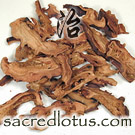 Mu Gua6 gDispel Wind-Dampness
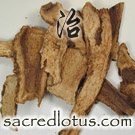 Mu Xiang6 gRegulate the Qi
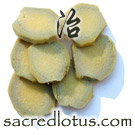 Sheng Jiang5 SlicesWarm, Spicy Herbs that Release the Exterior
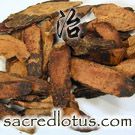 Zhi Gan Cao3 gTonify Qi
Preparation & dosage
How is Shi Pi Yin prepared?
Shi Pi Yin is prepared as a decoction (the classical "yin" preparation was a coarse powder simmered in water with fresh ginger and jujube, drunk warm) using the ten primary herbs plus Sheng Jiang and Da Zao as envoys. It is taken warm, traditionally on an empty stomach or before meals, and typically for a defined course under a practitioner's supervision rather than as ongoing self-treatment, given the aconite content.
Source: Bensky & Barolet, Formulas & Strategies (classical preparation method for Song-dynasty "yin" formulas). Traditional-use framing; not medical advice.
Decoction. Reference relative amounts (per Sacred Lotus sources & references, matching the standard Bensky & Barolet dosage table): Fu Zi (processed), Gan Jiang (blast-fried), Bai Zhu, Fu Ling, Mu Gua, Hou Po, Mu Xiang, Da Fu Pi, Cao Guo (processed) 6 g each; Zhi Gan Cao 3 g; Sheng Jiang 5 slices; Da Zao 1 piece. Fu Zi requires proper processing/cooking (long decoction) to reduce toxicity — prepare only under qualified practitioner guidance. Reference only, not a prescription.
Safety — read before use
What are the cautions for Shi Pi Yin?
Shi Pi Yin is a warming formula for cold-deficiency edema, so it is inappropriate for yang-type (damp-heat or wind-water) edema — using it where heat signs are present (thirst, dark scanty urine, red tongue with yellow coat, fever, or a rapid pulse) would add fuel to heat rather than address the pattern.
- Avoid, or use only with careful modification, in heat or yin-deficiency patterns — the formula is built on hot, drying herbs (Fu Zi, Gan Jiang, Cao Guo) that can aggravate thirst, dry mouth, or heat signs.
- Fu Zi (aconite) requires proper processing and cooking — raw or under-processed aconite is toxic; this formula should only be prepared by, or under the guidance of, a qualified TCM practitioner.
- Pregnancy: contains strongly warming, qi-moving, and downward-draining herbs (Fu Zi, Da Fu Pi, Hou Po) — use only under professional guidance.
- Edema of any cause warrants proper medical evaluation before or alongside herbal treatment, particularly to rule out cardiac, renal, or hepatic disease requiring biomedical management.
Source: Bensky & Barolet, Formulas & Strategies (cautions for aconite-containing warming formulas; yin/yang edema differentiation). Traditional-use framing; not medical advice.
Originally Appeared In:
- Effective Formulas from Generations of Physicians (Shi Yi De Xiao Fang)
Notes:
How is Shi Pi Yin different from Zhen Wu Tang, Wu Ling San, and Shu Zao Yin Zi?
Shi Pi Yin and Shu Zao Yin Zi form the classic yin/yang edema pair from the same source text (Yan Yonghe's Ji Sheng Fang, 1253) — Shi Pi Yin for yin-type (cold, chronic, lower-body) edema from Spleen-Kidney yang deficiency; Shu Zao Yin Zi for yang-type (acute, generalized, excess) edema with damp-heat or blood stasis. They represent opposite ends of the edema spectrum and are not interchangeable.
- vs Zhen Wu Tang (True Warrior Decoction): both warm yang to move water and share Fu Zi, Bai Zhu, and Fu Ling, but Zhen Wu Tang is more Kidney-focused (uses Bai Shao and Sheng Jiang without the qi-moving/aromatic herbs) and targets water overflowing to cause dizziness, palpitations, and trembling; Shi Pi Yin is more Spleen-focused, with a stronger emphasis on qi movement (Hou Po, Mu Xiang, Da Fu Pi, Cao Guo) for abdominal fullness and distension. The two are frequently combined or compared for severe yang-deficient edema.
- vs Wu Ling San: Wu Ling San transforms qi to promote urination for a milder Tai Yang water-accumulation pattern (with or without exterior signs) and is not as strongly warming; Shi Pi Yin addresses more pronounced Spleen-Kidney yang collapse with cold limbs and no thirst. The two are commonly combined in clinical practice for cirrhotic ascites when diuresis alone is insufficient.
- vs Shu Zao Yin Zi (Drain and Soothe Decoction): Shu Zao Yin Zi is the yang-edema counterpart — an excess pattern with generalized swelling, possible exterior signs, and heat or stasis, treated by draining water and vigorously promoting urination and sweating; it is contraindicated for the cold-deficiency pattern Shi Pi Yin treats, and vice versa.
Source: Bensky & Barolet, Formulas & Strategies (yin/yang edema differentiation, formula comparisons); Chen & Chen, Chinese Herbal Formulas and Applications.
Clinical Studies & Research:
Is there modern research on Shi Pi Yin?
Direct modern research on the unmodified, classical twelve-herb formula is limited; the name and its yang-support strategy appear in a small number of modern papers, generally with modified composition, which should be read as adjacent context rather than trials of the exact classical formula.
- Refractory nephrotic syndrome (integrative review): a 2018 review on combining TCM with immunosuppressive therapy names "Bolster the Spleen Decoction" (Shi Pi Yin) as the representative yang-nourishing, qi-boosting formula for patients on non-steroid immunosuppressants; the herb table listed there (e.g. Yin Yang Huo, Ba Ji Tian, Shu Di Huang) differs from the classical composition above, so this reflects the strategy/name rather than a trial of the exact formula (PMID 29507594).
- Cirrhotic ascites and intestinal flora (2023 literature review): a review of "Shi-Pi-San" (SPS) and its effect on cirrhotic ascites via intestinal microbiota reported that SPS combined with Western medicine outperformed Western medicine alone in clinical outcomes and was associated with increased beneficial gut-bacteria abundance; the composition described adds Ze Xie and Zhu Ling (diuretic herbs from Wu Ling San), consistent with the common clinical practice of combining Shi Pi Yin with Wu Ling San for ascites, rather than the unmodified classical formula (DOI 10.53388/MMR2023006, Microenvironment & Microecology Research 2023;5(2):6).
Sources: PubMed 29507594; DOI 10.53388/MMR2023006. Research context on the formula's name/strategy in modified forms, not a therapeutic claim; no dedicated clinical trial or mechanistic study of the unmodified classical formula was located.
Sources & References
Compiled and edited by Thomas Dehli, Founder & Editor, Sacred Lotus Updated
The information here is referenced from numerous sources — teachers, practitioners, class notes from Five Branches University, the books below, and the published research literature, with citations given as resolvable PubMed identifiers. Where sources disagree, I have flagged the discrepancies directly. If facts couldn't be verified, I have left them out. How we source our content.
Reference information for students and practitioners — not medical advice. Consult a qualified practitioner. Terms of use.
Chinese Formulas Books & References
 https://amzn.to/4fYI3f8
 https://amzn.to/4j55NRA
 https://amzn.to/4gMROyv
 https://amzn.to/4h7msSK