
Radix Glycyrrhizae Honey Fried Licorice Root
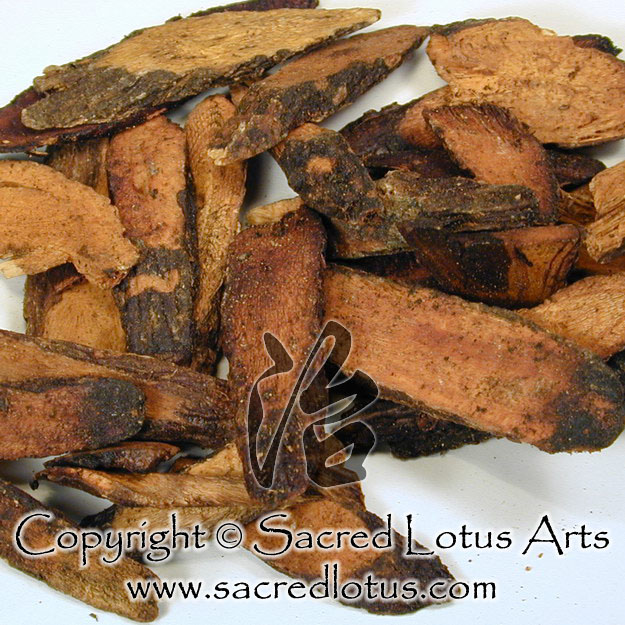
Materia Medica Data
- Category
- Herbs that Tonify Qi
- Temperature
- Warm
- Nature & Flavour
- Sweet, Warm
- Channels Entered
- All 12 Channels
- Latin (pharmaceutical)
- Radix Glycyrrhizae
- Chinese
- 炙甘草
- Tone Marks
- zhì gān căo
Chinese Herb Actions
What is Zhi Gan Cao (honey-fried licorice) used for in Chinese medicine?
Zhi Gan Cao is licorice root stir-fried with honey, which shifts it from neutral toward warm and directs it to tonify the Spleen, Stomach and Heart qi. It is the tonifying form of licorice — traditionally used for Spleen/Stomach qi deficiency with shortness of breath, fatigue and loose stools, and for Heart qi deficiency with palpitations and an irregular (knotted or intermittent) pulse. It also moderates cramping and harmonizes a formula.
Its main traditional actions:
- Tonifies the Spleen and Stomach and augments qi — qi deficiency with shortness of breath, lassitude and loose stools; a core member of Si Jun Zi Tang (the Four Gentlemen).
- Benefits Heart qi and regulates the pulse — palpitations with a knotted or intermittent pulse from Heart qi–blood–yin deficiency (the chief herb of Zhi Gan Cao Tang, Restore the Pulse Decoction).
- Moderates spasms and alleviates pain — cramping of the abdomen or legs, classically paired with Bai Shao.
- Harmonizes and moderates other herbs — balances a formula and softens harsh or drastic ingredients.
Source: owner’s Five Branches notes (Tonify Qi set), reviewed against Bensky, Materia Medica (3rd ed.). Traditional-use framing; not medical advice.
Chinese Herb Dosage
What is the typical dosage of Zhi Gan Cao?
2–9 g in decoction. Larger amounts are used within specific classical formulas (for example Zhi Gan Cao Tang), but prolonged or high-dose use should be avoided because of the licorice-related pseudoaldosteronism risk described under Cautions.
Source: owner’s Five Branches notes (roughly 1–4 qian); standard materia medica ranges. Reference only — not a prescription.
Chinese Herb Contraindications & Cautions
Are there cautions or contraindications for Zhi Gan Cao (licorice)?
Two cautions matter: the classical ones, and a well-documented dose-related licorice effect. Traditionally, its sweet, cloying nature makes it unsuitable for excess dampness, fullness/distention, nausea or vomiting. Under the classical Eighteen Incompatibilities it is not combined with Hai Zao (Sargassum), Yuan Hua, Gan Sui or Da Ji.
High-dose or long-term caution: licorice’s glycyrrhizin (metabolized to glycyrrhetinic acid) can cause pseudoaldosteronism — sodium and water retention, low potassium (hypokalemia), raised blood pressure and edema — via inhibition of the 11β-HSD2 enzyme. Avoid prolonged high-dose use; use with particular care in hypertension, edema, kidney disease or low potassium. The classical note that “too much Gan Cao swells the face” (water not draining) mirrors this.
Source: owner’s Five Branches notes (classical contraindications and incompatibilities; water-retention note); PMC 8484325 / PubMed 34604277 (narrative review of licorice-induced pseudoaldosteronism). Not medical advice.
Chinese Herb Toxicity & Overdose
Low for the herb itself, but glycyrrhizin carries a dose-dependent risk. Licorice is food-grade at ordinary doses, yet excessive or prolonged intake of its glycyrrhizin/glycyrrhetinic acid produces pseudoaldosteronism (hypokalemia, sodium/water retention, hypertension) by inhibiting 11β-hydroxysteroid dehydrogenase type 2, allowing cortisol to over-stimulate mineralocorticoid receptors.
Source: PMC 8484325 / PubMed 34604277 (licorice-induced pseudoaldosteronism, narrative review); PMC 6367500 (18β-glycyrrhetyl-3-O-sulfate as a causative metabolite). Research context, not a therapeutic claim.
Herb-Drug Interactions
Licorice has several documented, mechanism-based drug cautions, all stemming from its potassium-lowering, mineralocorticoid-like effect. Reasonable practitioner caution applies with:
- Potassium-depleting diuretics (thiazide and loop) — additive risk of hypokalemia.
- Cardiac glycosides (digoxin) — licorice-induced hypokalemia can potentiate digitalis toxicity.
- Corticosteroids — glycyrrhizin slows cortisol breakdown and can potentiate steroid effects.
- Antihypertensive therapy — the sodium/water retention may work against blood-pressure control.
Source: mechanism documented in PMC 8484325 / PubMed 34604277 (licorice-induced pseudoaldosteronism / hypokalemia). Flagged for practitioner confirmation; not medical advice.
Western / Biomedical Research
Chinese Herb Clinical Studies & Research
Provided as research context — a summary of published biomedical study, not a therapeutic or medical claim.
Is there modern research on licorice (Gan Cao / Glycyrrhiza)?
Yes — licorice is among the most-studied herbs, and its best-characterized clinical effect is the glycyrrhizin dose–pseudoaldosteronism relationship. Reviews establish that glycyrrhizin and its metabolite glycyrrhetinic acid inhibit the 11β-HSD2 enzyme, producing dose-dependent hypokalemia, sodium retention and hypertension; 18β-glycyrrhetyl-3-O-sulfate is identified as a major human causative metabolite. Broader anti-inflammatory, antiviral and hepatoprotective activities of licorice constituents remain largely preclinical, and honey-frying (Zhi Gan Cao) is traditionally held to soften these effects toward tonification.
Sources: PMC 8484325 / PubMed 34604277 (pseudoaldosteronism narrative review); PMC 6367500 (causative glycyrrhizin metabolite). Research context, not a therapeutic claim.
Chinese Herb Notes
How is Zhi Gan Cao different from raw Gan Cao, and what is it combined with?
Zhi Gan Cao and raw Gan Cao are the same root prepared two ways, and the preparation changes the emphasis. Honey-frying makes the herb warm and moves it toward tonifying the Spleen, Stomach and Heart qi and warming the middle; raw (unprocessed) Gan Cao is cooler and is chosen instead to clear heat and relieve fire toxicity (sores, carbuncles, sore throat) and to moisten the Lung for cough.
Note: this is a preparation-based difference, not a different plant — both are Radix Glycyrrhizae. Choose the honey-fried form for tonifying qi and the raw form for clearing heat/toxicity.
Common combinations:
- Si Jun Zi Tang — with Ren Shen, Bai Zhu and Fu Ling to tonify Spleen qi.
- Zhi Gan Cao Tang (Restore the Pulse) — as chief herb for palpitations with a knotted/intermittent pulse.
- Shao Yao Gan Cao Tang — with Bai Shao to relax spasms and relieve cramping pain of the abdomen or legs.
Source: owner’s Five Branches notes (raw vs honey-fried distinction; combinations including the Four Gentlemen and the Bai Shao pairing).
Sources & References
Compiled and edited by Thomas Dehli, Founder & Editor, Sacred Lotus Updated
The information here is referenced from numerous sources — teachers, practitioners, class notes from Five Branches University, the books below, and the published research literature, with citations given as resolvable PubMed identifiers. Where sources disagree, I have flagged the discrepancies directly. If facts couldn't be verified, I have left them out. How we source our content.
Reference information for students and practitioners — not medical advice. Consult a qualified practitioner. Terms of use.
Chinese Herbs Books & References
 https://amzn.to/3WfB3DK
 https://amzn.to/3DR1VUh
 https://amzn.to/42aMz73
 https://amzn.to/3PuD4bt