
Sheng Ma Ge Gen Tang
Cimicifuga and Kudzu Decoction
- Category
- Formulas that Release the Exterior
- Subcategory
- Formulas that Release Exterior Wind-Heat
- Ingredients
- 4 herbs
Actions
What does Sheng Ma Ge Gen Tang do?
Sheng Ma Ge Gen Tang releases the exterior, vents the muscle layer, and promotes the eruption of rashes out to the surface. It is built for the early, unsettled stage of a wind-heat exterior pattern with an eruptive rash — classically measles — that has not yet fully surfaced, pushing both the pathogen and the rash outward rather than letting them stall beneath the skin.
The four herbs divide by role:
- Chiefs: Sheng Ma and Ge Gen act together — Sheng Ma disperses wind-heat and raises and vents toxin outward, helping a stalled rash reach the surface; Ge Gen releases the muscle layer (the layer just beneath the exterior), relieves associated stiffness, and generates fluids, reinforcing the outward, rash-promoting action.
- Deputy: Shao Yao (Chi Shao in this formula) cools and harmonizes the blood as heat is vented, helping keep the eruption from turning toxic.
- Envoy: Zhi Gan Cao harmonizes the other herbs and protects the Stomach.
Source: Sacred Lotus sources & references + Bensky & Barolet, Formulas & Strategies (chief/deputy/envoy analysis for exterior-releasing, rash-venting formulas). Traditional-use framing; not medical advice.
Indications
What is Sheng Ma Ge Gen Tang used for?
Sheng Ma Ge Gen Tang treats early-stage measles, or a similar wind-heat exterior pattern, where the rash has not yet surfaced or is erupting incompletely. The strategy is to open the exterior and muscle layer so the rash — and the heat driving it — can vent outward rather than remaining trapped.
Its classic clinical presentation:
- Exterior wind-heat signs: fever with only slight aversion to wind/cold, headache.
- Incomplete rash: an eruption that is slow to appear, patchy, or blocked — the skin looks like it should be erupting but is not doing so fully.
- Associated signs: red, watery eyes (conjunctival injection), sneezing or cough, and thirst.
Tongue and pulse: Sacred Lotus does not carry values for this formula; classical formula references generally describe a red tongue and a floating, rapid pulse consistent with wind-heat at the exterior trying to vent a rash.
Source: Sacred Lotus sources & references on pattern + Bensky & Barolet, Formulas & Strategies. Traditional-use framing; not medical advice.
Western Uses:
What is Sheng Ma Ge Gen Tang used for in modern practice?
In modern practice, Sheng Ma Ge Gen Tang is referenced as a traditional formula for early, incompletely-erupted viral exanthems in children, historically centered on measles. Because routine childhood vaccination has made measles rare in much of the world, contemporary interest has shifted toward laboratory study of the formula's antiviral activity against measles virus and related respiratory viruses (see research) rather than routine clinical use for measles itself. Some practitioners still reference its wind-heat-releasing, rash-venting action for other early, eruptive wind-heat presentations.
These biomedical correlates are offered as reference to the formula’s traditional use, not as a claim that it treats any disease, including measles. Suspected measles is a reportable infectious disease and requires prompt medical evaluation, not self-treatment.
Source: traditional-use correlates summarized from Bensky & Barolet, Formulas & Strategies, cross-checked with the in-vitro antiviral studies cited in research. Reference only, not a treatment claim.
Ingredients
4 substances in Sheng Ma Ge Gen Tang — each links to its full herb monograph.
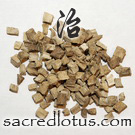 Ge Gen3-9 gCool, Spicy Herbs that Release the Exterior
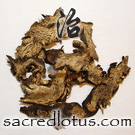 Sheng Ma3-6 gCool, Spicy Herbs that Release the Exterior
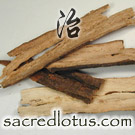 Chi Shao6-9 gCool the Blood
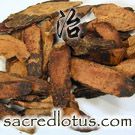 Zhi Gan Cao3 gTonify Qi
Preparation & dosage
How is Sheng Ma Ge Gen Tang prepared?
Prepared as a standard water decoction of the four herbs and taken warm, in keeping with the general practice for exterior-releasing formulas. No special processing beyond honey-frying the licorice (Zhi Gan Cao) is noted for this formula.
Source: Bensky & Barolet, Formulas & Strategies (standard decoction method for exterior-releasing formulas). Reference only.
Decoction. Reference relative amounts: Ge Gen 3–9 g; Chi Shao 6–9 g; Sheng Ma 3–6 g; Zhi Gan Cao 3 g. Reference only; historically dosed lightly for children in the early stage of an eruptive rash.
Safety — read before use
What are the cautions for Sheng Ma Ge Gen Tang?
Sheng Ma Ge Gen Tang is written for the brief window before a rash has fully erupted; once the rash is fully out, or there is already clear interior heat toxin, this formula should be stopped in favor of a heat-clearing strategy. Continuing an outward-venting, dispersing formula after the rash has surfaced risks wasting fluids and aggravating heat rather than helping.
- Discontinue once the rash has fully vented. At that stage, switch to formulas that clear heat and resolve toxin rather than ones that push the exterior open.
- Not appropriate where clear interior heat toxin is already present — for example measles with high fever and a dark or purplish rash, or signs the pathogen has moved to the qi or blood level. These call for stronger heat-clearing, toxin-resolving formulas instead.
- Ascending, dispersing action: Sheng Ma and Ge Gen lift and disperse; use cautiously, or avoid, in qi or yin deficiency, spontaneous sweating, or once a rash has already faded.
- Pregnancy: traditional sources caution against use without professional guidance, given the formula’s dispersing, upward-venting action.
Source: Bensky & Barolet, Formulas & Strategies (cautions for rash-venting, exterior-releasing formulas), cross-checked against multiple TCM formula references. Traditional-use framing; not medical advice.
Originally Appeared In:
- Craft of Medicinal Treatment for Childhood Disease Patterns (Xiao Er Yao Zheng Zhi Jue)
Notes:
How does Sheng Ma Ge Gen Tang compare to Xuan Du Fa Biao Tang and Ge Gen Tang?
Sheng Ma Ge Gen Tang is the simpler, foundational rash-venting formula; Xuan Du Fa Biao Tang builds on its Sheng Ma + Ge Gen core with additional wind-dispersing and toxin-venting herbs for a rash that is not emerging well despite treatment. The two are frequently confused for a third, unrelated formula because of the shared name element.
- vs Xuan Du Fa Biao Tang: reach for the fuller formula when Sheng Ma Ge Gen Tang alone is not moving a stubborn or delayed eruption; it keeps the same outward-venting strategy with reinforcing herbs.
- vs Ge Gen Tang (Kudzu Decoction): a different formula despite sharing Ge Gen — it is built around Ma Huang, Gui Zhi, and Bai Shao for wind-cold with a stiff, aching neck and back, not for venting an eruptive rash.
Source: Bensky & Barolet, Formulas & Strategies (formula-family comparisons); exact modified-formula herb lists vary across secondary references, so only the general comparison is stated here.
Clinical Studies & Research:
Is there modern research on Sheng Ma Ge Gen Tang?
Yes — laboratory (in-vitro) studies have found antiviral activity against measles virus and other pediatric respiratory viruses, consistent with the formula's traditional use for eruptive viral illness in children. This is preclinical, cell-culture evidence, not clinical-trial evidence in humans.
- Measles virus: Sheng Ma Ge Gen Tang suppressed measles virus release in Vero cells and human peripheral blood mononuclear cells, an effect associated with stimulation of the cytokine TNF-alpha (PMID 9167001).
- Enterovirus 71: inhibited EV71 infection in a human foreskin fibroblast cell line, active whether given before, together with, or after viral exposure (PMID 18601992).
- Respiratory syncytial virus (RSV): a crude extract inhibited the cytopathic effect of human RSV in cell lines of the human respiratory tract (PMID 21463671).
Sources: PubMed 9167001; PubMed 18601992; PubMed 21463671. Preclinical research context, not a therapeutic claim; no clinical trial evidence in humans was found.
Sources & References
Compiled and edited by Thomas Dehli, Founder & Editor, Sacred Lotus Updated
The information here is referenced from numerous sources — teachers, practitioners, class notes from Five Branches University, the books below, and the published research literature, with citations given as resolvable PubMed identifiers. Where sources disagree, I have flagged the discrepancies directly. If facts couldn't be verified, I have left them out. How we source our content.
Reference information for students and practitioners — not medical advice. Consult a qualified practitioner. Terms of use.
Chinese Formulas Books & References
 https://amzn.to/4fYI3f8
 https://amzn.to/4j55NRA
 https://amzn.to/4gMROyv
 https://amzn.to/4h7msSK