
Sang Ju Yin
Mulberry Leaf and Chrysanthemum Decoction
- Category
- Formulas that Release the Exterior
- Subcategory
- Formulas that Release Exterior Wind-Heat
- Ingredients
- 8 herbs
Actions
What does Sang Ju Yin do?
Sang Ju Yin gently releases the exterior and disperses Wind-Heat while it specifically directs Lung Qi to stop cough, making it the mildest of the acrid-cool (xin liang) exterior-releasing formulas. It is built around Sang Ye (Mori Folium) and Ju Hua (Chrysanthemi Flos), a pair traditionally described as venting Wind-Heat from the exterior while entering the Lung to clear heat and calm cough.
- Releases the exterior and disperses Wind-Heat — Sang Ye, Ju Hua, and Bo He (Menthae Haplocalycis Herba) vent pathogenic heat from the surface with a light, cool touch rather than strong sweating.
- Directs and regulates Lung Qi to stop cough — Xing Ren (Armeniacae Semen) descends rebellious Lung Qi while Jie Geng (Platycodonis Radix) lifts and opens the Lung, a classic "one up, one down" pairing traditionally said to restore normal Lung Qi dynamics.
- Clears heat and generates fluids — Lu Gen (Phragmitis Rhizoma) clears residual heat and relieves the mild thirst of early Wind-Heat.
- Resolves toxicity — Lian Qiao (Forsythiae Fructus) adds a light heat-clearing, toxin-resolving action along the throat and chest.
- Harmonizes — Gan Cao (Glycyrrhizae Radix) moderates the other herbs and, paired with Jie Geng, is traditionally said to soothe the throat.
Source: Bensky & Barolet, Formulas & Strategies; Wu Ju-tong, Wen Bing Tiao Bian (1798).
Indications
What is Sang Ju Yin used for?
Sang Ju Yin is the classic formula for early-stage Wind-Heat invading the Lung where cough is the leading complaint, with only mild surface heat signs. It is traditionally distinguished from stronger Wind-Heat formulas by how mild the accompanying fever and sore throat are relative to the cough.
- Cough, often dry or with scant phlegm, as the predominant symptom
- Slight fever with only mild aversion to wind
- Mild thirst
- Slight sore or itchy throat
- Possible mild redness or discomfort of the eyes
- Thin white tongue coating; floating, rapid pulse
Source: Bensky & Barolet, Formulas & Strategies; Chen & Chen, Chinese Medical Herbology and Pharmacology.
Western Uses:
What conditions is Sang Ju Yin used for in modern practice?
Sang Ju Yin is a light formula for an early-stage wind-heat exterior with cough (mild fever, slight thirst, dry cough), so it is referenced for the onset of upper-respiratory and heat presentations: the common cold, influenza, acute early-stage bronchitis, acute tonsillitis, and epidemic (contagious) conjunctivitis.
It is chosen for the early wind-heat pattern, not for a diagnosis. A sore throat with difficulty swallowing or breathing, or a cough that persists beyond three weeks or brings up blood, needs medical assessment; contagious conjunctivitis warrants hygiene care and review if severe. Traditional-use correlates only, not a treatment claim.
Source: Sacred Lotus sources & references (pattern) + Bensky & Barolet, Formulas & Strategies; biomedical correlates as reference only. Not medical advice.
Ingredients
8 substances in Sang Ju Yin — each links to its full herb monograph.
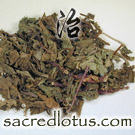 Bo He2.4 gCool, Spicy Herbs that Release the Exterior
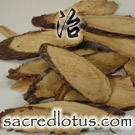 Gan Cao2.4 gTonify Qi
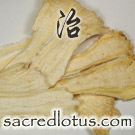 Jie Geng6 gWarm Herbs that Transform Phlegm-Cold
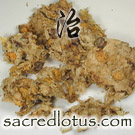 Ju Hua3 gCool, Spicy Herbs that Release the Exterior
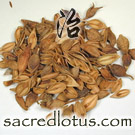 Lian Qiao4.5 gClear Heat and Eliminate Toxins
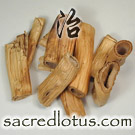 Lu Gen6 gDrain Fire
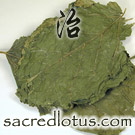 Sang Ye7.5 gCool, Spicy Herbs that Release the Exterior
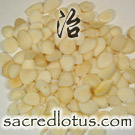 Xing Ren6 gRelieve Coughing and Wheezing
Preparation & dosage
How is Sang Ju Yin prepared?
Sang Ju Yin is traditionally taken as a light water decoction (tang), and classical instruction is explicit that it should be boiled briefly rather than simmered long, since its acrid-cool, aromatic herbs — especially Bo He and Ju Hua — are volatile and their exterior-releasing, heat-venting effect is said to weaken with prolonged cooking.
- Herbs are combined in a single decoction; Bo He (and, where used, other aromatic components) is added toward the end of cooking to preserve its volatile oils, following the general classical caution against over-boiling light, acrid-cool formulas.
- The decoction is taken warm, in divided doses, at the earliest sign of Wind-Heat with cough.
- Granule or pre-modern powder (san) preparations following the same herb set are also used in modern practice, adjusted for the light, surface-releasing intent of the formula.
Source: Wu Ju-tong, Wen Bing Tiao Bian; Bensky & Barolet, Formulas & Strategies.
Safety — read before use
What are the cautions for Sang Ju Yin?
Sang Ju Yin is contraindicated for cough due to Wind-Cold rather than Wind-Heat, and is not appropriate once a Wind-Heat pattern has progressed past its mild, early stage into more pronounced heat-toxin signs (high fever, marked sore throat, thick yellow phlegm) — patterns better matched to stronger formulas such as Yin Qiao San.
- Not indicated for Wind-Cold patterns (cough with clear phlegm, chills predominating over fever, absence of thirst); using an acrid-cool formula here can aggravate the Cold pathogen.
- Not intended as the primary formula for severe exterior Wind-Heat with prominent high fever or sore throat — this is the classical division of labor with Yin Qiao San.
- None of the eight herbs in this formula (Sang Ye, Ju Hua, Lian Qiao, Bo He, Jie Geng, Xing Ren, Lu Gen, Gan Cao) are on standard toxic or restricted-substance lists; this is provided as general public-safety reference, not administration guidance.
- As with any herbal formula, use should be guided by a qualified TCM practitioner familiar with the individual's full pattern presentation.
Source: Bensky & Barolet, Formulas & Strategies; Chen & Chen, Chinese Medical Herbology and Pharmacology.
Originally Appeared In:
- Systematic Differentiation of Warm Diseases (Wen Bing Tiao Bian)
Notes:
How does Sang Ju Yin differ from Yin Qiao San?
Sang Ju Yin and Yin Qiao San are the two classic acrid-cool Wind-Heat formulas from Wu Ju-tong's Wen Bing Tiao Bian, but they treat different points on the same spectrum: Sang Ju Yin is the lighter, cough-focused formula for the mildest presentation, while Yin Qiao San is the stronger formula for more pronounced surface heat with prominent fever and sore throat.
- Lead symptom: Sang Ju Yin — cough is the dominant complaint, with only slight fever and sore throat. Yin Qiao San — fever and sore throat are prominent, often with more marked heat-toxin signs, and cough is a secondary feature.
- Strength: Wu Ju-tong himself describes Sang Ju Yin as the "light and clear" (qing qing) formula, reserved for the very outset of Wind-Heat; Yin Qiao San is dosed and composed to clear a more assertive heat toxin.
- Composition: Yin Qiao San adds stronger heat-toxin-clearing and diaphoretic herbs (e.g., Jin Yin Hua, Jing Jie, Dan Dou Chi, Niu Bang Zi) not present in Sang Ju Yin, and does not include Sang Ju Yin's cough-directed Xing Ren/Jie Geng emphasis to the same degree.
- Clinical use: In practice, a Wind-Heat cold that stays mild and cough-predominant is treated with Sang Ju Yin; one that spikes into a more feverish, sore-throat-dominant presentation is treated with Yin Qiao San, and the two are sometimes combined or one substituted for the other as the pattern shifts.
Sang Ju Yin has also been studied together with Yu Ping Feng San as a combined preventive regimen, and its herb set has been examined for interactions with the antiviral drug oseltamivir — see Research.
Source: Wu Ju-tong, Wen Bing Tiao Bian; Bensky & Barolet, Formulas & Strategies.
Clinical Studies & Research:
Is there modern research on Sang Ju Yin?
Modern research on Sang Ju Yin itself is limited but includes a controlled human study of immune-marker effects and pharmacokinetic studies of its interaction with the antiviral drug oseltamivir; its two chief herbs, Sang Ye and Ju Hua, have separate modern research bases in anti-inflammatory and antiviral contexts.
- A controlled self-study in 37 healthy adults given a regimen combining Sang Ju Yin and Yu Ping Feng San for 14 days found a transient rise in the CD4/CD8 T-cell ratio versus controls, which the authors framed as a possible immunomodulatory effect relevant to preventing viral respiratory infections (PMID 16437735).
- Pharmacokinetic studies have examined whether Sang Ju Yin's herb combination alters the metabolism or effect of oseltamivir (Tamiflu) when the two are used together, relevant to patients combining TCM and antiviral drug therapy (PMID 24527044; PMID 31325600).
- Separately from the formula as a whole, a 2025 mechanistic study found that mulberry leaf (Morus alba, Sang Ye) ethanol extract reduced lung inflammation and inhibited a Dectin-1/Syk signaling pathway in a mouse model of H1N1 influenza pneumonia, offering a plausible modern rationale for Sang Ye's traditional role in Wind-Heat cough with Lung involvement (PMID 40054181).
Sources: PMID 16437735; PMID 24527044; PMID 31325600; PMID 40054181.
Sources & References
Compiled and edited by Thomas Dehli, Founder & Editor, Sacred Lotus Updated
The information here is referenced from numerous sources — teachers, practitioners, class notes from Five Branches University, the books below, and the published research literature, with citations given as resolvable PubMed identifiers. Where sources disagree, I have flagged the discrepancies directly. If facts couldn't be verified, I have left them out. How we source our content.
Reference information for students and practitioners — not medical advice. Consult a qualified practitioner. Terms of use.
Chinese Formulas Books & References
 https://amzn.to/4fYI3f8
 https://amzn.to/4j55NRA
 https://amzn.to/4gMROyv
 https://amzn.to/4h7msSK