
Radix Glycyrrhizae Licorice Root
Also known as Guo Lao
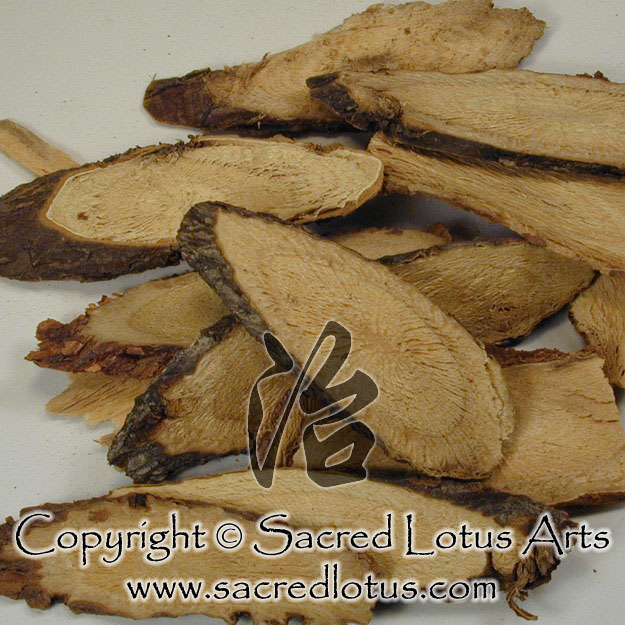
Materia Medica Data
- Category
- Herbs that Tonify Qi
- Temperature
- Neutral
- Nature & Flavour
- Sweet, Neutral
- Channels Entered
- All 12 (Primarily the LU, HT, SP, ST)
- Latin (pharmaceutical)
- Radix Glycyrrhizae
- Chinese
- 甘草
- Tone Marks
- gān căo
- Also Known As
- Guo Lao
- Translation
- Sweet Herb, Sweet Grass
Chinese Herb Actions
What is Gan Cao (Licorice Root) used for in Chinese medicine?
Gan Cao (Glycyrrhiza uralensis, Radix Glycyrrhizae) is a sweet, neutral herb that tonifies Spleen Qi, stops cough, relieves cramping/pain, clears heat toxin, and — most distinctively — harmonizes and moderates the other herbs in a formula. It is said to enter all twelve channels but is used primarily via the Lung, Heart, Spleen, and Stomach, and it appears in more classical formulas than almost any other single herb because of its moderating role.
Its main traditional actions:
- Tonifies the Spleen and strengthens Qi — improves the Spleen's transformation/transportation function for fatigue, shortness of breath, poor appetite, and loose stools.
- Moistens the Lung, dispels phlegm, and stops cough — for cough and wheezing arising from excess, deficiency, heat, or cold patterns; also used alone for Lung Wei (atrophy) syndrome with chronic cough.
- Releases cramping and alleviates pain — for cramping/pain of smooth muscle, especially in the abdomen. For skeletal-muscle cramps or spasms it is classically combined with Bai Shao (Paeoniae Radix Alba) as Shao Yao Gan Cao Tang — a pairing with modern clinical-trial support (see Research).
- Clears heat and reduces fire toxin — the fresh herb, taken internally or applied topically, for uncomplicated carbuncles, sores, and lesions marked by heat and toxicity; decocted and applied topically for erysipelas or eczema with itching.
- Antidotes poisoning — traditionally used to mitigate food, herb, drug, and chemical poisonings: alone for beef poisoning, with honey for drug poisoning, with Xing Ren (Semen Armeniacae Amarum) for lead poisoning, and with Hua Shi (Talcum) for herbicide/pesticide poisoning; used topically or internally.
- Harmonizes formulas and moderates other herbs — reduces the harshness/toxicity of other ingredients, protects the Middle Jiao, and evens out a formula's overall temperature and effect. Specific classical pairings: mitigates the toxicity of Fu Zi (Radix Aconiti Lateralis Praeparata); moderates the heat of Gan Jiang (Rhizoma Zingiberis) while protecting Yin; protects the Stomach from the cold nature of Shi Gao (Gypsum Fibrosum) and Zhi Mu (Radix Anemarrhenae); and reduces the intensity of Da Huang (Radix et Rhizoma Rhei) and Mang Xiao's (Natrii Sulfas) purgative effect.
Source: Sacred Lotus materia medica notes, cross-checked against Bensky, Chinese Herbal Medicine: Materia Medica (3rd ed.) and Chen & Chen, Chinese Herbal Medicine: Materia Medica; muscle-cramp combination corroborated by clinical trials (see Research). Traditional-use framing; not medical advice.
Chinese Herb Dosage
What is the typical dosage of Gan Cao (Licorice Root)?
Commonly 3–9 g in decoction (some sources give 1.5–9 g), with higher amounts of roughly 15–30 g reserved for detoxification/poison-antidote use. These ranges are consistent across materia medica sources; the exact figure used depends on whether the raw or honey-fried (Zhi Gan Cao) form is chosen and the indication being treated (see Notes for the raw-vs-honey-fried distinction).
Source: Sacred Lotus materia medica notes; cross-checked against standard materia medica dosage ranges (Bensky, 3rd ed.; Chen & Chen). Reference only — not a prescription.
Chinese Herb Combinations:
- Bai Shao (Radix Albus Paeoniae Lactiflorae)
- Gan Cao (Radix Glycyrrhizae)
Chinese Herb Contraindications & Cautions
Are there cautions for Gan Cao (Licorice Root)?
Gan Cao is generally mild but is not appropriate for every pattern, nor for unsupervised long-term or high-dose use. The materia medica contraindicates it in vomiting, nausea, or chest/abdominal distention and fullness due to Dampness, and in patients with high blood pressure or edema, since its main constituent (glycyrrhizin) can itself raise blood pressure and cause fluid retention (see Toxicity).
- Eighteen Incompatibilities (Shi Ba Fan) — classical Chinese pharmacology holds Gan Cao to be incompatible with Gan Sui (Radix Kansui), Da Ji (Radix Euphorbiae seu Knoxiae), Yuan Hua (Flos Genkwa), and Hai Zao (Sargassum), and directs that it not be combined with any of these four herbs in the same formula.
- Long-term/high-dose use — sustained or large-dose use is associated with pseudoaldosteronism-type effects (sodium retention, potassium loss, hypertension); risk is dose- and duration-related but varies between individuals (see Toxicity).
Source: Sacred Lotus materia medica notes; classical Eighteen Incompatibilities doctrine (Bensky, Materia Medica, 3rd ed.); pseudoaldosteronism risk corroborated by PMID 42292819, PMC 13253302, DOI 10.3389/fphar.2026.1840515. Traditional-use framing; not medical advice.
Chinese Herb Toxicity & Overdose
Low acute toxicity, but a real risk with sustained high-dose or unsupervised use. Overdose or prolonged excessive intake of Gan Cao/glycyrrhizin classically causes higher blood pressure, edema, weakness or numbness of the extremities, dizziness, and headache, arising from sodium retention and potassium loss (pseudoaldosteronism/pseudohyperaldosteronism). Modern research identifies the underlying mechanism as inhibition of the enzyme 11β-hydroxysteroid dehydrogenase type 2, which normally shields mineralocorticoid receptors from cortisol.
- Documented case — a 2023 case report described a 49-year-old who developed hypertension, hypokalemia (potassium 3.1 mmol/L), facial/leg edema, and fatigue after roughly three weeks of daily licorice-root tea.
- Mitigating combination — classically, Gan Cao can be combined with Ze Xie (Rhizoma Alismatis) and Fu Ling (Poria) to help offset the water and sodium retention.
Source: Sacred Lotus materia medica notes; PMID 42292819, PMC 13253302, DOI 10.3389/fphar.2026.1840515 (2026 narrative review of mechanism and risk factors); PMID 36874748, PMC 9981224, DOI 10.7759/cureus.34425 (case report). Reference note, not a safety guarantee.
Herb-Drug Interactions
Two interactions are commonly flagged: potentiation of corticosteroids, and increased cardiac-glycoside (e.g., digoxin) risk via potassium loss. Glycyrrhizin's inhibition of 11β-hydroxysteroid dehydrogenase type 2 slows cortisol breakdown, which can prolong or intensify the effect of systemic corticosteroids. Separately, the potassium loss associated with Gan Cao/glycyrrhizin can lower serum potassium enough to increase the risk of toxicity from cardiac glycosides such as digoxin, since hypokalemia sensitizes the heart to these drugs. (Mechanism-based cautions; practitioner awareness advised for patients on corticosteroids or digoxin/cardiac glycosides.)
Source: Sacred Lotus materia medica notes; mechanism corroborated by PMID 42292819, PMC 13253302, DOI 10.3389/fphar.2026.1840515 (11β-HSD2 inhibition/pseudohyperaldosteronism review). No licorice-specific digoxin case report was found in a PubMed search; the digoxin caution rests on the general pharmacology of hypokalemia potentiating cardiac-glycoside toxicity, combined with licorice's documented capacity to cause hypokalemia.
Western / Biomedical Research
Chinese Herb Clinical Studies & Research
Provided as research context — a summary of published biomedical study, not a therapeutic or medical claim.
Is there modern research on Gan Cao (Glycyrrhiza uralensis)?
Yes — clinical trials support its classical cramp-relieving pairing with Bai Shao, and laboratory research documents antiviral, hepatoprotective, and anti-inflammatory activity of its main compound, glycyrrhizin. Most disease-treatment evidence remains preclinical/in vitro; the strongest clinical evidence is for muscle cramps.
- Muscle cramps (clinical, best-supported) — a randomized crossover trial in 60 maintenance-hemodialysis patients with recurrent cramps found Shaoyao-Gancao decoction (Bai Shao + Gan Cao) significantly reduced cramp frequency versus control (p < 0.001), with improved pain scores and good tolerability. An earlier trial in lumbar-spinal-stenosis patients reported cramps reduced by more than half in 13 of 16 responders, at a minimum effective dose around 2.5 g.
- Antiviral (in vitro) — a 2026 laboratory study found glycyrrhizin produced dose-dependent neutralization of multiple SARS-CoV-2 variants (D614G, Omicron BA.5, Omicron XBB.1) at non-toxic concentrations; a broader review of glycyrrhizic acid's antiviral activity reports laboratory evidence of activity against hepatitis B and HIV via several proposed mechanisms. All antiviral findings to date are preclinical/in vitro, not evidence of clinical antiviral efficacy.
- Pseudoaldosteronism mechanism — a 2026 narrative review consolidates evidence that licorice-induced pseudohyperaldosteronism arises from glycyrrhetinic-acid-family metabolites inhibiting 11β-hydroxysteroid dehydrogenase type 2, with individual risk shaped by gut-microbiota metabolism, albumin level, age, and formulation — not dose alone (see Toxicity/Cautions).
Overall: strong classical-formula clinical support for the muscle-cramp indication; antiviral/hepatoprotective findings are promising but preclinical; the safety literature on high-dose/long-term use is the most clinically actionable research to date.
Sources: PMID 40204247, DOI 10.1016/j.jep.2025.119758 (J Ethnopharmacology, 2025, RCT); PMID 27363396 (Kobe J Med Sci, 2015, clinical trial); PMID 41572261, PMC 12911001, DOI 10.1186/s12906-026-05253-1 (BMC Complementary Medicine and Therapies, 2026, in vitro); PMID 30659537, DOI 10.2174/1389557519666190119111125 (Mini Reviews in Medicinal Chemistry, 2019, review); PMID 42292819, PMC 13253302, DOI 10.3389/fphar.2026.1840515 (Frontiers in Pharmacology, 2026, review). Research context, not a therapeutic claim.
Chinese Herb Notes
How does Gan Cao differ from Zhi Gan Cao (honey-fried licorice), and what are its key combinations?
Raw Gan Cao and honey-fried Zhi Gan Cao are the same root prepared two ways for different emphases — raw Gan Cao leans toward clearing heat/fire toxin, detoxifying, and moistening the Lung for cough, while honey-frying warms the herb and shifts its emphasis toward tonifying Spleen/Stomach Qi, as used in formulas such as Zhi Gan Cao Tang and Si Jun Zi Tang.
- Bai Shao (Paeoniae Radix Alba) — Gan Cao's best-known pairing, as Shao Yao Gan Cao Tang (Shakuyaku-kanzo-to/Jakyak-gamcho-tang), for smooth- and skeletal-muscle cramping. A randomized crossover trial in maintenance-hemodialysis patients with recurrent cramps found a significant reduction in cramp frequency and pain scores, and an earlier trial in lumbar-spinal-stenosis patients reported cramps reduced by more than half in most responders, at a minimum effective dose of about 2.5 g.
- Formula appearances — Gan Cao is one of the most broadly used herbs in the pharmacopeia, most often functioning as the harmonizing/“envoy” herb. It appears in dozens of classical formulas, including Si Jun Zi Tang (base Spleen-Qi tonic formula), Zhi Gan Cao Tang, Gan Mai Da Zao Tang, Si Ni Tang, Ge Gen Tang, and the Gui Zhi Tang family, among 60+ formulas linked to it in the Sacred Lotus database. (Traditional formula context, not treatment advice.)
Source: Sacred Lotus materia medica notes; Bensky/Chen & Chen processing distinction (raw vs. honey-fried); PMID 27363396 (Kobe J Med Sci, 2015); PMID 40204247, DOI 10.1016/j.jep.2025.119758 (J Ethnopharmacology, 2025); Sacred Lotus formula database.
This herb is incompatible with:
- Da Ji (Herba Cirsii Japonici)
- Jing Da Ji (Radix Euphorbiae Pekinensis)
- Gan Sui (Radix Euphorbiae Kansui)
- Hai Zao (Herba Sargassii)
- Yuan Hua (Flos Daphnis Genkwae)
Sources & References
Compiled and edited by Thomas Dehli, Founder & Editor, Sacred Lotus Updated
The information here is referenced from numerous sources — teachers, practitioners, class notes from Five Branches University, the books below, and the published research literature, with citations given as resolvable PubMed identifiers. Where sources disagree, I have flagged the discrepancies directly. If facts couldn't be verified, I have left them out. How we source our content.
Reference information for students and practitioners — not medical advice. Consult a qualified practitioner. Terms of use.
Chinese Herbs Books & References
 https://amzn.to/3WfB3DK
 https://amzn.to/3DR1VUh
 https://amzn.to/42aMz73
 https://amzn.to/3PuD4bt