
Actions
What does Zai Zao San do?
Zai Zao San (“Renewal Powder”) releases a wind-cold invasion of the exterior while simultaneously warming yang and tonifying qi, so the body has the strength to sweat out the pathogen instead of being driven deeper by it or further depleted trying. It answers the classic dilemma of a weak, yang-deficient patient who has taken a cold: a strong diaphoretic like Ma Huang Tang can force a sweat but risks collapsing an already-depleted constitution, so this formula pairs mild exterior-releasing herbs with qi and yang tonics.
The twelve ingredients divide by role:
- Chief: Huang Qi and Ren Shen tonify the source qi and stabilize the defensive (wei) qi, giving the body the reserves to mount and sustain a sweat.
- Deputies: Fu Zi warms and rescues yang — the underlying deficiency that left the exterior unable to resist the cold invasion; Gui Zhi supports it by warming the channels and harmonizing nutritive-defensive (ying-wei) qi.
- Assistants: Qiang Huo, Fang Feng, Xi Xin, and Chuan Xiong disperse wind-cold and relieve the headache and body aches of the exterior pattern; Chi Shao cools and moves blood, moderating the warming, drying tendency of Fu Zi, Gui Zhi, and Xi Xin so the sweat stays gentle rather than forceful.
- Envoys: Gan Cao, Sheng Jiang, and Da Zao harmonize the formula and support the Spleen/Stomach, further steadying ying-wei during the release.
Source: Sacred Lotus sources & references + Bensky & Barolet, Formulas & Strategies (chief/deputy/assistant/envoy analysis for exterior-release-with-deficiency formulas). Traditional-use framing; not medical advice.
Indications
What is Zai Zao San used for?
Zai Zao San treats a wind-cold invasion of the exterior in a patient whose underlying yang and qi are already deficient — the classic case where the body registers a cold attack (chills, fever, headache, body aches) but lacks the reserves to raise an effective sweat, or sweats without the pattern resolving.
Its classic clinical presentation:
- Exterior wind-cold signs: pronounced chills often greater than the fever, headache, and stiffness or aching of the neck, back, and limbs, typically without spontaneous sweating.
- Underlying yang/qi deficiency: cold limbs, marked fatigue, a weak or soft voice, and a pale, sometimes puffy complexion.
Tongue and pulse: the tongue is pale (sometimes swollen) with a thin white coat; the pulse is deep and forceless, or floating but big and forceless — reflecting yang too weak to sustain a strong response at the surface.
Source: cross-checked against Bensky & Barolet, Formulas & Strategies, and published TCM formula references (pattern, tongue, pulse). Traditional-use framing; not medical advice.
Western Uses:
What is Zai Zao San used for in modern practice?
In modern practice, Zai Zao San is referenced for cold/flu-type illness in elderly, chronically fatigued, or otherwise constitutionally weak patients — people whose presentation (marked chills, low-grade fever, exhaustion, cold extremities) suggests a depleted response to a common upper-respiratory infection rather than a robust immune reaction. It reflects a broader TCM strategy of supporting the body’s own defenses rather than forcing a sweat with strongly dispersing herbs alone.
These biomedical correlates are offered as a reference to the formula’s traditional use, not as a claim that it treats any diagnosed disease. It has not been the subject of dedicated modern clinical trials (see research), and — because it contains prepared aconite (Fu Zi) — should only be used under a qualified TCM practitioner’s supervision.
Source: traditional-use correlates summarized from Bensky & Barolet, Formulas & Strategies, and published TCM formula references; reference only, not a treatment claim.
Ingredients
12 substances in Zai Zao San — each links to its full herb monograph.
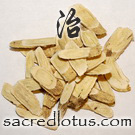 Huang Qi6 gTonify Qi
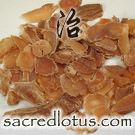 Ren Shen3 gTonify Qi
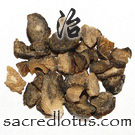 Fu Zi3 gWarm the Interior and Expel Cold
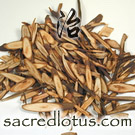 Gui Zhi3 gWarm, Spicy Herbs that Release the Exterior
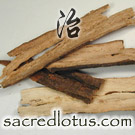 Chi Shao3 gCool the Blood
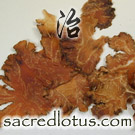 Chuan Xiong3 gInvigorate Blood and Remove Stagnation
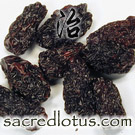 Da Zao2 piecesTonify Qi
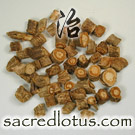 Fang Feng3 gWarm, Spicy Herbs that Release the Exterior
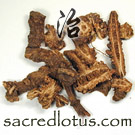 Qiang Huo3 gWarm, Spicy Herbs that Release the Exterior
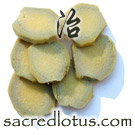 Sheng Jiang3 gRoastedWarm, Spicy Herbs that Release the Exterior
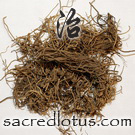 Xi Xin3 gWarm, Spicy Herbs that Release the Exterior
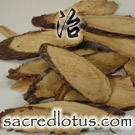 Gan Cao1.5 gTonify Qi
Preparation & dosage
How is Zai Zao San prepared?
Traditionally taken as a decoction (the classical “San/powder” name reflects an older coarse-powder preparation; modern practice generally decocts the pieces). Fu Zi is decocted first and longer than the other herbs to hydrolyze its toxic alkaloids before the rest are added; Sheng Jiang is used roasted rather than fresh, and the finished decoction is taken warm.
Source: Bensky & Barolet, Formulas & Strategies; general TCM preparation convention for aconite-containing decoctions (extended, separate decoction of Fu Zi). Reference only, not a self-preparation instruction.
Decoction. Reference relative amounts: Huang Qi 6 g; Ren Shen, Fu Zi (prepared), Gui Zhi, Xi Xin, Qiang Huo, Chuan Xiong, Fang Feng, Chi Shao 3 g each; Sheng Jiang (roasted) 3 g; Gan Cao 1.5 g; Da Zao 2 pieces. Fu Zi requires extended, separate decoction to reduce toxicity. Reference only; dosing (especially of Fu Zi) must be supervised by a qualified practitioner.
Safety — read before use
What are the cautions for Zai Zao San?
Zai Zao San contains prepared aconite (Fu Zi), a restricted, toxic herb, so it should only be prescribed and dosed by a qualified TCM practitioner using properly processed material. Fu Zi’s toxicity comes from diester diterpenoid alkaloids (aconitine, mesaconitine, hypaconitine); processing (brine-soaking then boiling or steaming) and prolonged decoction hydrolyze these into far less toxic forms, but overdose or improper preparation can cause numbness or tingling of the mouth and limbs, nausea and other GI upset, and cardiac arrhythmia.
- Not for excess heat, wind-heat, or yin-deficient heat patterns — the formula’s warming, yang-supporting herbs would aggravate heat signs.
- Not for robust, excess-type exterior cold (the strong, floating-tight pulse pattern suited to Ma Huang Tang) — Zai Zao San is reserved for cases with genuine underlying yang/qi deficiency.
- Pregnancy: contains Fu Zi and the blood-moving herb Chuan Xiong — contraindicated without direct professional supervision.
- Toxic-herb flag: Fu Zi carries our materia medica’s toxic-herb flag; sourcing, processing, and dosing all affect safety.
Source: Bensky & Barolet, Formulas & Strategies (cautions for exterior-release-with-deficiency formulas); Sacred Lotus toxic-herb flag; PubMed 22053844; PubMed 35240238 (Aconitum carmichaelii alkaloid toxicity/processing chemistry). Public-safety reference; not medical advice.
Originally Appeared In:
- Six Texts of Cold Induced Disorders (Shang Han Liu Shu)
Notes:
How is Zai Zao San different from Ma Huang Tang and Ren Shen Bai Du San?
Zai Zao San was designed for exactly the case where Ma Huang Tang would be dangerous: a wind-cold exterior invasion in a patient whose yang and qi are already deficient. Ma Huang Tang’s strong, unsupported diaphoresis can further deplete such a patient; Zai Zao San instead pairs Huang Qi, Ren Shen, and Fu Zi with mild exterior-releasing herbs so the sweat stays gentle while the underlying deficiency is treated at the same time.
- vs Ma Huang Tang: choose Zai Zao San, not Ma Huang Tang, when chills, fatigue, cold limbs, and a weak or deep pulse show the patient cannot tolerate strong, unsupported sweating.
- vs Ren Shen Bai Du San: both release the exterior while supporting qi, but Ren Shen Bai Du San addresses milder qi deficiency, while Zai Zao San adds Fu Zi and Gui Zhi for more pronounced underlying yang deficiency and cold.
Source text: formula references trace Zai Zao San to the Ming-dynasty formula compilation Shang Han Liu Shu (Six Texts on Cold-Induced Disorders), circa 1445 CE.
Source: Bensky & Barolet, Formulas & Strategies (category comparison, exterior-release-with-deficiency formulas); cross-checked published TCM formula references for the source-text attribution.
Clinical Studies & Research:
Is there modern research on Zai Zao San?
No dedicated clinical trials or pharmacological studies of Zai Zao San as a whole formula turned up in a PubMed/PMC search (July 2026) — it is a comparatively obscure classical formula next to more widely studied combinations. What research exists concerns individual ingredients rather than the formula itself, most notably the toxicology and detoxification chemistry of Fu Zi (prepared aconite).
- Fu Zi (aconite) toxicology/processing (ingredient-level, not formula-specific): comparative metabolomic study of raw aconite root versus its processed products (PMID 22053844); systematic review of Aconitum carmichaelii chemistry and pharmacology (PMID 35240238).
Sources: PubMed search conducted July 2026 (no formula-specific results returned); PubMed 22053844; PubMed 35240238 (ingredient-level Fu Zi references, cited for safety context, not formula efficacy). Research context, not a therapeutic claim.
Sources & References
Compiled and edited by Thomas Dehli, Founder & Editor, Sacred Lotus Updated
The information here is referenced from numerous sources — teachers, practitioners, class notes from Five Branches University, the books below, and the published research literature, with citations given as resolvable PubMed identifiers. Where sources disagree, I have flagged the discrepancies directly. If facts couldn't be verified, I have left them out. How we source our content.
Reference information for students and practitioners — not medical advice. Consult a qualified practitioner. Terms of use.
Chinese Formulas Books & References
 https://amzn.to/4fYI3f8
 https://amzn.to/4j55NRA
 https://amzn.to/4gMROyv
 https://amzn.to/4h7msSK