
Jia Jian Wei Rui Tang
Modified Polygonatum Odoratum Decoction
- Category
- Formulas that Release the Exterior
- Ingredients
- 8 herbs
Actions
What does Jia Jian Wei Rui Tang do?
Jia Jian Wei Rui Tang releases the exterior and disperses wind-heat while simultaneously nourishing yin — the defining strategy of this Wen Bing (warm-disease) formula, built for patients whose underlying yin deficiency means an ordinary diaphoretic risks drying them out further. Yu Zhu (Polygonatum odoratum) moistens and protects fluids while the acrid, cooling herbs do the work of expelling the pathogen through sweating.
- Releases wind-heat from the exterior: Cong Bai, Dan Dou Chi, and Bo He are acrid and cooling/neutral, opening the pores and dispersing surface heat.
- Nourishes yin and moistens dryness: Yu Zhu enriches Lung and Stomach fluids so the diaphoretic herbs do not further deplete an already-deficient yin.
- Clears lingering deficiency heat: Bai Wei cools the blood and clears heat that tends to surface once yin can no longer restrain it.
- Harmonizes and protects the middle: Zhi Gan Cao and Da Zao moderate the dispersing herbs and support Stomach qi through the sweating process.
Source: Sacred Lotus sources & references (composition) + Bensky & Barolet, Formulas & Strategies; Chen & Chen, Chinese Medical Herbology and Pharmacology (strategy and herb-role analysis). Traditional-use framing; not medical advice.
Indications
What is Jia Jian Wei Rui Tang used for?
Jia Jian Wei Rui Tang treats an invasion of exterior wind-heat occurring in a person with pre-existing yin deficiency — commonly the elderly, those recovering from a long illness, or anyone with a constitutionally depleted yin who catches a wind-heat type cold or influenza.
- Fever with only slight chills, and little or no sweating despite the heat
- Headache and a feeling of stuffiness or heaviness in the head
- Dry mouth and throat, or a mildly sore throat
- Dry or unproductive cough, sometimes with scanty phlegm
- Irritability, restlessness, or mild agitation layered over the exterior symptoms
- General signs of yin deficiency in the background — a thin body, dry skin, or a history of chronic depletion
Source: Sacred Lotus sources & references (pattern field) + Bensky & Barolet, Formulas & Strategies. Traditional-use framing; not medical advice.
Ingredients
8 substances in Jia Jian Wei Rui Tang — each links to its full herb monograph.
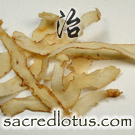 Yu Zhu6-9 gTonify YinNo specimen photographCong Bai6 gWarm, Spicy Herbs that Release the Exterior
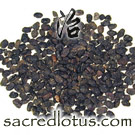 Dan Dou Chi9-12 gCool, Spicy Herbs that Release the Exterior
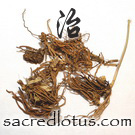 Bai Wei1.5-3 gCool the Blood
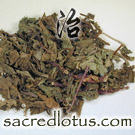 Bo He3-4.5 gCool, Spicy Herbs that Release the Exterior
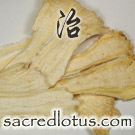 Jie Geng3-4.5 gWarm Herbs that Transform Phlegm-Cold
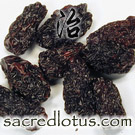 Da Zao2 piecesTonify Qi
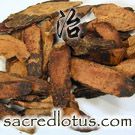 Zhi Gan Cao1.5 gTonify Qi
Preparation & dosage
How is Jia Jian Wei Rui Tang prepared?
Jia Jian Wei Rui Tang is a decoction (tang) — the herbs are simmered together in water and the strained liquid is drunk warm, in keeping with the standard method for exterior-releasing formulas meant to be taken promptly while the pathogen is still at the surface.
- Order of cooking: Yu Zhu, being a moistening root, benefits from a slightly longer simmer to extract its mucilaginous constituents; aromatic, volatile herbs such as Bo He are conventionally added late in the cooking (the last few minutes) so their dispersing oils are not driven off by prolonged boiling.
- Dosing pattern: taken warm, often in one or two doses over the course of a day while exterior symptoms are active, consistent with the general convention for wind-heat release formulas.
Source: Bensky & Barolet, Formulas & Strategies (decoction method); Bensky, Clavey & Stoger, Materia Medica (late-addition convention for aromatic, volatile herbs such as Bo He).
Safety — read before use
What are the cautions for Jia Jian Wei Rui Tang?
Jia Jian Wei Rui Tang is intended specifically for wind-heat with yin deficiency and is not appropriate for plain wind-cold, nor for patients whose digestion is weak.
- Not for wind-cold without heat signs: the formula's acrid-cooling dispersing herbs (Bo He, Dan Dou Chi) are matched to a heat-type exterior pathogen, not cold.
- Caution with weak digestion or dampness: Yu Zhu is rich and somewhat cloying; in patients with a sluggish Spleen, phlegm-damp accumulation, or poor appetite, it can aggravate fullness or loose stool.
- Short-course, exterior-release formula: like other formulas that release the exterior, it is intended for the acute phase of an external invasion, not for sustained or unsupervised long-term use.
Source: Bensky, Clavey & Stoger, Materia Medica (Yu Zhu's cloying quality and caution in dampness); Bensky & Barolet, Formulas & Strategies (pattern-matching caution). Traditional-use framing; not medical advice.
Originally Appeared In:
- Revised Popular Guide to the Discussion of Cold Induced Disorders (Chong Ding Tong Su Shan Han Lun)
Notes:
How does Jia Jian Wei Rui Tang differ from Yin Qiao San and Sang Ju Yin?
Jia Jian Wei Rui Tang is distinguished from other wind-heat releasing formulas by its built-in yin-nourishing chief herb, Yu Zhu — a feature the more commonly used wind-heat formulas lack.
- vs Yin Qiao San (Honeysuckle and Forsythia Powder): a broader heat-toxin-clearing wind-heat formula for a robust patient without notable yin deficiency; it does not include a yin-nourishing chief herb and is not tailored to a depleted constitution.
- vs Sang Ju Yin (Mulberry Leaf and Chrysanthemum Drink): a milder, Lung-focused wind-heat formula for early-stage cough with minimal systemic heat; it targets the Lung more narrowly and likewise assumes no underlying yin deficiency.
Classical source: Jia Jian Wei Rui Tang comes from the Wen Bing Tiao Bian (Systematic Differentiation of Warm Diseases), compiled by Wu Ju-Tong (Wu Jutang) in 1798 — a foundational Warm Disease (Wen Bing) school text organized around the Triple Burner. Wu Jutang designed the formula specifically for patients whose yin had already been compromised before a wind-heat pathogen arrived, a scenario the earlier Cold Damage (Shang Han) tradition addressed less directly.
Source: Bensky & Barolet, Formulas & Strategies (formula comparisons; classical source attribution to Wen Bing Tiao Bian, Wu Jutang, 1798).
Clinical Studies & Research:
Is there modern research on Jia Jian Wei Rui Tang?
No dedicated clinical trials of this specific formula appear in PubMed/PMC — as a classical, narrowly-indicated Wen Bing formula it has not been the subject of modern controlled research the way some larger-volume patent formulas have. What exists is ingredient-level pharmacology on its chief herb.
- Chief herb, ingredient-level context: a 2023 review of Polygonatum genus polysaccharides (the class of compounds Yu Zhu/Polygonatum odoratum is best known for) summarizes documented immunomodulatory and anti-inflammatory bioactivities across extraction and structural studies — general pharmacology of the plant genus, not a trial of this formula or a therapeutic claim.
Source: PMID 36608864 (Polygonatum polysaccharide review). Research context only, at the single-ingredient level; not a formula-specific trial and not a therapeutic claim.
Sources & References
Compiled and edited by Thomas Dehli, Founder & Editor, Sacred Lotus Updated
The information here is referenced from numerous sources — teachers, practitioners, class notes from Five Branches University, the books below, and the published research literature, with citations given as resolvable PubMed identifiers. Where sources disagree, I have flagged the discrepancies directly. If facts couldn't be verified, I have left them out. How we source our content.
Reference information for students and practitioners — not medical advice. Consult a qualified practitioner. Terms of use.
Chinese Formulas Books & References
 https://amzn.to/4fYI3f8
 https://amzn.to/4j55NRA
 https://amzn.to/4gMROyv
 https://amzn.to/4h7msSK