
Ma Huang Xi Xin Fu Zi Tang
Ephedra, Asarun, and Prepared Aconite Decoction
- Category
- Formulas that Release the Exterior
- Ingredients
- 3 herbs
Actions
What does Ma Huang Xi Xin Fu Zi Tang do?
Ma Huang Xi Xin Fu Zi Tang releases an exterior wind-cold invasion while simultaneously warming Shaoyin (Kidney) yang — the classical "release the exterior while warming the interior" (biao li shuang jie / wen jing jie biao) strategy. It is built for the specific case where an exterior cold invades a person whose baseline yang is already depleted, so the two problems must be treated at once rather than in sequence.
How the three ingredients work together:
- Chief pair — Ma Huang & Fu Zi: Ma Huang releases the exterior and disperses the invading wind-cold from the Tai-Yang surface; Fu Zi (prepared/processed aconite) warms and restores Kidney (Shaoyin) yang at the same time, addressing the underlying deficiency that let the cold penetrate so deeply and so quickly.
- Assistant — Xi Xin: penetrates both the exterior and the interior, helping Ma Huang disperse the surface cold while reinforcing Fu Zi's warming of the interior — the herb that links the two chief actions into a single strategy rather than two separate ones.
The formula's elegance is restraint: it uses only enough Ma Huang to vent the exterior, relying on Fu Zi's warmth (not a larger, more forceful diaphoretic dose) to keep the sweating gentle so it does not further deplete an already-deficient yang.
Source: Sacred Lotus record (composition, category, origin); role/strategy analysis cross-referenced against multiple online sources describing the classical Shang Han Lun combination, in our own words. Traditional-use framing; not medical advice.
Indications
What is Ma Huang Xi Xin Fu Zi Tang used for?
Ma Huang Xi Xin Fu Zi Tang treats an exterior wind-cold invasion occurring in a person with underlying Shaoyin (Kidney) yang deficiency — the classical "simultaneous Tai-Yang and Shaoyin disorder." It is the textbook example of an exterior cold striking a constitutionally cold, depleted person, rather than a robust one.
- Fever that is mild or absent despite pronounced chills/aversion to cold — the body cannot mount a strong exterior reaction because its yang is already deficient.
- Marked fatigue, lethargy, and a wish to simply lie down and sleep (shan mei), rather than the restless irritability seen in a robust exterior excess pattern.
- A weak, quiet voice and generally diminished vitality layered on top of ordinary cold symptoms (nasal congestion, sneezing, body ache).
- No thirst, and a pale tongue with a white, slippery coat — signs of cold rather than heat, per the Sacred Lotus record.
- A pulse that is deep (sunken) despite the presence of fever — the sign the Shang Han Lun uses to identify this exact pattern.
Source: Sacred Lotus pattern/tongue record; cross-referenced against multiple online sources for the classical Shang Han Lun presentation. Reference only, not a diagnosis.
Western Uses:
What is Ma Huang Xi Xin Fu Zi Tang used for in modern practice?
In modern practice, Ma Huang Xi Xin Fu Zi Tang (often transliterated Mahuang Fuzi Xixin decoction) is most studied for allergic rhinitis, and is also referenced traditionally for a cold or flu-like onset in someone constitutionally cold, frail, or elderly — presentations where an ordinary exterior-releasing formula alone is considered insufficient because the underlying yang is already weak.
These are biomedical correlates of the formula's traditional pattern, not a claim that it treats any diagnosed disease; the systematic-review evidence for allergic rhinitis specifically found it was not shown to outperform conventional Western treatment. Any use for a diagnosed condition belongs with a qualified practitioner and appropriate medical care.
Source: PubMed 29636787 (systematic review, allergic rhinitis); traditional-use correlates cross-referenced against multiple online sources. Reference only, not a treatment claim.
Ingredients
3 substances in Ma Huang Xi Xin Fu Zi Tang — each links to its full herb monograph.
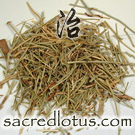 Ma Huang6 gWarm, Spicy Herbs that Release the Exterior
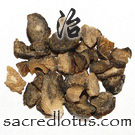 Fu Zi9 gWarm the Interior and Expel Cold
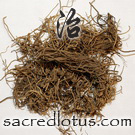 Xi Xin6 gWarm, Spicy Herbs that Release the Exterior
Preparation & dosage
How is Ma Huang Xi Xin Fu Zi Tang prepared?
A classical decoction, with Fu Zi (prepared/processed aconite) traditionally simmered separately and for longer than the other two herbs. The Shang Han Lun's original method specifies Ma Huang simmered first with any foam skimmed off, after which Xi Xin and Fu Zi are added and the decoction completed. Because Fu Zi is toxic in its raw state, only properly processed ("zhi," prepared/detoxified) Fu Zi is used, and it is conventionally given a longer, separate simmering time to further reduce residual toxicity before the finished decoction is strained.
Source: Shang Han Lun (Treatise on Cold Damage), summarized in our own words; cross-referenced against multiple online sources for standard Fu Zi processing/decoction practice.
Safety — read before use
What are the cautions for Ma Huang Xi Xin Fu Zi Tang?
This formula is reserved for a confirmed simultaneous exterior-cold/Shaoyin-yang-deficiency pattern, and it depends on three ingredients that each carry their own modern regulatory and safety considerations. The following is neutral public-safety reference only, not administration guidance.
- Not for severe/collapsing yang deficiency: per the Sacred Lotus record, it is not used where yang deficiency is severe — profound exhaustion, cold limbs, or a very faint/collapsing pulse call for pure warming/rescue strategies rather than a formula that also induces sweating.
- Not for robust exterior excess: in a person without underlying yang deficiency, an ordinary exterior-releasing formula is used instead; adding Fu Zi where it is not needed is inappropriate.
- Ma Huang (Ephedra): contains ephedrine-type alkaloids. Ephedra-containing products are regulated or restricted in many jurisdictions, and ephedrine-type alkaloids carry known cardiovascular considerations; this is a regulatory/public-safety fact, not a dosing instruction.
- Fu Zi (Aconite): a toxic substance in its raw state. Only specially processed ("prepared"/"zhi") Fu Zi is used in practice, and sourcing, processing, and any use of aconite-containing formulas is a matter for a licensed practitioner, not self-treatment.
- Xi Xin (Asarum): modern pharmacopoeias place dose limits on Xi Xin, reflecting both a long-standing classical caution about over-dosing the powdered herb and modern pharmacopoeial safety review; this is a reference fact about regulation, not a dosing recommendation.
- Pregnancy: generally avoided, given the combination of a diaphoretic, an unprocessed-toxicity-risk substance (aconite), and a restricted herb (ephedra).
Source: Sacred Lotus record; cross-referenced against multiple online sources for standard cautions on Ma Huang, Fu Zi, and Xi Xin. Traditional-use framing; not medical advice, not administration guidance.
Originally Appeared In:
- On Cold Damage (Shang Han Lun)
Notes:
How does Ma Huang Xi Xin Fu Zi Tang differ from Ma Huang Tang and Gui Zhi Jia Fu Zi Tang?
All three formulas come from the Shang Han Lun and all use Ma Huang or a warming strategy for an exterior pattern, but they target different underlying constitutions.
- vs Ma Huang Tang: Ma Huang Tang releases a robust Tai-Yang wind-cold excess pattern in an otherwise healthy person with no underlying yang deficiency; it contains no Fu Zi and is not built to protect a depleted Kidney yang the way this formula is.
- vs Gui Zhi Jia Fu Zi Tang (Cinnamon Twig Decoction plus Aconite): that formula addresses continued sweating and yang depletion that has already resulted from over-sweating a Tai-Yang case; it uses Gui Zhi's gentler harmonizing release rather than Ma Huang's stronger opening action, reflecting a milder, already-more-depleted presentation rather than a fresh invasion striking a constitutionally cold person.
Source: Shang Han Lun; cross-referenced against multiple online sources for formula-family comparisons.
Clinical Studies & Research:
Is there modern research on Ma Huang Xi Xin Fu Zi Tang?
Yes, primarily on allergic rhinitis, with additional preclinical work on influenza infection in a Kidney-yang-deficiency model. A systematic review of six randomized controlled trials (576 participants) found the decoction was not shown to outperform conventional Western treatment for allergic rhinitis, though evidence quality in the underlying trials was rated low to very low. More recent mechanistic studies report that the decoction reduces nasal epithelial pyroptosis (a form of inflammatory cell death) via the NLRP3/Caspase-1/GSDMD-N pathway in allergic rhinitis models. Separately, an animal study modeling Kidney-Yang deficiency alongside influenza A infection found the decoction reduced mortality, lung fluid accumulation, and pro-inflammatory cytokines (IL-6, MCP-1, TNF-α) while raising anti-inflammatory IL-10 and antioxidant activity — a laboratory angle consistent with the formula's traditional logic of treating a cold invasion together with an underlying deficiency.
Sources: PubMed 29636787 (systematic review, allergic rhinitis, 2018); PubMed 38479543 ("Mahuang Fuzi Xixin decoction alleviates allergic rhinitis by inhibiting NLRP3/Caspase-1/GSDMD-N-mediated pyroptosis," J Ethnopharmacol, 2024); PubMed 27401293 ("Mahuang-Xixin-Fuzi decoction reduces the infection of influenza A virus in Kidney-Yang deficiency syndrome mice," J Ethnopharmacol, 2016). Research context, not a therapeutic claim.
Sources & References
Compiled and edited by Thomas Dehli, Founder & Editor, Sacred Lotus Updated
The information here is referenced from numerous sources — teachers, practitioners, class notes from Five Branches University, the books below, and the published research literature, with citations given as resolvable PubMed identifiers. Where sources disagree, I have flagged the discrepancies directly. If facts couldn't be verified, I have left them out. How we source our content.
Reference information for students and practitioners — not medical advice. Consult a qualified practitioner. Terms of use.
Chinese Formulas Books & References
 https://amzn.to/4fYI3f8
 https://amzn.to/4j55NRA
 https://amzn.to/4gMROyv
 https://amzn.to/4h7msSK