

Xi Xin (Chinese Wild Ginger, Asarum)
Herba Asari Cum Radice Chinese Wild Ginger, Asarum
Materia Medica Data
- Temperature
- Warm
- Nature & Flavour
- Spicy, Warm
- Channels Entered
- LU, KI
- Latin (pharmaceutical)
- Herba Asari Cum Radice
- Chinese
- 细辛
- Tone Marks
- xì xīn
- Translation
- Thin Spicy
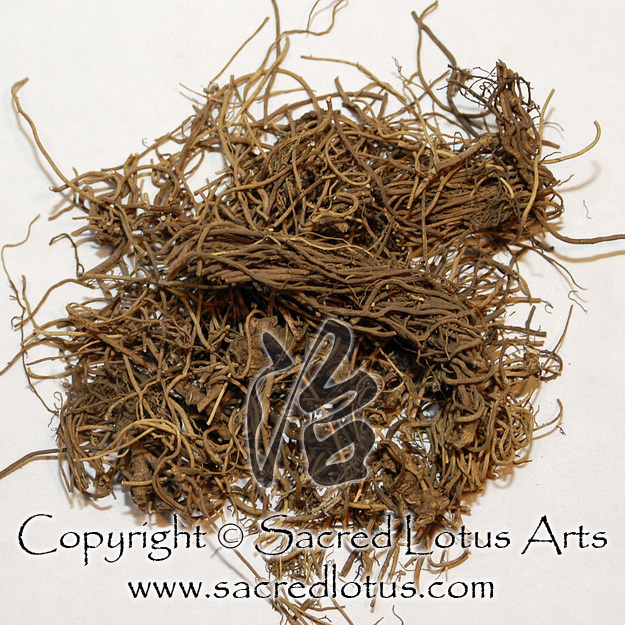
- Photo Note
- Xi Xin Gen Shown
Chinese Herb Actions
What is Xi Xin used for in Chinese medicine?
Xi Xin (Asarum) is a warm, acrid herb traditionally used to release the exterior and disperse cold, stop pain of a cold nature, and warm the Lungs to transform thin, watery phlegm — it is prized for a pronounced pain-stopping and warming action out of proportion to its very small dose.
- Releases the exterior and disperses cold — wind-cold exterior patterns, especially with an underlying Kidney-yang deficiency or internal cold-damp; paired with Fu Zi and Ma Huang in Ma Huang Xi Xin Fu Zi Tang for exterior cold layered over yang deficiency.
- Stops pain from cold — headache, toothache, and body aches of a cold nature; included in classic wind headache formulas such as Chuan Xiong Cha Tiao San and Jiu Wei Qiang Huo Tang.
- Warms the Lung and transforms thin, cold phlegm/fluids — copious clear or watery phlegm, wheezing, and nasal congestion; the classic Gan Jiang–Xi Xin–Wu Wei Zi trio (Xiao Qing Long Tang; Ling Gan Wu Wei Jiang Xin Tang) balances Xi Xin and Gan Jiang’s warming, dispersing action against Wu Wei Zi’s sour astringency.
- Warms the channels and unblocks cold in the vessels — cold-type numbness/pain of the extremities (Dang Gui Si Ni Tang); also combined with purgatives to warm and move cold-type abdominal accumulation (Da Huang Fu Zi Tang).
Source: cross-referenced against multiple online sources and Sacred Lotus sources & references (formula composition), consistent with Bensky, Materia Medica (3rd ed.) / Chen & Chen consensus.
Chinese Herb Dosage
What is the typical dosage of Xi Xin, and why is the traditional dose so small?
Typically about 1–3 g in decoction — markedly lower than most herbs, reflecting a long-standing safety adage (“Xi Xin does not exceed one qián,” roughly 3 g) together with modern awareness that Asarum species naturally contain aristolochic acid analogs and safrole. This is general reference information, not dosing instruction.
The classical low-dose adage is generally understood to apply most strictly to powdered, directly-ingested forms rather than decoction, on the traditional reasoning that prolonged boiling volatilizes some of the aromatic oil constituents — a traditional rationale, not a settled clinical safety finding.
Note: Sacred Lotus’s existing identity record lists the part used as “whole plant,” reflecting older/folk practice. Current official pharmacopeial standards designate the root and rhizome only (Asari Radix et Rhizoma, from A. heterotropoides, A. sieboldii, or A. heterotropoides var. mandshuricum). We flag this discrepancy rather than silently overwrite the identity field, pending owner review.
Source: cross-referenced against multiple online sources; PMID 40839988 (chloroplast-genome identification confirming current species/part designation); PMID 34899315, PMID 33617966 (dose/duration safety data, see research). Reference only, not a prescription.
Chinese Herb Contraindications & Cautions
Are there cautions or restrictions on Xi Xin (Asarum)?
Yes — Xi Xin carries real public-safety restrictions because Asarum species naturally contain aristolochic acid analogs (nephrotoxic; classified by IARC as a Group 1 human carcinogen) and safrole. This is documented here as neutral reference information, not usage guidance.
- Regulatory restrictions (reference) — the U.S. FDA issued a 2001 consumer advisory regarding aristolochic-acid-containing botanicals (the Aristolochiaceae family, which includes Asarum); Health Canada has similarly restricted/advised against related products; several other jurisdictions restrict or prohibit sale of Aristolochiaceae-derived material.
- Official part used (reference) — current pharmacopeial standards designate the root and rhizome (Asari Radix et Rhizoma) as the official medicinal material (see dosage discrepancy note).
- Renal caution (reference) — because aristolochic acid analogs are nephrotoxic, caution regarding kidney/renal function is emphasized in modern safety literature.
- Traditional contraindications — Lung heat, yin deficiency, qi deficiency with spontaneous sweating, and headache from blood deficiency.
- Eighteen Incompatibilities — traditionally never combined with Li Lu (see notes).
- Not for unsupervised or long-term use — professional supervision and short-duration use are emphasized in the modern safety literature (see research).
Source: FDA public advisory (2001); Health Canada; cross-referenced against multiple online sources; PMID 31244661, PMID 33617966 (below). Neutral safety reference, not medical advice.
Chinese Herb Toxicity & Overdose
Xi Xin carries real, well-documented toxicity concerns rather than being toxicologically inert. Asarum species contain aristolochic acid analogs (AAAs — nephrotoxic and IARC Group 1 carcinogens) and safrole. High-resolution LC-MS phytochemical screening across medicinally used Asarum species found potentially nephrotoxic AAAs (including aristolactam I and IV) distributed across all parts of the plant tested, not confined to a single part — though most extracts were not directly cytotoxic to human kidney (HK-2) cells at the doses tested; other mechanisms such as DNA adduct formation remain a concern. A targeted study of Asarum heterotropoides (Xixin) quantified AA IVa and aristolactam I as the principal analogs present at low μg/g levels and concluded that controlled-dose, short-duration use is relatively safe, while cautioning that long-term toxicity data are still lacking. A mouse model of chronic low-dose exposure (0.5 mg/kg/day for 56 days) produced measurable kidney-injury biomarkers that persisted after the herb was withdrawn, leading the authors to recommend short-duration use (under one month) specifically for Xixin and other aristolochic-acid-containing herbs.
Note: findings on which plant part carries the aristolochic acid burden are mixed — the LC-MS screening above found AAAs distributed across all plant parts, suggesting the official root/rhizome-only restriction reduces, but does not eliminate, exposure risk.
Source: PMID 28588481; PMID 34899315; PMID 33617966; PMID 31244661 (systematic review of aristolochic acid nephrotoxicity/carcinogenicity mechanisms). Neutral safety reference, not a safety guarantee.
-
This herb is considered toxic.
(while some Chinese herbs are toxic, it must be noted that many come prepared, or are combined, to mitigate their toxicity)
Herb-Drug Interactions
No well-established clinical herb–drug interaction studies specific to Xi Xin were identified in the literature reviewed. Given documented aristolochic-acid nephrotoxicity, caution when combining with other nephrotoxic agents (e.g., aminoglycoside antibiotics, NSAIDs, calcineurin inhibitors such as cyclosporine) is a reasonable precaution raised in general aristolochic-acid safety literature — this is precautionary reasoning, not a demonstrated clinical interaction specific to Xi Xin formulas. (Flagged for practitioner confirmation.)
Western / Biomedical Research
Chinese Herb Clinical Studies & Research
Provided as research context — a summary of published biomedical study, not a therapeutic or medical claim.
Is there modern research on Xi Xin (Asarum)?
Yes — but modern research on Asarum concentrates overwhelmingly on toxicology and safety rather than on confirming traditional therapeutic actions. This itself is a meaningful, honest finding: the evidence base is a safety literature, not an efficacy literature.
- Phytochemistry & toxicity screening (preclinical) — high-resolution LC-MS metabolomics across medicinally used Asarum species detected aristolochic acid analogs in all plant parts tested; extracts were largely non-cytotoxic to human kidney cells at tested doses, though DNA-adduct-forming mechanisms may still occur.
- Quantitative analysis of Xixin specifically (preclinical) — UPLC-MS/MS quantification in Asarum heterotropoides and related patent medicines found AA IVa and aristolactam I as the principal analogs at low μg/g concentrations, far below acutely toxic levels; the authors judged controlled-dose, short-duration use “relatively safe” while flagging unresolved long-term risk.
- Chronic low-dose animal model — repeated low-dose aristolochic acid in mice produced kidney-injury biomarkers that persisted after the exposure was stopped, supporting a recommendation for short-duration (under one month) use.
- Mechanistic review — a systematic overview of aristolochic acids summarizes the nephrotoxicity and carcinogenicity mechanisms (DNA adduct formation, upper urinary tract carcinoma risk) underlying these safety concerns across the Aristolochiaceae family.
All of this is research context on a documented public-safety topic, not a therapeutic claim, and not administration guidance.
Sources: PMID 28588481 (LC-MS phytochemistry/toxicity screening of Asarum species); PMID 34899315 (UPLC-MS/MS quantification, Asarum heterotropoides/Xixin); PMID 33617966 (chronic low-dose aristolochic acid, mouse model); PMID 31244661 (systematic review, aristolochic acid nephrotoxicity/carcinogenicity mechanisms).
Chinese Herb Notes
What are Xi Xin’s key classical combinations, and is it ever combined with Li Lu?
No — Xi Xin is never combined with Li Lú (Veratrum nigrum, black false hellebore). This pairing is one of the classical “Eighteen Incompatibilities” (Shí Bā Fǎn, 十八反) that practitioners are trained to avoid outright, rather than merely use with caution.
- Xi Xin + Gan Jiang + Wu Wei Zi — the central trio for warming the Lung and transforming thin, cold phlegm while Wu Wei Zi’s sour-astringent nature reins in excessive dispersal; found together in Xiao Qing Long Tang and Ling Gan Wu Wei Jiang Xin Tang.
- Xi Xin + Fu Zi + Ma Huang — Ma Huang Xi Xin Fu Zi Tang, for exterior wind-cold arising on a background of Kidney-yang deficiency.
- Xi Xin + Dang Gui + Gui Zhi — Dang Gui Si Ni Tang, warms the channels/blood vessels for cold-type limb numbness and pain.
- Xi Xin + Da Huang + Fu Zi — Da Huang Fu Zi Tang, warms and purges cold-type abdominal accumulation.
- Also appears in Du Huo Ji Sheng Tang (painful obstruction with Liver-Kidney deficiency), Chuan Xiong Cha Tiao San and Jiu Wei Qiang Huo Tang (wind-cold-damp headache), Wu Mei Wan (Jue Yin cold pattern), and Zai Zao San.
Eighteen Incompatibilities: classically, Lí Lú is listed as incompatible with a defined group of herbs that includes Xi Xin, along with Rén Shēn, Dān Shēn, Shā Shēn, Xuán Shēn, Kǔ Shēn, and Sháo Yào (both Bai Shao and Chi Shao) — this combination is avoided as a matter of trained practice, not dosed cautiously. (Traditional formula/incompatibility context, not treatment advice.)
Source: Sacred Lotus sources & references (formula composition data); classical materia medica texts and Bensky/Chen & Chen consensus on the Eighteen Incompatibilities.
This herb is incompatible with:
- Li Lu (Radix Et Rhizoma Veratri)
Sources & References
Compiled and edited by Thomas Dehli, Founder & Editor, Sacred Lotus Updated
The information here is referenced from numerous sources — teachers, practitioners, class notes from Five Branches University, the books below, and the published research literature, with citations given as resolvable PubMed identifiers. Where sources disagree, I have flagged the discrepancies directly. If facts couldn't be verified, I have left them out. How we source our content.
Reference information for students and practitioners — not medical advice. Consult a qualified practitioner. Terms of use.
Chinese Herbs Books & References
 https://amzn.to/3WfB3DK
 https://amzn.to/3DR1VUh
 https://amzn.to/42aMz73
 https://amzn.to/3PuD4bt