
Da Huang Fu Zi Tang
Rhubarb and Prepared Aconite Decoction
- Category
- Formulas that Drain Downward
- Ingredients
- 3 herbs
Actions
What does Da Huang Fu Zi Tang do?
Da Huang Fu Zi Tang warms the interior, dispels cold, and unblocks the bowels — a "warm purgation" strategy for constipation caused by cold rather than heat. It pairs a large dose of a strongly warming herb with a purgative herb whose usual cold nature is restrained by that heat, so only the purgative's bowel-unblocking action is retained. This lets the formula attack (purge) a bowel accumulation while simultaneously warming — something a purely cold purgative cannot safely do in a cold-type case.
The three ingredients divide by role:
- Chief: Fu Zi (Prepared Aconite Root), used in a notably large dose (three pieces in the source text) — warms the interior and disperses accumulated cold, supplying the formula's warming force and easing pain.
- Deputy: Da Huang (Rhubarb Root and Rhizome) — drains the bowel and breaks up the accumulation; combined with this much heat, its normally cold, heat-clearing property is neutralized and only its purgative action is used (an herb applied against its usual nature).
- Assistant: Xi Xin (Chinese Wild Ginger / Asarum Herb) — warms and disperses cold, penetrates deeply into the interior to reinforce Fu Zi's warming action, and helps relieve the abdominal pain.
Source: Sacred Lotus sources & references + Bensky & Barolet, Formulas & Strategies (chief/deputy/assistant analysis); Jin Gui Yao Lue (Han dynasty source text), summarized in our own words.
Indications
What is Da Huang Fu Zi Tang used for?
Da Huang Fu Zi Tang treats constipation caused by cold accumulating and clumping in the interior — an excess-cold pattern that obstructs the bowel and blocks the free flow of yang qi, distinct from the more familiar heat-type (Yangming) constipation. Its classic presentation, recorded in the Jin Gui Yao Lue, centers on one-sided abdominal or hypochondriac (flank) pain together with signs that the obstruction is cold, not hot.
- Bowel/abdominal signs: constipation with abdominal pain that is often unilateral or one-sided (classically flank/hypochondriac pain), typically worse with pressure.
- Cold signs despite fever: fever can be present alongside cold limbs/extremities — the fever reflects qi struggling against the obstruction, not true heat.
Tongue and pulse: a white, greasy tongue coating; a pulse that is deep and tight, or deep and wiry — deep/tight/wiry point to cold lodged internally and to pain from obstruction, not to a heat excess.
Source: Sacred Lotus sources & references on pattern/tongue/pulse + Bensky & Barolet, Formulas & Strategies; Jin Gui Yao Lue described in our own words. Traditional-use framing; not medical advice.
Western Uses:
What is Da Huang Fu Zi Tang used for in modern practice?
In modern practice, Da Huang Fu Zi Tang is referenced for cold-type abdominal pain and constipation with obstruction — contexts practitioners have traditionally linked to conditions such as biliary colic, appendicitis, and partial/incomplete intestinal obstruction presenting with a cold, deep-pulse picture (cold limbs, deep tight pulse) rather than a hot, robust one. Some contemporary TCM clinicians also draw on it, modified, where cold-pattern constipation accompanies chronic kidney disease.
These biomedical correlates describe how the formula's traditional cold-accumulation pattern has been applied; they are not a claim that it treats any diagnosed disease. Current study of the formula itself is preclinical/mechanistic (see research); any use for a diagnosed condition belongs with a qualified practitioner and appropriate medical care.
Source: traditional-use correlates summarized from Bensky & Barolet, Formulas & Strategies, and the clinical contexts referenced in the cited PubMed literature (see research field); reference only, not a treatment claim.
Ingredients
3 substances in Da Huang Fu Zi Tang — each links to its full herb monograph.
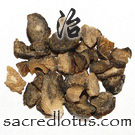 Fu Zi6-12 g3 piecesWarm the Interior and Expel Cold
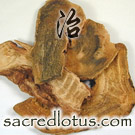 Da Huang9 gPurgatives
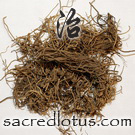 Xi Xin6 gWarm, Spicy Herbs that Release the Exterior
Preparation & dosage
How is Da Huang Fu Zi Tang prepared?
Prepared as a decoction, with Fu Zi cooked separately and for longer before the other two herbs are added. The source text specifies Fu Zi that has been processed ("pao," i.e., prepared/detoxified) rather than raw. In practice this means Fu Zi is simmered on its own first — commonly for an extended period — to further reduce residual toxicity, after which Da Huang and Xi Xin are added and the decoction is completed and strained for oral use.
Source: Jin Gui Yao Lue (Han dynasty source text), summarized in our own words + Bensky & Barolet, Formulas & Strategies (preparation note); PMID 34315520 / PMC 8314510 (decoction/prolonged boiling reduces Fu Zi's toxic alkaloid content).
Decoction. Reference relative amounts: Fu Zi (prepared/processed, not raw) 6-12 g, classically "3 pieces," decocted first and separately; Da Huang 9 g; Xi Xin 6 g. Some modern secondary sources cite Xi Xin nearer 3 g (a general dosing caution, not specific to this decoction) — see the dosage discrepancy note in cautions. Reference only; not a self-dosing guide given Fu Zi's toxicity — sourcing, processing, and dosing belong with a qualified practitioner.
Safety — read before use
What are the cautions for Da Huang Fu Zi Tang?
This formula depends on Fu Zi (Aconite), a toxic herb, and must use properly processed (prepared/"zhi") Fu Zi only — never raw aconite root. Processing (soaking, boiling, and steaming) hydrolyzes Fu Zi's toxic diester-type aconitine alkaloids into far less toxic derivatives; even so, Fu Zi is traditionally decocted first and longer than the other two herbs to further reduce residual toxicity before they are added. This is a formula for a trained practitioner to source, dose, and prepare — not for unsupervised self-use.
- Wrong pattern causes harm: reserved for cold-type (excess-cold) constipation; inappropriate for Yangming heat-excess constipation (high fever, thirst, red tongue with dry yellow coat) — that pattern calls for a purely cold purgative such as Da Cheng Qi Tang, not this formula.
- Pregnancy: contraindicated — both Fu Zi and Da Huang, and the formula's strong purgative action overall, are unsafe in pregnancy.
- Fu Zi incompatibilities: classically not combined with Ban Xia, Gua Lou (Trichosanthes Fruit), Bei Mu, Bai Lian, or Bai Ji — the traditional aconite "incompatibles."
Dosage discrepancy: Sacred Lotus lists Xi Xin at 6 g, consistent with the Jin Gui Yao Lue's original ratio of roughly 3 parts Da Huang to 2 parts Xi Xin. Some modern secondary compilations instead cap Xi Xin nearer 3 g, reflecting a general caution ("Xi Xin bu guo qian," historically about powdered/raw dosing) rather than a rule specific to this decocted formula. We keep our 6 g as authoritative and flag the lower figure as an alternate, more conservative reference — final dosing is a practitioner decision.
Source: Bensky & Barolet, Formulas & Strategies (cautions, incompatibilities, dosage conventions); PMID 34315520 / PMC 8314510, "The toxicology and detoxification of Aconitum: traditional and modern views" (Fu Zi processing reduces toxic alkaloid content). Traditional-use framing; not medical advice.
Originally Appeared In:
- Essentials from the Golden Cabinet (Jin Gui Yao Lue)
Notes:
How is Da Huang Fu Zi Tang different from Da Cheng Qi Tang and Wen Pi Tang?
All three formulas purge the bowel, but they target opposite temperatures and different degrees of underlying deficiency. Choosing between them turns on whether the obstruction is hot or cold, and whether qi/yang deficiency underlies it.
- vs Da Cheng Qi Tang: Da Cheng Qi Tang purges Yangming excess heat (high fever, thirst, delirium, red tongue with a thick, dry yellow coat); Da Huang Fu Zi Tang purges excess cold (cold limbs, white greasy coat, deep tight/wiry pulse). Using either formula for the other's pattern would worsen the case.
- vs Wen Pi Tang (Warm the Spleen Decoction): Wen Pi Tang is built for chronic cold accumulation with underlying Spleen-yang deficiency, so it adds Ren Shen (or Dang Shen) and Gan Jiang to tonify while it purges; Da Huang Fu Zi Tang addresses a more acute, robust cold-excess presentation without significant qi deficiency, so it purges and warms without tonifying.
Source: Bensky & Barolet, Formulas & Strategies (warm-purgation category comparison).
Clinical Studies & Research:
Is there modern research on Da Huang Fu Zi Tang?
Yes, though it is mostly preclinical — animal and network-pharmacology studies exploring the formula's classic anti-inflammatory, pain-relieving, and bowel-clearing actions. Several studies use rat models of severe acute pancreatitis (a modern context sharing the formula's traditional territory of abdominal pain with obstruction) to show reduced gut and lung injury and inflammatory signaling; others use network pharmacology to map candidate mechanisms in intestinal obstruction and neuropathic pain.
- Severe acute pancreatitis (animal): reduced pulmonary and intestinal injury via regulation of aquaporins in a rat model (PMID 28577538); separately shown to ameliorate pancreatitis-related injury via elevation of M2 Kupffer cells in rats (PMID 34122596).
- Incomplete intestinal obstruction (network pharmacology): identified candidate active compounds (e.g., kaempferol) and targets (TNF, IL6, AKT1) acting via PI3K-AKT and HIF-1 signaling (PMID 35528155).
- Neuropathic pain (animal): reduced pain sensitization in a nerve-injury rat model by lowering TNF-alpha and inhibiting PI3K-AKT signaling (PMID 39723427; PMC 11668693).
Sources: PubMed 28577538; PubMed 34122596; PubMed 35528155; PubMed 39723427 / PMC 11668693. Research context, not a therapeutic claim; no human clinical trials of the formula itself were found.
Sources & References
Compiled and edited by Thomas Dehli, Founder & Editor, Sacred Lotus Updated
The information here is referenced from numerous sources — teachers, practitioners, class notes from Five Branches University, the books below, and the published research literature, with citations given as resolvable PubMed identifiers. Where sources disagree, I have flagged the discrepancies directly. If facts couldn't be verified, I have left them out. How we source our content.
Reference information for students and practitioners — not medical advice. Consult a qualified practitioner. Terms of use.
Chinese Formulas Books & References
 https://amzn.to/4fYI3f8
 https://amzn.to/4j55NRA
 https://amzn.to/4gMROyv
 https://amzn.to/4h7msSK