

Herba Ephedrae Ephedra Stem
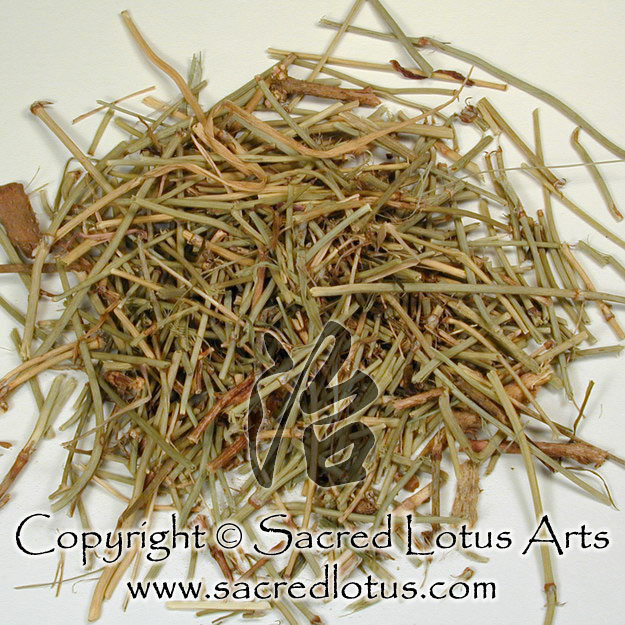
Materia Medica Data
- Temperature
- Warm
- Nature & Flavour
- Spicy, Slightly Bitter, Warm
- Channels Entered
- LU, BL
- Latin (pharmaceutical)
- Herba Ephedrae
- Chinese
- 麻黄
- Tone Marks
- má huáng
- Translation
- Hemp Yellow
Chinese Herb Actions
What is Ma Huang used for in Chinese medicine?
Ma Huang (Ephedra Stem) is a strongly acrid, warm herb traditionally used to induce sweating and release exterior wind-cold, and to open the Lung to relieve wheezing and promote urination — for excess-type wind-cold exterior patterns with fever, chills, absence of sweating, headache, body aches, and a floating, tight pulse.
Its main traditional actions:
- Induces sweating and releases the exterior (wind-cold) — for wind-cold excess patterns with no sweating; it opens the pores and is considered one of the strongest traditional diaphoretics (sweat-inducing herbs) in the materia medica.
- Diffuses Lung qi to relieve wheezing, asthma, and cough — for obstruction of Lung qi from exterior wind-cold, or for wheezing of internal origin, typically combined with other herbs according to the underlying pattern (cold or heat).
- Promotes urination and reduces edema — particularly wind-edema (surface swelling) associated with an external wind-cold pathogen obstructing the Lung’s water-regulating function.
Source: Sacred Lotus sources & references, cross-referenced against multiple online sources (materia medica consensus). Traditional-use framing; not medical advice.
Chinese Herb Dosage
What is the typical dosage of Ma Huang?
Roughly 3–9 g in decoction — the part used is the dried stem/twig (the root, Ma Huang Gen, has the opposite action of stopping sweating and is a distinct herb entry). Traditional preparation calls for the decoction to be brought to a boil first and any foam skimmed from the surface before adding other herbs, as the foam was traditionally considered to cause palpitations or unease.
Source: Sacred Lotus sources & references, cross-referenced against multiple online sources (standard materia medica ranges and preparation notes). Reference only, not a prescription; Ma Huang is a restricted/regulated substance in many jurisdictions (see cautions).
Chinese Herb Contraindications & Cautions
Are there cautions for Ma Huang?
Ma Huang is traditionally reserved for robust, excess-type patterns and avoided where sweating, deficiency, or cardiovascular sensitivity are present — long-term or excessive use is said to cause heavy sweating and weaken the body. Classical and modern caution both flag it as unsuitable for patients with spontaneous sweating (exterior/Qi deficiency), insomnia, high blood pressure, or cardiac arrhythmia, and its dispersing, sweat-inducing effect is markedly reduced by honey-frying (see notes).
Source: Sacred Lotus sources & references, cross-referenced against multiple online sources (materia medica cautions); PMID 36641108 (comprehensive review). Traditional-use framing, not medical advice.
Chinese Herb Toxicity & Overdose
Is Ma Huang toxic, and is it restricted?
Ma Huang’s active alkaloids — ephedrine and pseudoephedrine — are sympathomimetic amines with well-documented cardiovascular and central-nervous-system risk at excess doses, and the herb is subject to specific legal/regulatory restriction in a number of jurisdictions. This is presented here as neutral public-safety reference information, not usage or dosing guidance.
- U.S. regulatory status — in 2004 the U.S. Food and Drug Administration banned the sale of dietary supplements containing ephedrine-group alkaloids (ephedra), the first category-wide dietary-supplement ban issued under U.S. supplement law, citing an unreasonable risk of illness or injury; the ban was upheld on appeal in 2006. This action followed an earlier (1997) FDA proposal to cap ephedrine-alkaloid content and duration of use in over-the-counter products. Regulatory status varies by jurisdiction and by context (e.g., licensed practitioner dispensing versus retail dietary supplements); readers should check current local law rather than rely on this summary.
- Sport/anti-doping status — ephedrine is included on the World Anti-Doping Agency (WADA) Prohibited List as a specified stimulant, prohibited in-competition above a defined urine concentration threshold; athletes subject to anti-doping codes should be aware of this independent of any medical or herbal-safety consideration.
- Documented adverse effects — an FDA adverse-event case review of 140 reports linked to ephedra-alkaloid supplements found cardiovascular events (hypertension, palpitations/tachycardia, stroke) and central-nervous-system events (seizures) were most common, including cases of death and permanent disability; the authors concluded these supplements could pose a health risk to some individuals, particularly with pre-existing cardiovascular disease, at high doses, or with concurrent stimulant use.
Sources: PMID 11117974 (Haller & Benowitz, adverse cardiovascular/CNS events, N Engl J Med 2000); PMID 36641108 (comprehensive phytochemistry/pharmacology/toxicology review, J Ethnopharmacol 2023); U.S. FDA final rule on ephedrine alkaloid dietary supplements (2004); WADA Prohibited List. Neutral regulatory/safety reference, not medical or legal advice.
Herb-Drug Interactions
Ma Huang’s ephedrine/pseudoephedrine content is documented to interact with several drug classes, as a neutral pharmacological reference point rather than usage guidance.
- MAOIs (monoamine oxidase inhibitors) — combination is documented to risk a dangerous hypertensive crisis.
- Sympathomimetic and cardiovascular medications — additive stimulant effects on heart rate and blood pressure are documented with other stimulants, decongestants, and cardiovascular drugs (including antiarrhythmics and cardiac glycosides).
- Antihypertensive medications — ephedrine’s pressor (blood-pressure-raising) effect can work against these medications’ intended effect.
Source: Sacred Lotus sources & references, cross-referenced against multiple online sources; PMID 11117974; PMID 36641108. Neutral pharmacological reference, not medical advice.
Western / Biomedical Research
Chinese Herb Clinical Studies & Research
Provided as research context — a summary of published biomedical study, not a therapeutic or medical claim.
Is there modern research on Ma Huang (Ephedra sinica)?
Yes — Ma Huang and its ephedrine-group alkaloids are among the most extensively studied substances in the materia medica, spanning pharmacology, chemistry, and clinical safety surveillance. A 2023 comprehensive review in the Journal of Ethnopharmacology catalogs roughly 281 identified chemical constituents (alkaloids and volatile oils being most significant) and documents diuretic, anti-allergic, blood-pressure-regulatory, anti-inflammatory, antioxidant, and antiviral activity in laboratory studies, while noting a maximum traditionally recommended dose of around 10 g and citing palpitations, sweating, and insomnia as documented excess-dose effects.
- Mechanism (animal/cell study) — a 2025 study proposed that Ephedra sinica alkaloid extracts act via the TRPM8/TLR4-NFκB signaling pathway and the CHRM3 receptor to modulate immune and inflammatory responses in a “wind-chill cold” model, offering a candidate mechanism for its traditional cold/exterior-releasing use. Animal/cell evidence, not a clinical treatment claim.
- Human adverse-event surveillance — the landmark FDA-linked case review (cited above under toxicity) remains the key human safety dataset behind the herb’s regulatory status, documenting cardiovascular and CNS adverse events from ephedra-alkaloid supplement use.
Overall, chemistry and mechanism research is extensive; the clinical literature is dominated by safety/pharmacovigilance data rather than efficacy trials, consistent with the herb’s regulated status.
Sources: PMID 36641108 (comprehensive review, J Ethnopharmacol 2023); PMID 40058103 (mechanism study, Int Immunopharmacol 2025); PMID 11117974 (adverse-event case review, N Engl J Med 2000). Research context, not a therapeutic claim.
Chinese Herb Notes
What is the difference between raw and honey-fried Ma Huang, and what does it combine with?
Raw Ma Huang is the stronger, more sweat-inducing form; honey-frying (Zhi Ma Huang) moderates that dispersing action while enhancing its ability to diffuse Lung qi and relieve cough/wheeze — the two forms are traditionally chosen for different presentations rather than used interchangeably.
- Raw Ma Huang (Sheng Ma Huang) — used when the priority is releasing an exterior wind-cold pattern (fever, chills, no sweating).
- Honey-fried Ma Huang (Zhi Ma Huang) — processing with honey is said to reduce its harsh, overly dispersing/sweat-inducing quality and to moisten and strengthen its Lung-qi-diffusing, cough- and wheeze-relieving action, making it the preferred form when an exterior pattern is not the main concern.
Two classic contrasting pairs illustrate how Ma Huang is used:
- Ma Huang + Gui Zhi (as in Ma Huang Tang) — Gui Zhi reinforces Ma Huang’s sweat-inducing, exterior-releasing action and warms the channels, producing a strong combined diaphoretic effect reserved for robust, excess-type wind-cold with no sweating; this pairing is traditionally avoided once sweating is already present.
- Ma Huang + Shi Gao (gypsum) (as in Ma Xing Shi Gan Tang) — the cold, heat-clearing nature of Shi Gao offsets Ma Huang’s warmth, so the pair diffuses and vents Lung qi to relieve cough/wheeze and fever without the strong warming, sweat-forcing effect Ma Huang has alone — used for cough/wheezing with heat signs rather than a simple cold pattern.
(Traditional formula context, not treatment advice.)
Source: Sacred Lotus sources & references (processing & combinations); Sacred Lotus formula records for Ma Huang Tang and Ma Xing Shi Gan Tang.
Sources & References
Compiled and edited by Thomas Dehli, Founder & Editor, Sacred Lotus Updated
The information here is referenced from numerous sources — teachers, practitioners, class notes from Five Branches University, the books below, and the published research literature, with citations given as resolvable PubMed identifiers. Where sources disagree, I have flagged the discrepancies directly. If facts couldn't be verified, I have left them out. How we source our content.
Reference information for students and practitioners — not medical advice. Consult a qualified practitioner. Terms of use.
Chinese Herbs Books & References
 https://amzn.to/3WfB3DK
 https://amzn.to/3DR1VUh
 https://amzn.to/42aMz73
 https://amzn.to/3PuD4bt