
Yang He Tang
Yang Heartening Decoction
- Category
- Formulas that Warm Interior Cold
- Ingredients
- 7 herbs
Actions
What does Yang He Tang do?
Yang He Tang (Yang-Heartening Decoction) warms and tonifies yang and blood while dispelling cold and dissolving cold-phlegm stagnation. It was built for a pattern almost the mirror image of a hot, toxic abscess: a deep-seated, cold, yin-type swelling that forms because yang is too weak to warm the blood and fluids, letting them congeal in the flesh, sinews, and bone.
The seven ingredients divide by role:
- Chief: Shu Di Huang (large dose) richly nourishes yin-blood and supplies the material substrate yang needs to act on; Lu Jiao Jiao (deer antler glue) warms and tonifies yang, essence, and blood together and strengthens sinew and bone.
- Deputies: Rou Gui warms the Kidney and unblocks the channels, dispelling deep cold and moving stagnant blood; Pao Jiang (charred ginger) warms the interior and drives cold out of the blood level, helping the tonics reach deep tissue.
- Assistants: Bai Jie Zi warms and transforms phlegm lodged between skin and membrane, dispersing nodules and swelling; Ma Huang, in a small dose, opens the pores and channels so the heavy tonics can move outward instead of stagnating — the classic teaching pair with Shu Di Huang, one consolidating and one dispersing.
- Envoy: Sheng Gan Cao (raw, unprepared licorice) harmonizes the formula and moderates the heat of Rou Gui, Pao Jiang, and Ma Huang.
Source: Sacred Lotus sources & references + Bensky & Barolet, Formulas & Strategies (chief/deputy/assistant/envoy analysis). Traditional-use framing; not medical advice.
Indications
What is Yang He Tang used for?
Yang He Tang treats yin-type (cold, deep, flat, non-suppurating) sores and swellings, and cold-phlegm musculoskeletal patterns rooted in yang deficiency. Because the underlying cause is a lack of warmth to move blood and fluid rather than heat or toxin, the affected area looks and feels the opposite of a hot abscess.
- Yin-type sores/abscesses: deep-rooted swelling with normal or dusky skin colour, no local heat, redness, or throbbing pain, and little or no tendency to suppurate — classically described as an "attached-bone abscess" (贴骨痐, tie gu ju) when it settles near bone or joint.
- Cold-phlegm musculoskeletal presentation: aching, cold, deep-seated joint or bone pain, sometimes with soft-tissue or subcutaneous nodules, worse with cold and better with warmth.
- Systemic signs of yang/blood deficiency with cold: pale complexion, cold limbs, no thirst, general lack of vitality.
Tongue and pulse: a very pale tongue; a thin and forceless pulse (other formula sources also describe the pulse as deep, consistent with cold lodged at depth).
Source: Sacred Lotus sources & references on pattern/tongue/pulse + Bensky & Barolet, Formulas & Strategies. Traditional-use framing; not medical advice.
Western Uses:
What is Yang He Tang used for in modern practice?
In modern practice Yang He Tang is referenced for deep, cold-type musculoskeletal and soft-tissue conditions that fit its yin-type pattern. Practitioners have traditionally applied it to conditions such as cold-type joint pain and stiffness (including presentations resembling ankylosing spondylitis and osteoarthritis), chronic cold subcutaneous nodules or lymphadenitis, and — historically, before antibiotics — deep-seated bone and joint infection such as skeletal tuberculosis, where the lesion presents cold, pale, and slow rather than hot and acute.
These biomedical correlates are offered as a reference to the formula’s traditional use, not as a claim that it treats any disease. Some contemporary trials and laboratory studies (see research) have also explored it as an adjunct in oncology contexts under the same warming-yang theory, but that use is exploratory and always alongside, never instead of, conventional medical care. Any use for a diagnosed condition belongs with a qualified practitioner.
Source: traditional-use correlates summarized from Bensky & Barolet, Formulas & Strategies; reference only, not a treatment claim.
Ingredients
7 substances in Yang He Tang — each links to its full herb monograph.
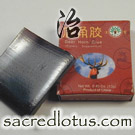 Lu Jiao Jiao9 gTonify Yang
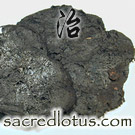 Shu Di Huang30 gTonify BloodNo specimen photographPao Jiang1.5 gWarm the Interior and Expel Cold
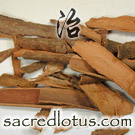 Rou Gui3 gWarm the Interior and Expel Cold
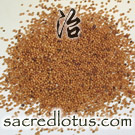 Bai Jie Zi6 gWarm Herbs that Transform Phlegm-Cold
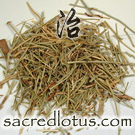 Ma Huang1.5 gWarm, Spicy Herbs that Release the Exterior
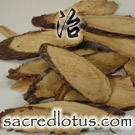 Gan Cao3 gTonify Qi
Preparation & dosage
How is Yang He Tang prepared?
Yang He Tang is taken as a warm decoction, traditionally twice daily. Lu Jiao Jiao is a glue (colla), not a woody or root herb, so it is dissolved into the hot, strained decoction rather than boiled together with the other six herbs — the same handling used for other animal-derived glues such as E Jiao. Ma Huang and Pao Jiang are used in small amounts relative to Shu Di Huang, consistent with their role as couriers/openers rather than primary tonics.
Source: Sacred Lotus sources & references + Bensky & Barolet, Formulas & Strategies (standard glue-herb preparation method). Reference only, not medical advice.
Decoction, taken warm. Reference relative amounts (per Sacred Lotus sources & references): Shu Di Huang 30 g; Lu Jiao Jiao 9 g (dissolved into the strained hot decoction, not boiled with the other herbs); Bai Jie Zi 6 g; Rou Gui 3 g; Sheng Gan Cao 3 g; Pao Jiang 1.5 g; Ma Huang 1.5 g. Ma Huang and Pao Jiang are intentionally small relative to the tonic herbs. Reference only; typical courses for chronic cold-phlegm conditions run several weeks.
Safety — read before use
What are the cautions for Yang He Tang?
Yang He Tang is a strongly warming formula built for cold, deficient (yin-type) patterns, so it is inappropriate — and can actively worsen — heat or excess conditions. Correct pattern differentiation is essential before use.
- Do not use for yang-type (hot) sores or abscesses — those with redness, swelling, local heat, throbbing pain, or a tendency to suppurate quickly; the formula's warming herbs would aggravate a heat-toxin process.
- Avoid with yin-deficiency heat signs such as night sweats, five-palm heat, a red tongue with little coating, or a rapid pulse.
- Use caution with already-ulcerated, long-open, or draining sores, where the warming, consolidating action is generally considered less appropriate and the formula is often modified.
- Contains Ma Huang (a small dose, but pharmacologically active) — use cautiously, and generally avoid, with hypertension, cardiac arrhythmia, insomnia, or during pregnancy; Rou Gui is also cautioned in pregnancy.
- Any deep-seated mass, swelling, or bone/joint lesion should be medically evaluated before self-treating, since cold-type presentations described here can outwardly resemble, but are not a substitute for diagnosing, serious underlying disease.
Source: Bensky & Barolet, Formulas & Strategies (cautions for warming yin-type-sore formulas); Ma Huang safety profile is well established in TCM materia medica sources. Traditional-use framing; not medical advice.
Originally Appeared In:
- Complete Collection of Patterns and Treatments in External Medicine (Wai Ke Zheng Zhi Quan Sheng Ji)
Notes:
How is Yang He Tang different from related formulas, and how is it modified?
Yang He Tang is distinguished by treating cold, deficient (yin-type) swellings — the opposite pattern from formulas that clear heat-toxin sores.
- vs Si Miao Yong An Tang: Si Miao Yong An Tang clears heat and toxin for hot, yang-type sores and abscesses (e.g. red, swollen, painful); Yang He Tang treats the cold, pale, yin-type opposite. The two patterns should never be confused.
- vs Yang He Jie Ning Wan: a related pill-form formula built on the same warm-yang, dissolve-cold-phlegm strategy, generally considered gentler and better suited to long-term use for chronic, slow-forming nodules.
- vs Du Huo Ji Sheng Tang: Du Huo Ji Sheng Tang addresses chronic wind-damp Bi (painful obstruction) with Liver/Kidney and qi/blood deficiency and widespread joint stiffness, without the phlegm-nodule, cold-sore focus that defines Yang He Tang.
Common modifications: add Ru Xiang and Mo Yao to invigorate blood and relieve pain when a nodule or swelling is firm and painful; add Xia Ku Cao to strengthen phlegm-nodule dispersal. Where Lu Jiao Jiao (deer antler glue) is unavailable, Lu Jiao Shuang (degelatinized antler shavings) or Lu Jiao (deer horn) are common practical substitutes, typically at a higher dose since they are less concentrated than the glue.
Source: Bensky & Barolet, Formulas & Strategies (formula comparisons and modifications).
Clinical Studies & Research:
Is there modern research on Yang He Tang?
Yes — modern research includes randomized clinical trials in musculoskeletal and oncology-adjunct contexts, plus mechanistic/preclinical work. A randomized controlled trial of modified Yang He Tang in ankylosing spondylitis found symptom improvement comparable to a celecoxib-sulfasalazine control, with fewer adverse effects in the herbal group. A separate randomized, placebo-controlled trial tested Yang He Tang as an add-on to neo-adjuvant chemotherapy in breast cancer, examining pathological response and immune-inflammatory markers. Preclinical work has also explored a mitochondrial-autophagy mechanism (AMPK-SIRT3 pathway) for cartilage protection in an osteoarthritis animal model.
- Ankylosing spondylitis (clinical RCT): modified Yang He Tang vs. celecoxib-sulfasalazine, ASAS20 response and safety compared (PMID 29735967).
- Breast cancer, neo-adjuvant chemotherapy adjunct (clinical RCT): randomized, placebo-controlled trial evaluating pathological response and immune-inflammatory markers (PMID 35451408).
- Osteoarthritis (preclinical, mechanism): AMPK-SIRT3-mediated mitochondrial autophagy and reduced chondrocyte apoptosis in an animal model (PMID 39746407).
Sources: PubMed 29735967; PubMed 35451408; PubMed 39746407. Research context, not a therapeutic claim; the oncology-adjunct trial studied Yang He Tang alongside, not in place of, conventional chemotherapy.
Sources & References
Compiled and edited by Thomas Dehli, Founder & Editor, Sacred Lotus Updated
The information here is referenced from numerous sources — teachers, practitioners, class notes from Five Branches University, the books below, and the published research literature, with citations given as resolvable PubMed identifiers. Where sources disagree, I have flagged the discrepancies directly. If facts couldn't be verified, I have left them out. How we source our content.
Reference information for students and practitioners — not medical advice. Consult a qualified practitioner. Terms of use.
Chinese Formulas Books & References
 https://amzn.to/4fYI3f8
 https://amzn.to/4j55NRA
 https://amzn.to/4gMROyv
 https://amzn.to/4h7msSK