
Gui Zhi Shao Yao Zhi Mu Tang
Cinnamon Twig, Peony, and Anemarrhena Decoction
- Category
- Formulas that Expel Dampness
- Subcategory
- Formulas that Dispel Wind-Dampness
- Ingredients
- 9 herbs
Actions
What does Gui Zhi Shao Yao Zhi Mu Tang do?
Gui Zhi Shao Yao Zhi Mu Tang releases wind-cold-damp from the joints while clearing the heat that has begun to develop from their stagnation, without further depleting an already-weakened qi and yin. It pairs warming, damp-dispersing herbs with cooling, yin-nourishing herbs — a strategy suited to chronic joint Bi (painful obstruction) that has partially transformed into heat on a background of underlying deficiency.
The nine ingredients divide by role:
- Chief: Gui Zhi and Ma Huang together release the exterior, warm and unblock the channels, and disperse wind-cold from the joints.
- Deputies: Fang Feng assists Gui Zhi and Ma Huang in dispelling wind-damp from the sinews and joints; Bai Zhu strengthens the Spleen and dries damp at its source.
- Assistants: Fu Zi (prepared aconite) warms yang and powerfully unblocks the channels to relieve painful obstruction; Zhi Mu and Bai Shao clear the heat that has developed from stagnation and nourish yin and blood, offsetting the warming, drying action of Gui Zhi, Ma Huang, and Fu Zi so the formula does not further injure fluids.
- Envoys: Sheng Jiang assists in releasing the exterior and harmonizes the Stomach; Gan Cao harmonizes all the herbs and moderates the toxicity of Fu Zi.
Source: Sacred Lotus sources & references + Bensky & Barolet, Formulas & Strategies (chief/deputy/assistant/envoy analysis; role flags are unset in our records and were derived from this source). Traditional-use framing; not medical advice.
Indications
What is Gui Zhi Shao Yao Zhi Mu Tang used for?
Gui Zhi Shao Yao Zhi Mu Tang treats chronic wind-damp painful obstruction (Bi syndrome) of the joints that has begun to transform into heat, occurring on a background of qi and yin deficiency. It originates in the Jin Gui Yao Lue (Essentials from the Golden Cabinet), where it is described for pain throughout the joints of the body together with an emaciated frame but swollen, hot joints, dizziness, shortness of breath, and a tendency toward nausea.
- Local signs: swollen, painful, sometimes hot joints of the extremities, worse with movement, that can feel locally warm despite the body overall running cold and weak.
- Systemic signs: an emaciated or wasted body, dizziness, shortness of breath, and a queasy, nauseated sensation reflecting the underlying qi and yin deficiency beneath the wind-damp-heat.
Tongue and pulse: a white, greasy tongue coating and a wiry, slippery pulse, both reflecting lingering wind-damp.
Source: Sacred Lotus sources & references on pattern/tongue/pulse + Bensky & Barolet, Formulas & Strategies (translation and analysis of the Jin Gui Yao Lue indication). Traditional-use framing; not medical advice.
Western Uses:
What is Gui Zhi Shao Yao Zhi Mu Tang used for in modern practice?
In modern practice Gui Zhi Shao Yao Zhi Mu Tang (often abbreviated GSZD in the research literature) is referenced most often alongside conventional drug therapy for rheumatoid arthritis, and secondarily for gout. Its classic pattern of swollen, painful joints on an underlying deficient, cold constitution loosely corresponds to what Western medicine recognizes as inflammatory joint disease; most clinical study has paired it with standard drugs such as methotrexate or leflunomide rather than testing it alone.
These biomedical correlates are offered as a reference to the formula’s traditional use, not as a claim that it treats rheumatoid arthritis, gout, or any other diagnosed disease. See research for the modern evidence base and its limits. Any use for a diagnosed condition belongs with a qualified practitioner and appropriate medical care.
Source: traditional-use correlates summarized from Bensky & Barolet, Formulas & Strategies, and the modern research cited in research; reference only, not a treatment claim.
Ingredients
9 substances in Gui Zhi Shao Yao Zhi Mu Tang — each links to its full herb monograph.
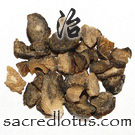 Fu Zi6 gWarm the Interior and Expel Cold
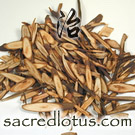 Gui Zhi12 gWarm, Spicy Herbs that Release the Exterior
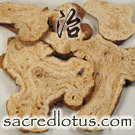 Bai Zhu15 gTonify Qi
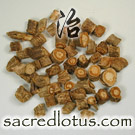 Fang Feng12 gWarm, Spicy Herbs that Release the Exterior
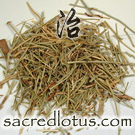 Ma Huang6 gWarm, Spicy Herbs that Release the Exterior
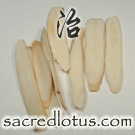 Bai Shao9 gTonify Blood
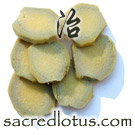 Sheng Jiang15 gWarm, Spicy Herbs that Release the Exterior
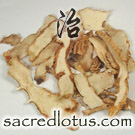 Zhi Mu12 gDrain Fire
 Gan Cao6 gTonify Qi
Preparation & dosage
How is Gui Zhi Shao Yao Zhi Mu Tang prepared?
Gui Zhi Shao Yao Zhi Mu Tang is prepared as a decoction (tang), with the prepared Fu Zi decocted separately and first (xian jian) so its toxic alkaloids are properly hydrolyzed before the remaining herbs are added. This cook-first step for processed aconite is standard safety practice in Chinese herbal dispensing, not optional, and dosing (especially of Fu Zi) is titrated by a qualified practitioner to the individual.
See dosage for reference relative amounts. The decoction is typically taken warm, in divided doses.
Source: Sacred Lotus sources & references + standard TCM dispensing practice for prepared aconite; see cautions and research for the toxicity/detoxification evidence. Reference only, not a prescription.
Decoction; Fu Zi (prepared) is decocted separately and first (xian jian) before the remaining herbs are added. Reference relative amounts (Sacred Lotus sources & references): Bai Zhu 15 g; Sheng Jiang 15 g; Gui Zhi, Zhi Mu, Fang Feng 12 g; Bai Shao 9 g; Ma Huang, Fu Zi (prepared), Gan Cao 6 g. Reference only; Fu Zi dosing must be supervised by a qualified practitioner.
Safety — read before use
What are the cautions for Gui Zhi Shao Yao Zhi Mu Tang?
Gui Zhi Shao Yao Zhi Mu Tang contains Fu Zi (prepared Aconiti Radix Lateralis), a toxic herb that must be sourced as properly processed (zhi Fu Zi) and decocted correctly. Raw aconite root contains diester-diterpenoid alkaloids (aconitine, mesaconitine, hypaconitine) that are cardiotoxic and neurotoxic; traditional processing plus prolonged decoction hydrolyzes these into far less toxic derivatives, but the herb still carries risk if under-processed, over-dosed, or combined incorrectly, and should only be prescribed and dosed by a qualified TCM practitioner.
- Contraindicated in pregnancy (Fu Zi and Ma Huang) and not to be combined with Ban Xia, Gua Lou, Bei Mu, Bai Lian, or Bai Ji — the traditional “eighteen incompatible medicinals” restriction that applies to aconite-type herbs.
- Ma Huang is a stimulant that raises heart rate and blood pressure; use cautiously, or avoid, with hypertension, arrhythmia, insomnia, or anxiety, and alongside MAOIs or other cardiac/stimulant medications.
- Signs of aconite toxicity include numbness or tingling of the mouth, tongue, or limbs, palpitations, and irregular heartbeat — stop the formula and seek care if these occur.
- Pattern fit: inappropriate for pure heat-excess Bi (acutely hot, red, inflamed joints with no underlying deficiency) or for exterior conditions without joint involvement.
Source: Bensky & Barolet, Formulas & Strategies (cautions, incompatible medicinals) + “The toxicology and detoxification of Aconitum: traditional and modern views,” Chinese Medicine, 2021 (PMID 34315520). Reference fact, not medical advice; toxicity is inherent to unprocessed/mis-prepared aconite, not a claim about this formula’s effect.
Originally Appeared In:
- Essentials from the Golden Cabinet (Jin Gui Yao Lue)
Notes:
How is Gui Zhi Shao Yao Zhi Mu Tang different from Wu Tou Tang and Gui Zhi Fu Zi Tang?
All three formulas come from the Jin Gui Yao Lue and use warming herbs to unblock painful joints, but they diverge on whether heat and deficiency are present. Choosing between them depends on how far the cold-damp Bi has transformed toward heat and how deficient the underlying constitution is.
- vs Wu Tou Tang (Aconite Decoction): Wu Tou Tang treats severe, cold-predominant Bi pain with no heat signs — it is purely warming and dispersing, without Zhi Mu or Bai Shao. Favor Wu Tou Tang when cold clearly predominates and there is no heat transformation; favor Gui Zhi Shao Yao Zhi Mu Tang once local heat and yin/qi deficiency have appeared.
- vs Gui Zhi Fu Zi Tang (Cinnamon Twig and Aconite Decoction): this simpler formula (Gui Zhi, Fu Zi, Zhi Gan Cao, Sheng Jiang, Da Zao) addresses wind-damp Bi with predominant yang deficiency and no heat. Gui Zhi Shao Yao Zhi Mu Tang is the more complex choice once heat and yin deficiency complicate the picture.
General modification principles (not from a specific cited source, offered for context): more pronounced joint heat/swelling may call for added heat-clearing/damp-draining herbs (e.g., Yi Yi Ren); more localized wind-damp in specific joints may call for added channel-guiding herbs (e.g., Qiang Huo for upper body, Du Huo for lower body). Any modification, and especially any adjustment to the Fu Zi dose, should be made by a qualified practitioner.
Source: Bensky & Barolet, Formulas & Strategies (formula-family comparison within the Jin Gui Yao Lue Dispel Wind-Dampness chapter).
Clinical Studies & Research:
Is there modern research on Gui Zhi Shao Yao Zhi Mu Tang?
Yes — most modern research studies it as an add-on to standard rheumatoid-arthritis (RA) drug therapy, with a smaller body of work on gout and on mechanism. The strongest clinical evidence is a meta-analysis of 14 randomized controlled trials (1,224 RA patients) finding that adding Gui Zhi Shao Yao Zhi Mu decoction (GSZD) to methotrexate improved clinical response and reduced some adverse effects compared with methotrexate alone (PMID 33633825). A separate meta-analysis of 13 RCTs (1,056 patients) reported similar added benefit for gout alongside conventional treatment (PMID 33205687).
- Rheumatoid arthritis, add-on to methotrexate (clinical meta-analysis): 14 RCTs, 1,224 patients, improved response and safety versus methotrexate alone (PMID 33633825).
- Gout, add-on to conventional treatment (clinical meta-analysis): 13 RCTs, 1,056 patients, improved efficacy and tolerability (PMID 33205687).
- Mechanism (preclinical, animal and cell): GSZD reduced inflammatory markers and joint damage in an adjuvant-arthritis model, implicating an HDAC1–HSP90AA1–NFKB2–IKBKB–TNF-alpha signaling axis (PMID 27277474).
- Gut microbiota (clinical, RA): GSZD combined with leflunomide shifted gut bacterial ratios (increased Bacteroidetes/Firmicutes, reduced Actinobacteria) versus leflunomide alone in a small RA cohort (PMID 38463585).
Sources: PubMed 33633825; PubMed 33205687; PubMed 27277474; PubMed 38463585. Research context, not a therapeutic claim; most trials combine the formula with standard drug therapy rather than testing it alone.
Sources & References
Compiled and edited by Thomas Dehli, Founder & Editor, Sacred Lotus Updated
The information here is referenced from numerous sources — teachers, practitioners, class notes from Five Branches University, the books below, and the published research literature, with citations given as resolvable PubMed identifiers. Where sources disagree, I have flagged the discrepancies directly. If facts couldn't be verified, I have left them out. How we source our content.
Reference information for students and practitioners — not medical advice. Consult a qualified practitioner. Terms of use.
Chinese Formulas Books & References
 https://amzn.to/4fYI3f8
 https://amzn.to/4j55NRA
 https://amzn.to/4gMROyv
 https://amzn.to/4h7msSK