
Xuan Bi Tang
Disband Painful Obstruction Decoction
- Category
- Formulas that Expel Dampness
- Subcategory
- Formulas that Dispel Wind-Dampness
- Ingredients
- 9 herbs
Actions
What does Xuan Bi Tang do?
Xuan Bi Tang (Disband Painful Obstruction Decoction) clears and drains damp-heat from the channels and joints, dispersing painful obstruction (bi) where dampness and heat are roughly balanced. From Wu Jutong’s Wen Bing Tiao Bian (Systematic Differentiation of Warm Diseases, 1798), it favors light, acrid-cold and aromatic herbs over heavy bitter-cold ones, so it clears heat without trapping the dampness underneath it.
The nine ingredients divide by function:
- Chief: Fang Ji — bitter, acrid, and cold; penetrates the channels and collaterals to drain damp-heat and relieve joint pain. (See cautions for an important species note on our listed Fang Ji.)
- Deputies: Xing Ren opens and descends Lung qi to move fluids from the upper burner; Yi Yi Ren percolates dampness through urination and strengthens the Spleen from the lower burner; Hua Shi drains damp-heat via the Bladder — together the three open a path for damp-heat to leave through all three burners, echoing the strategy of San Ren Tang.
- Assistants: Zhi Zi, Lian Qiao, and Chi Xiao Dou clear heat and toxin at the qi and blood levels; Ban Xia’s warm, drying quality dries dampness in the middle burner and keeps the cooler herbs from congealing into stagnation; Can Sha dispels wind-dampness and unblocks the channels directly, targeting the joint pain.
Source: Sacred Lotus sources & references + Bensky & Barolet, Formulas & Strategies (chief/deputy/assistant analysis). Traditional-use framing; not medical advice.
Indications
What is Xuan Bi Tang used for?
Xuan Bi Tang treats Damp-Heat Painful Obstruction (damp-heat bi) — a pattern where roughly equal dampness and heat lodge in the channels and joints, most often in warm, humid conditions or when damp accumulates and steams into heat.
Its classic clinical presentation:
- Joints: one or more hot, swollen, and painful joints with restricted movement; discomfort often worsens in damp or overcast weather.
- Systemic heat-damp signs: fever (with chills, or with sweating that doesn’t relieve it), a sallow-yellow complexion, a feeling of heaviness, dry mouth or thirst without much desire to drink, and scanty, dark urine.
Tongue and pulse: a gray or yellow, greasy tongue coating (per the Sacred Lotus sources & references on tongue); the pulse is commonly described as rapid and slippery, or soggy and rapid.
Source: Sacred Lotus sources & references on tongue + Bensky & Barolet, Formulas & Strategies; secondary formula references cross-checked for pulse. Traditional-use framing; not medical advice.
Western Uses:
What is Xuan Bi Tang used for in modern practice?
In modern practice Xuan Bi Tang is referenced for acute, hot, inflamed joint conditions — most notably gouty arthritis flares and active-phase rheumatoid arthritis. Practitioners have traditionally applied its damp-heat joint pattern where Western medicine recognizes redness, swelling, and heat in one or more joints.
This biomedical correlate is offered as a reference to the formula’s traditional use, not as a claim that it treats any diagnosed disease. Contemporary study remains largely preclinical/mechanistic, with some comparative clinical synthesis (see research). Any use for a diagnosed joint condition belongs with a qualified practitioner and appropriate medical care.
Source: traditional-use correlates summarized from Bensky & Barolet, Formulas & Strategies; reference only, not a treatment claim.
Ingredients
9 substances in Xuan Bi Tang — each links to its full herb monograph.
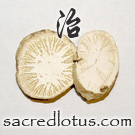 Han Fang Ji15 gRegulate Water and Drain Dampness
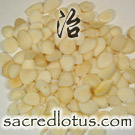 Xing Ren15 gRelieve Coughing and Wheezing
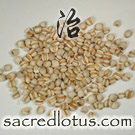 Yi Yi Ren15 gRegulate Water and Drain Dampness
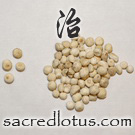 Ban Xia9 gWarm Herbs that Transform Phlegm-Cold
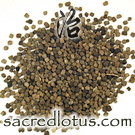 Can Sha9 gDispel Wind-Dampness
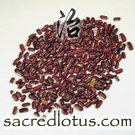 Chi Xiao Dou9 gRegulate Water and Drain Dampness
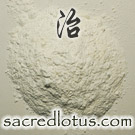 Hua Shi15 gRegulate Water and Drain Dampness
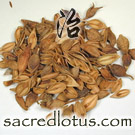 Lian Qiao9 gClear Heat and Eliminate Toxins
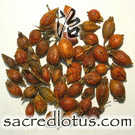 Zhi Zi9 gDrain Fire
Preparation & dosage
How is Xuan Bi Tang prepared, and which "Fang Ji" is used?
Xuan Bi Tang is prepared as a water decoction (tang) of Xing Ren, Yi Yi Ren, Can Sha, Ban Xia, Lian Qiao, Zhi Zi, Hua Shi, Chi Xiao Dou and Fang Ji, for damp-heat painful obstruction. Can Sha (silkworm faeces) and Hua Shi (talc) are traditionally wrapped in cloth while cooking. Chi Xiao Dou is often increased 2–3 fold in modern versions.
Critical safety note on "Fang Ji." This formula uses Han Fang Ji (Stephania tetrandra) — NOT Guang Fang Ji (Aristolochia fangchi), which contains aristolochic acid and is nephrotoxic and carcinogenic and is banned. Only the Stephania (Han Fang Ji) form is safe and correct here. This is a practitioner-directed formula; source Fang Ji carefully.
Source: Sacred Lotus sources & references (composition and preparation note) + Bensky & Barolet, Formulas & Strategies; the aristolochic-acid caution from standard herb-safety references.
Decoction. Reference relative amounts: Fang Ji, Xing Ren, Yi Yi Ren, Hua Shi 15 g; Can Sha, Ban Xia, Lian Qiao, Zhi Zi, Chi Xiao Dou 9 g. Chi Xiao Dou is often increased 2–3x in modern formulations. Reference only.
Safety — read before use
What are the cautions for Xuan Bi Tang?
Xuan Bi Tang is a cooling, damp-draining formula for excess damp-heat bi, so it is inappropriate once heat is absent or in states of underlying deficiency without active damp-heat — using it for a cold-damp bi pattern (no fever, no thirst, pale-white greasy tongue coat) can worsen the condition. Its cold, damp-draining nature also means it should be used cautiously with a weak Spleen and Stomach or loose stools, and it contains Ban Xia, traditionally used with caution in pregnancy.
Species safety note: This formula uses Han Fang Ji (Radix Stephaniae Tetrandrae, Stephania tetrandra), as classical and modern formularies (including Bensky & Barolet) specify. A similarly-named herb, Guang Fang Ji (Radix Aristolochiae Fangchi, Aristolochia fangchi), must never be used in its place: it contains aristolochic acid, a confirmed human carcinogen and potent nephrotoxin behind the 1990s "Chinese-herb nephropathy" outbreak (rapidly progressive kidney failure and urothelial cancer), now restricted or banned in the US, EU, Canada and elsewhere. Confirm the species is Stephania tetrandra, never Aristolochia.
Source: Bensky & Barolet, Formulas & Strategies (cautions for damp-heat bi formulas); aristolochic acid nephropathy: PubMed 28146082. Traditional-use framing; not medical advice.
Originally Appeared In:
- Systematic Differentiation of Warm Diseases (Wen Bing Tiao Bian)
Notes:
How is Xuan Bi Tang different from San Ren Tang and Si Miao San / Er Miao San?
Xuan Bi Tang, San Ren Tang, and Si Miao San / Er Miao San all clear damp-heat but target different territory. Choosing between them depends on where the damp-heat sits and how much heat has developed relative to dampness.
- vs San Ren Tang: San Ren Tang opens the same three burners for early-stage damp-warmth where dampness predominates over a mild, not-yet-established heat, without a fixed joint bi pattern. Xuan Bi Tang narrows that same “open all three burners” strategy onto damp-heat already lodged in the channels and joints, adding stronger heat-clearing herbs because heat is more pronounced.
- vs Si Miao San / Er Miao San: these simpler formulas (four or two herbs) concentrate on damp-heat settled in the lower burner — the knees and legs. Xuan Bi Tang is chosen when damp-heat bi is more diffuse across the joints and accompanied by more pronounced systemic heat signs such as fever and thirst.
Modern modification: Chi Xiao Dou is commonly increased two to three times its classical amount in contemporary use (see preparation).
Source: Bensky & Barolet, Formulas & Strategies (damp-heat bi formula differentiation).
Clinical Studies & Research:
Is there modern research on Xuan Bi Tang?
Yes, though it is still limited — mostly network-pharmacology/metabolomics work plus one comparative clinical synthesis, rather than dedicated randomized trials of the classical nine-herb formula.
- Gouty arthritis (preclinical, mechanistic): a metabolomics and network-pharmacology study of Xuanbi Decoction identified blood metabolites and shared molecular targets between the formula and gout-related pathways (PMID 40230334). The study does not confirm its herb list matches the classical nine-herb Wen Bing Tiao Bian formula exactly, so this is mechanistic context, not formula-specific clinical evidence.
- Rheumatoid arthritis (clinical synthesis): a network meta-analysis of 15 randomized trials (1,079 patients) compared four guideline-recommended damp-heat formulas — Baihu Guizhi Decoction, Danggui Niantong Decoction, Simiao Pill, and Xuanbi Decoction. Simiao Pill combined with conventional treatment ranked best overall; Xuanbi Decoction was included but was not the top performer (PMID 34353032).
Sources: PubMed 40230334; PubMed 34353032. Research context, not a therapeutic claim; direct clinical trial evidence on the classical formula remains limited.
Sources & References
Compiled and edited by Thomas Dehli, Founder & Editor, Sacred Lotus Updated
The information here is referenced from numerous sources — teachers, practitioners, class notes from Five Branches University, the books below, and the published research literature, with citations given as resolvable PubMed identifiers. Where sources disagree, I have flagged the discrepancies directly. If facts couldn't be verified, I have left them out. How we source our content.
Reference information for students and practitioners — not medical advice. Consult a qualified practitioner. Terms of use.
Chinese Formulas Books & References
 https://amzn.to/4fYI3f8
 https://amzn.to/4j55NRA
 https://amzn.to/4gMROyv
 https://amzn.to/4h7msSK