
Materia Medica Data
- Category
- Herbs that Dispel Wind-Dampness
- Temperature
- Warm
- Nature & Flavour
- Sweet, Spicy, Warm
- Channels Entered
- LIV, SP, ST
- Latin (pharmaceutical)
- Excrementum Bombycis Mon
- Chinese
- 蚕沙
- Tone Marks
- cán shā
Chinese Herb Actions
What is Can Sha used for in Chinese medicine?
Can Sha is used to dispel wind-dampness for aching, painful limbs and itchy skin, and to transform turbid dampness in the middle burner for vomiting, diarrhea and cramping. It is one of the few herbs in its category that works on the skin and the digestion as well as the joints, which is what practitioners select it for.
Its main traditional actions, as our record carries them:
- Dispels wind and damp — muscle aches and pain associated with wind and dampness in the extremities; also itchy skin and eczema, where the wind-damp reading is applied to the skin rather than the joints.
- Transforms turbidity and dampness, harmonizes the Stomach — vomiting, diarrhea, cramps, abdominal pain, borborygmus (gut rumbling) and calf spasms attributed to turbid damp in the middle burner. This is the presentation of sudden turmoil disorder (huo luan), and it is the pairing of the two actions in a single herb that makes it distinctive.
It sits in our materia medica under Herbs that Dispel Wind-Dampness, is described as sweet, spicy (acrid) and warm, and enters the Liver, Spleen and Stomach channels.
Source: our own herb record, cross-referenced against multiple online sources and published materia medica consensus (Bensky et al., 3rd ed.; Chen & Chen). Traditional-use framing; not medical advice.
Chinese Herb Dosage
What is the typical dosage of Can Sha?
About 5–10 g in decoction, with some references giving 4.5–9 g. Because the material is light, loose and granular, it is conventionally tied into a cloth bag and decocted wrapped (bao jian) so that it does not disperse through the liquid — the same handling instruction used for herbs such as Xuan Fu Hua and Hai Jin Sha.
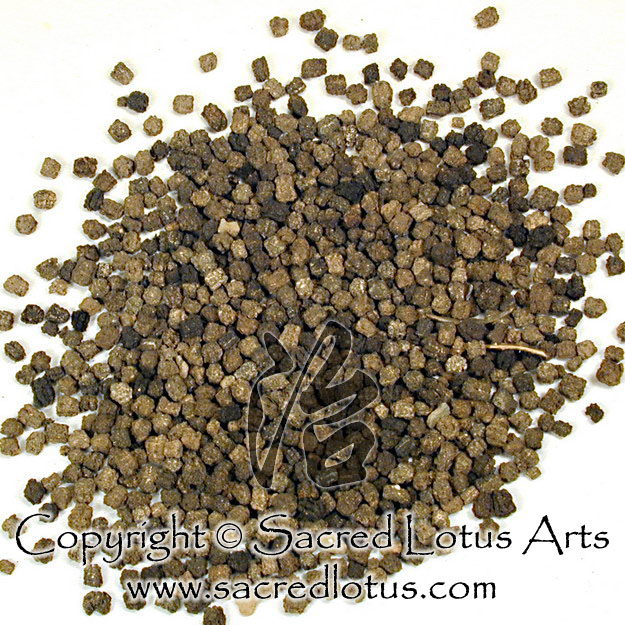
- Form dispensed — dried, sieved and cleaned pellets, dark green to near-black, collected from silkworm rearing.
- External use — it is also traditionally used externally, prepared as a wash or applied in a poultice for itchy damp skin conditions; no oral dose applies in that use.
Source: our own herb record (dosage figures as held) and standard materia medica ranges (Bensky et al., 3rd ed.; Chen & Chen), cross-referenced against multiple online sources. Reference only — not a prescription.
Chinese Herb Contraindications & Cautions
Are there cautions for Can Sha?
Our own record notes no specific contraindications for Can Sha, and it is regarded as a low-risk herb — but the general caution for its category applies: the wind-damp-dispelling herbs are drying, so they are used carefully where there is blood or yin deficiency without a genuine wind-damp pattern.
- Animal-derived — an insect faecal product; disclose it to anyone who avoids animal ingredients on dietary, religious or ethical grounds (see notes).
- Sourcing and hygiene — the material is collected from sericulture, sieved and dried, so cleanliness of processing and freedom from pesticide residues on the mulberry feed are quality questions worth asking a supplier. We have not located published residue surveys for this material and make no claim about typical commercial quality.
- Photosensitivity (theoretical) — because it is derived from mulberry leaf, Can Sha contains chlorophyll breakdown products (pheophytins and pheophorbides), a compound class known to be photoreactive in the laboratory (PMID 7318036). We have found no reports of photosensitivity from taking Can Sha at customary doses; this is noted as a chemical fact, not an observed adverse effect.
- Pregnancy — no specific contraindication is recorded in our data; as with any herb, use during pregnancy should be under a qualified practitioner.
Source: our own herb record; category cautions per published materia medica consensus (Bensky et al., 3rd ed.); constituent class per PMID 7318036. Reference note, not a safety guarantee.
Chinese Herb Toxicity & Overdose
Low. Can Sha is not classified as a toxic substance in the materia medica and is not flagged as toxic or restricted in our own records. No toxic dose, poisoning case, or organ-toxicity study specific to Can Sha was located in the published literature we could verify. The genuine safety considerations are the ordinary ones for an animal-derived, farm-collected material: hygienic processing, correct identification, and residues carried over from the mulberry feed.
Source: our own herb record (not flagged toxic); materia medica consensus. Reference note, not a safety guarantee.
Herb-Drug Interactions
No herb–drug interactions have been documented for Can Sha. No clinical interaction studies exist for this substance, so the absence of reported interactions reflects absence of investigation rather than demonstrated safety. Patients taking prescription medication should tell both their prescriber and their practitioner what is in their formula. (Flagged for practitioner confirmation; reference information only.)
Western / Biomedical Research
Chinese Herb Clinical Studies & Research
Provided as research context — a summary of published biomedical study, not a therapeutic or medical claim.
Is there modern research on Can Sha (Faeces Bombycis)?
Yes — a small but real body of laboratory and animal research, published mostly under the names Faeces Bombycis, Bombycis excrementum and Bombycis Feces. There are no clinical trials. The most striking work identified a specific compound behind one of its traditional uses.
- Headache and pain (animal, with a mechanism) — a 2023 study in the Journal of Ethnopharmacology, framed explicitly around the herb’s classical use for recurrent headache and rheumatic pain, tracked activity through a nitroglycerin-induced rat migraine model, isolated seven compounds, and identified phytol as the main anti-migraine constituent. Patch-clamp work showed phytol preferentially blocks the inactivated state of Nav1.7 sodium channels (half-inhibition around 0.32 µM) and reduces excitability in trigeminal ganglion neurons (PMID 36646158).
- Damp in the middle burner and the gut microbiome (animal) — a Chinese-language study used high-throughput sequencing in a rat model of “damp retention in the middle jiao” and reported that Faeces Bombycis shifted the intestinal microflora back toward the normal profile, suggesting the effect may relate to microorganisms and metabolites carried in the material itself (PMID 32237522). That is an unusually direct modern test of a classical indication our own record lists.
- Chemistry — fifteen compounds, including megastigmane derivatives, ionol glucosides, lutein, pipecolic acid, betaine and several amino acids, were isolated from Faeces Bombycis for the first time in a 2008 constituent study (PMID 19149256). Earlier work identified cytostatic pheophytins and photocytotoxic pheophorbides — chlorophyll degradation products traceable to the mulberry diet (PMID 7318036).
- Other preclinical directions — extracts reduced amyloid-β-oligomer-induced memory impairment, neuronal loss and neuroinflammation in mice (PMID 24898636), and suppressed adipogenesis in 3T3-L1 cells with shifts in branched-chain amino acid catabolism (PMID 40830614, PMC 12365174).
All of the above is cell and animal work. It provides chemical and mechanistic context for traditional use; it is not evidence that Can Sha treats migraine, dementia, obesity or any other condition in people.
Sources: PMID 36646158 (DOI 10.1016/j.jep.2023.116161); PMID 32237522; PMID 19149256; PMID 7318036 (DOI 10.1248/cpb.29.2261); PMID 24898636 (DOI 10.3233/JAD-140270); PMID 40830614, PMC 12365174 (DOI 10.1038/s41598-025-14700-x). Research context, not a therapeutic claim.
Chinese Herb Notes
What is Can Sha actually made of?
Can Sha is silkworm droppings — the dried faeces of the silkworm larva (Bombyx mori), collected during rearing, sieved clean and dried. The name says so plainly: cán is silkworm and shā here means the sand-like pellets. Silkworms are fed almost exclusively on mulberry leaves, so the material is essentially processed mulberry leaf, which is the traditional rationale for treating it as a medicinal rather than as waste and is why the research literature keeps returning to its chlorophyll-derived and mulberry-derived constituents.
- Animal-derived (dietary and ethical note) — Can Sha is an insect product and is not suitable for vegetarians or vegans. Anyone avoiding animal-derived medicinals should be told what this ingredient is; the same applies to Jiang Can, E Jiao, and Sang Piao Xiao (mantis egg case).
- Mulberry connection — we hold six separate mulberry-derived medicinals (Sang Ye leaf, Sang Zhi twig, Sang Bai Pi root bark, Sang Shen fruit, and the associated Sang Ji Sheng and Sang Piao Xiao). Can Sha belongs loosely to that same web: it is what the silkworm makes of the leaf.
What is the difference between Can Sha and Jiang Can?
Both come from the same insect, but in completely different states: Can Sha is what the living silkworm excretes; Jiang Can is the dead silkworm itself. They are separate records in our materia medica, in different categories, with different tastes, channels and uses — confusing them is a genuine error, not a naming variant.
- Can Sha (this herb) — the larva’s dried faeces. Sweet, spicy, warm; Liver, Spleen, Stomach. Category: herbs that dispel wind-dampness. Used for wind-damp aching, itchy skin, and turbid damp in the middle burner.
- Jiang Can — also called Bai Jiang Can, “stiff silkworm”: the body of a silkworm larva that has died of infection by the fungus Beauveria bassiana, which leaves the insect rigid and chalk-white. Spicy, salty, neutral; Liver and Lung. Category: herbs that extinguish wind and stop tremors. Used for wind-phlegm patterns — convulsions, facial paralysis, wind-heat sore throat, phlegm nodules.
- Practical tell — if the indication is joints, skin itch or damp digestive upset, it is Can Sha; if it is internal wind, spasm, throat or nodules, it is Jiang Can.
Identity field flagged, not altered. Our record gives the Latin as “Excrementum Bombycis Mon,” which appears to be a truncation — standard pharmaceutical forms are Excrementum Bombycis Mori or Faeces Bombycis, and the research literature uses Faeces Bombycis, Bombycis excrementum and Bombycis Feces for the same substance. We have not rewritten the field; it is noted here for owner correction.
Which formulas use Can Sha?
In our own formula records Can Sha appears in Xuan Bi Tang (Disband Painful Obstruction Decoction), alongside Han Fang Ji, Yi Yi Ren, Ban Xia, Lian Qiao, Zhi Zi, Hua Shi, Chi Xiao Dou and Xing Ren — a damp-heat painful-obstruction formula, where Can Sha contributes exactly its two actions at once: moving wind-damp in the channels while separating turbidity in the middle. (Traditional formula context, not treatment advice.)
Source: our own herb and formula records; substance identification and differentiation per published materia medica consensus (Bensky et al., 3rd ed.) and PMID 36646158, cross-referenced against multiple online sources.
Sources & References
Compiled and edited by Thomas Dehli, Founder & Editor, Sacred Lotus Updated
The information here is referenced from numerous sources — teachers, practitioners, class notes from Five Branches University, the books below, and the published research literature, with citations given as resolvable PubMed identifiers. Where sources disagree, I have flagged the discrepancies directly. If facts couldn't be verified, I have left them out. How we source our content.
Reference information for students and practitioners — not medical advice. Consult a qualified practitioner. Terms of use.
Chinese Herbs Books & References
 https://amzn.to/3WfB3DK
 https://amzn.to/3DR1VUh
 https://amzn.to/42aMz73
 https://amzn.to/3PuD4bt