

Fructus Forsythiae Suspensae Forsythia Fruit
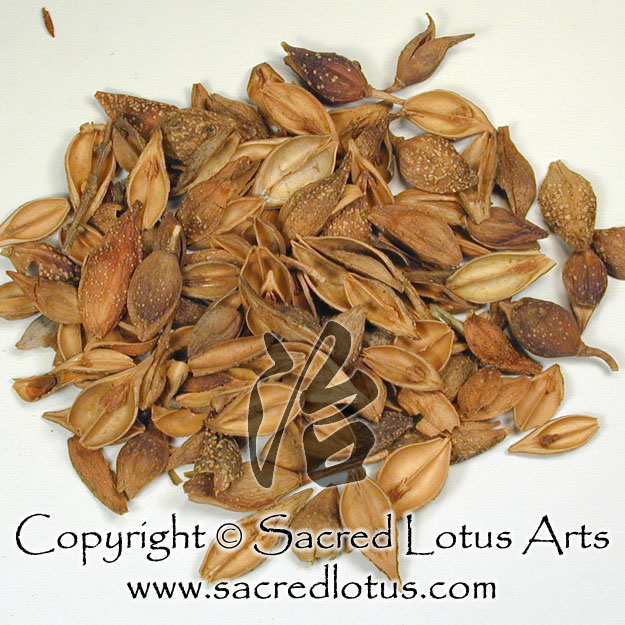
Materia Medica Data
- Temperature
- Cool
- Nature & Flavour
- Bitter, Slightly Spicy, Cool
- Channels Entered
- HT, LIV, GB
- Latin (pharmaceutical)
- Fructus Forsythiae Suspensae
- Chinese
- 连翘
- Tone Marks
- lián qiáo
Chinese Herb Actions
What is Lian Qiao used for in Chinese medicine?
Lian Qiao clears heat and relieves toxicity while dissipating nodules and lumps — earning it the classical epithet “the sage of sores” (疲家圣药) for its central role in treating sores, abscesses, and heat-toxin swellings, alongside a strong secondary use for the early stage of Wind-Heat invasion.
- Clears heat, relieves toxicity, disperses nodules — carbuncles, abscesses, sores, and neck/lymphatic lumps (including scrofula) arising from heat-toxin; considered one of the leading herbs for this category of pattern.
- Disperses Wind-Heat — the early stage of a Wind-Heat common cold or warm-febrile disease, with fever, sore throat, and headache.
- Clears heat at deeper levels — used for high fever, thirst, and mental disturbance/delirium in more advanced heat patterns, reflecting its ability to address heat toxin beyond just the surface.
Source: Sacred Lotus sources & references, cross-referenced against multiple online sources and published materia medica (Bensky, Materia Medica, 3rd ed.; Chen & Chen, Chinese Herbal Medicine: Materia Medica). Traditional-use framing; not medical advice.
Chinese Herb Dosage
What is the typical dosage of Lian Qiao?
Roughly 6–15 g in decoction — consistent across standard materia medica references. The part used is the fruit, harvested just before it fully ripens.
- Part used — the nearly-ripe fruit (green/unripe fruit is sometimes distinguished as more heat-clearing; fully ripe, opened fruit as more dispersing — a distinction noted in some traditions rather than a universal rule).
Source: Sacred Lotus sources & references; cross-referenced against multiple online sources and Bensky/Chen & Chen dosage ranges. Reference only — not a prescription.
Chinese Herb Contraindications & Cautions
Are there cautions for Lian Qiao?
Lian Qiao is not used for Yin-type (cold, non-inflamed) abscesses or carbuncles that have already ulcerated, and is contraindicated in diarrhea due to Spleen-Stomach deficiency — its bitter, cool, dispersing nature is suited to active heat-toxin patterns, not cold or deficient presentations.
- Yin-type sores — avoid in cold, non-suppurative (Yin-type) abscesses/carbuncles, and in sores that have already ulcerated, since Lian Qiao's cooling, dispersing action does not suit these presentations.
- Spleen-Stomach deficiency — contraindicated in diarrhea arising from underlying Spleen-Stomach deficiency, as its cold, bitter nature can further weaken digestion.
Source: Sacred Lotus sources & references; cross-referenced against multiple online sources and standard materia medica cautions.
Chinese Herb Toxicity & Overdose
Low, at standard decoction doses. Lian Qiao has a long history of dietary and medicinal use with no significant toxicity reported at typical materia medica dosages; its main traditional caution is pattern-appropriateness (cold/deficient presentations) rather than intrinsic toxicity.
Source: Sacred Lotus sources & references; materia medica consensus. Reference note, not a safety guarantee.
Herb-Drug Interactions
No well-established clinical herb–drug interactions are documented for Lian Qiao. Preclinical research on its constituents (phillyrin, forsythoside A) reports broad anti-inflammatory and antimicrobial activity across multiple biological pathways, which is a reasonable basis for general practitioner awareness in complex medication regimens, but this is precautionary rather than a demonstrated clinical interaction. (Flagged for practitioner confirmation.)
Western / Biomedical Research
Chinese Herb Clinical Studies & Research
Provided as research context — a summary of published biomedical study, not a therapeutic or medical claim.
Is there modern research on Lian Qiao (Forsythia suspensa)?
Yes — Forsythia suspensa fruit and its marker compounds phillyrin and forsythoside A are well studied preclinically for anti-inflammatory, antiviral, antibacterial, and hepatoprotective activity, supporting several of its traditional heat-toxin uses, though robust human clinical trial evidence remains limited.
- Comprehensive review — a 2018 review in the Journal of Ethnopharmacology covers the phytochemistry, pharmacology, and quality control of Forsythia suspensa, cataloging its major lignan and phenylethanoid glycoside constituents and their reported anti-inflammatory, antimicrobial, antiviral, and hepatoprotective effects in preclinical models.
- Phillyrin — a 2022 review in Molecules summarizes pharmacological work on phillyrin, one of Forsythia's characteristic lignan glycosides, reporting anti-inflammatory, antiviral, antibacterial, hepatoprotective, and anti-aging activity across in vitro and animal studies.
- Forsythoside A — a 2021 review in Pharmacological Research covers forsythoside A (the primary active component of the fruit), describing anti-inflammatory, antiviral, antioxidant, neuroprotective, and hepatoprotective mechanisms, including modulation of NF-κB and MAPK signaling.
- Central-nervous-system-focused review — a 2024 review in the Journal of Ethnopharmacology specifically surveys Forsythiae Fructus research relevant to central nervous system effects, an emerging area beyond the classical heat-toxin/sore indications.
Together these reviews indicate an active and growing preclinical evidence base for Lian Qiao's constituents; clinical (human trial) confirmation is comparatively limited, and this research should be read as context for — not proof of — its traditional uses.
Sources: PMID 28887216 (phytochemistry/pharmacology/quality control review, Journal of Ethnopharmacology); PMID 35744798 (phillyrin pharmacology review, Molecules); PMID 34029711 (forsythoside A review, Pharmacological Research); PMID 37797873 (Forsythiae Fructus and central nervous system, Journal of Ethnopharmacology). Research context, not a therapeutic claim.
Chinese Herb Notes
What is Lian Qiao's classic pairing, and what formula is it best known for?
Lian Qiao is classically paired with Jin Yin Hua (Honeysuckle Flower) — together they form the core Wind-Heat, heat-toxin pair of Chinese herbal medicine — each herb clears heat and relieves toxicity, with the pair being stronger together than either alone, and this pairing gives its name to the formula built around it, Yin Qiao San (Honeysuckle and Forsythia Powder), the classic prescription for exterior Wind-Heat with heat toxin.
Lian Qiao also appears in numerous other heat-toxin and Wind-Heat formulas, including Gan Lu Xiao Du Dan (Damp-Heat epidemic toxin at the qi level), Pu Ji Xiao Du Yin and Qing Wen Bai Du Yin (epidemic toxin patterns), Qing Ying Tang (heat entering the nutritive/Ying level in warm-febrile disease), Sang Ju Yin (early Wind-Heat cough), Liang Ge San (heat accumulated above the diaphragm), Fang Feng Tong Sheng San, and the food-stagnation formula Bao He Wan, where it helps clear heat generated by stagnant food. (Traditional formula context, not treatment advice.)
Source: Sacred Lotus formula data (Yin Qiao San, Gan Lu Xiao Du Dan, and related formulas); Sacred Lotus sources & references cross-referenced against multiple online sources.
Sources & References
Compiled and edited by Thomas Dehli, Founder & Editor, Sacred Lotus Updated
The information here is referenced from numerous sources — teachers, practitioners, class notes from Five Branches University, the books below, and the published research literature, with citations given as resolvable PubMed identifiers. Where sources disagree, I have flagged the discrepancies directly. If facts couldn't be verified, I have left them out. How we source our content.
Reference information for students and practitioners — not medical advice. Consult a qualified practitioner. Terms of use.
Chinese Herbs Books & References
 https://amzn.to/3WfB3DK
 https://amzn.to/3DR1VUh
 https://amzn.to/42aMz73
 https://amzn.to/3PuD4bt