
Pu Ji Xiao Du Yin
Universal Benefit Decoction to Eliminate Toxins
- Category
- Formulas that Clear Heat
- Subcategory
- Formulas that Clear Heat and Relieve Toxicity
- Ingredients
- 14 herbs
Actions
What does Pu Ji Xiao Du Yin do?
Pu Ji Xiao Du Yin (Universal Benefit Decoction to Eliminate Toxin) clears heat, resolves fire toxin, and disperses wind-heat, with its action directed especially at the head and face. It was designed by Li Dongyuan for “da tou wen” (big-head epidemic toxin) — a seasonal fire-toxin illness that lodges in the upper body, producing marked swelling, redness, heat, and pain of the head and face together with a sore, congested throat.
The fourteen ingredients divide by role:
- Chief: Huang Qin and Huang Lian (wine-processed) — bitter and cold, they clear heat and fire toxin from both the upper body and the interior.
- Deputies: Niu Bang Zi, Bo He, Jiang Can, Lian Qiao, and Ban Lan Gen disperse wind-heat and resolve toxin, helping to dissipate the swelling of the head, face, and throat.
- Assistants: Xuan Shen and Ma Bo clear heat, resolve toxin, and soothe the throat; Jie Geng opens the Lung qi and acts as a “boat” that carries the other herbs upward; Chen Pi regulates qi and disperses clumping so the concentration of cold, bitter herbs does not stagnate digestion.
- Envoys: Sheng Ma and Chai Hu vent and disperse the depressed fire toxin while guiding the formula’s action up to the head and face (“fire that is depressed should be dispersed”); Gan Cao harmonizes the other herbs.
Source: Sacred Lotus sources & references + Bensky & Barolet, Formulas & Strategies (chief/deputy/assistant/envoy analysis). Traditional-use framing; not medical advice.
Indications
What is Pu Ji Xiao Du Yin used for?
Pu Ji Xiao Du Yin treats “da tou wen” — fire toxin combined with wind-heat attacking the head and face. The pattern is a seasonal epidemic-toxin illness rather than an ordinary local infection: heat and toxin rise together to the upper body, producing dramatic swelling out of proportion to a simple exterior cold or a mild sore throat.
Its classic clinical presentation:
- Head and face: marked redness, swelling, heat, and pain, at times severe enough that the eyes swell shut.
- Throat: sore, swollen, or congested throat, sometimes with difficulty swallowing.
- Systemic signs: fever and thirst; an initial brief stage of chills/aversion to cold may appear as wind-heat first invades, before the fire-toxin pattern dominates.
Tongue and pulse: the tongue is red with a yellow coating; the pulse is floating and rapid, or rapid and forceful.
Source: Bensky & Barolet, Formulas & Strategies. Traditional-use framing; not medical advice.
Western Uses:
What is Pu Ji Xiao Du Yin used for in modern practice?
In modern practice, Pu Ji Xiao Du Yin’s fire-toxin/wind-heat pattern has traditionally been referenced for facial erysipelas, mumps (epidemic parotitis), and acute tonsillitis or pharyngitis — conditions where Western medicine recognizes the same visible picture of localized facial or throat swelling, redness, and fever that “da tou wen” describes.
These biomedical correlates are offered as a reference to the formula’s traditional use, not as a claim that it treats any disease. PubMed-indexed research specific to this formula is sparse (see research), so any use for a diagnosed condition belongs with a qualified practitioner and appropriate medical care.
Source: traditional-use correlates summarized from Bensky & Barolet, Formulas & Strategies; reference only, not a treatment claim.
Ingredients
14 substances in Pu Ji Xiao Du Yin — each links to its full herb monograph.
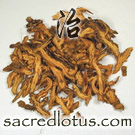 Huang Lian15 gClear Heat and Dry Dampness
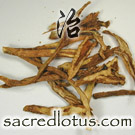 Huang Qin15 gWine FriedClear Heat and Dry Dampness
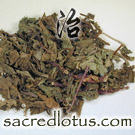 Bo He3 gCool, Spicy Herbs that Release the Exterior
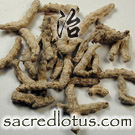 Jiang Can1.5 gExtinguish Wind and Stop Tremors
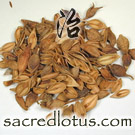 Lian Qiao3 gClear Heat and Eliminate Toxins
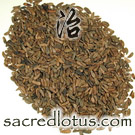 Niu Bang Zi3 gCool, Spicy Herbs that Release the Exterior
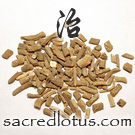 Ban Lan Gen3 gClear Heat and Eliminate Toxins
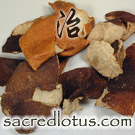 Chen Pi6 gRegulate the Qi
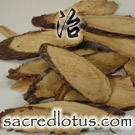 Gan Cao6 gTonify Qi
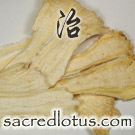 Jie Geng6 gWarm Herbs that Transform Phlegm-Cold
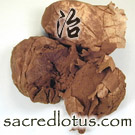 Ma Bo3 gClear Heat and Eliminate Toxins
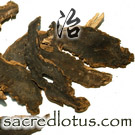 Xuan Shen6 gCool the Blood
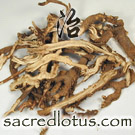 Chai Hu6 gCool, Spicy Herbs that Release the Exterior
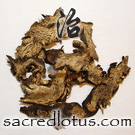 Sheng Ma1.5 gCool, Spicy Herbs that Release the Exterior
Preparation & dosage
How is Pu Ji Xiao Du Yin prepared?
Pu Ji Xiao Du Yin was originally a powder (san): the herbs were ground fine and taken as a draught with boiled water or green tea, sipped slowly so the medicine lingered at the throat. In modern practice it is most often prepared as a water decoction instead, with Bo He added near the end of cooking so its aromatic, dispersing properties are not driven off by prolonged boiling.
Source: Bensky & Barolet, Formulas & Strategies (original preparation method).
Decoction (originally a powder taken as a draught). Reference relative amounts: Huang Qin, Huang Lian 15 g (wine-fried); Xuan Shen, Jie Geng, Gan Cao, Chen Pi, Chai Hu 6 g; Niu Bang Zi, Lian Qiao, Bo He, Ban Lan Gen, Ma Bo 3 g; Jiang Can, Sheng Ma 1.5 g. Bo He is added near the end of cooking. Reference only.
Safety — read before use
What are the cautions for Pu Ji Xiao Du Yin?
Pu Ji Xiao Du Yin is a strongly cold, dispersing formula for excess fire-toxin patterns, so it is inappropriate once the presentation is not one of genuine heat toxin. Its concentrated bitter-cold herbs (Huang Qin, Huang Lian) and dispersing, ascending herbs (Sheng Ma, Chai Hu, Bo He) are suited to a short, acute course rather than ongoing use.
- Avoid in wind-cold without heat and in Spleen/Stomach deficiency-cold, since the bitter-cold herbs can further damage digestive yang and cause loose stools or poor appetite.
- Short-term use: traditionally discontinued once the heat toxin resolves; not intended as a long-term tonic or maintenance formula.
- Pregnancy: contains ascending, dispersing herbs (Sheng Ma, Chai Hu) and strong bitter-cold herbs — use only under professional guidance.
Source: Bensky & Barolet, Formulas & Strategies (cautions for bitter-cold, heat-toxin-clearing formulas). Traditional-use framing; not medical advice.
Originally Appeared In:
- Precious Mirror of Health (Wei Sheng Bao Jian)
Notes:
How is Pu Ji Xiao Du Yin different from Yin Qiao San and Huang Lian Jie Du Tang?
Pu Ji Xiao Du Yin combines two strategies at once — venting wind-heat from the exterior (as Yin Qiao San does) and clearing fire toxin from the interior (as Huang Lian Jie Du Tang does) — and directs both specifically at the head and face.
- vs Yin Qiao San: Yin Qiao San disperses wind-heat at the early, more superficial stage without the concentrated bitter-cold interior-clearing herbs; Pu Ji Xiao Du Yin is reserved for more advanced fire toxin with pronounced local swelling of the head, face, and throat.
- vs Huang Lian Jie Du Tang: Huang Lian Jie Du Tang purges fire toxin throughout the three burners with bitter-cold herbs alone; Pu Ji Xiao Du Yin adds wind-heat-dispersing, throat-benefiting herbs and specifically guides the action upward to the head and face via Sheng Ma and Chai Hu.
Common modifications: add Da Huang for pronounced constipation with excess heat; add extra Ban Lan Gen or Pu Gong Ying for severe facial swelling; add She Gan or Shan Dou Gen for severe sore throat.
Source: Bensky & Barolet, Formulas & Strategies (comparison and modifications).
Clinical Studies & Research:
Is there modern research on Pu Ji Xiao Du Yin?
PubMed-indexed clinical research specific to Pu Ji Xiao Du Yin is sparse. A 2008 Chinese-language review of Huang Lian’s clinical applications lists Pu Ji Xiao Du Yin among the classic Huang-Lian-based formulas used for heat-fire toxin and damp-heat patterns, reflecting its traditional standing rather than new trial data (PMID 18720877). A Cochrane systematic review of acupuncture for pediatric mumps identified one small Chinese study (Jin 2006) that used a “Pu Ji Xiao Du” decoction as its comparator arm, but the reviewers could not confirm it met randomized-trial criteria and left it “awaiting classification” — it was not included in any pooled analysis (PMID 25922859).
- Huang Lian formula review (context, not a trial of this formula): Pu Ji Xiao Du Yin named among classic Huang-Lian compound prescriptions for heat-fire toxin (PMID 18720877).
- Pediatric mumps (unconfirmed single study, not pooled): a “Pu Ji Xiao Du decoction” comparator arm appears in a study awaiting classification within a Cochrane review of acupuncture for mumps in children (PMID 25922859).
Sources: PubMed 18720877; PubMed 25922859 (Cochrane Database of Systematic Reviews). Research context only — direct, confirmed clinical-trial evidence for this formula is limited in indexed literature; not a therapeutic claim.
Sources & References
Compiled and edited by Thomas Dehli, Founder & Editor, Sacred Lotus Updated
The information here is referenced from numerous sources — teachers, practitioners, class notes from Five Branches University, the books below, and the published research literature, with citations given as resolvable PubMed identifiers. Where sources disagree, I have flagged the discrepancies directly. If facts couldn't be verified, I have left them out. How we source our content.
Reference information for students and practitioners — not medical advice. Consult a qualified practitioner. Terms of use.
Chinese Formulas Books & References
 https://amzn.to/4fYI3f8
 https://amzn.to/4j55NRA
 https://amzn.to/4gMROyv
 https://amzn.to/4h7msSK