
Xie Xin Tang
Drain the Epigastrium Decoction
- Category
- Formulas that Clear Heat
- Subcategory
- Formulas that Clear Heat and Relieve Toxicity
- Ingredients
- 3 herbs
Actions
What does Xie Xin Tang do?
Xie Xin Tang (this three-herb version, also called San Huang Xie Xin Tang, “Three Yellows Decoction to Drain the Epigastrium”) drains fire, purges heat, and resolves toxicity. All three ingredients are bitter and cold; together they clear excess fire wherever it has lodged — Heart, Stomach, or the upper body — and vent it downward and outward before it can force blood to move recklessly or knot as toxic heat.
The three ingredients divide by role:
- Chief: Da Huang (Rhei Radix et Rhizoma), 6 g. Bitter and cold, it drains excess fire and purges accumulated heat, carrying it downward and out through the bowels; it also moves blood, addressing the stasis that heat-driven bleeding leaves behind.
- Deputy: Huang Lian (Coptidis Rhizoma), 3 g. Drains fire from the Heart and Stomach, dries damp-heat in the middle burner, and resolves toxicity — the classic bitter “fire drainer” for a flushed, agitated presentation.
- Deputy: Huang Qin (Scutellariae Radix), 3 g. Drains fire from the Lung and upper burner and dries damp-heat, clearing the chest and epigastrium and complementing Huang Lian’s action in the middle.
Used together at a 2:1:1 ratio, the three “yellows” (Da Huang, Huang Lian, Huang Qin are all yellow-brown cut herbs) cover the upper and middle burner at once, which is why the formula is prized for reckless heat-bleeding and for damp-heat sitting as a soft, non-painful fullness below the sternum.
Source: Sacred Lotus sources & references + Bensky & Barolet, Formulas & Strategies (chief/deputy analysis). Traditional-use framing; not medical advice.
Indications
What is Xie Xin Tang used for?
Xie Xin Tang treats two classic presentations of excess heat/fire: reckless hot bleeding, and damp-heat epigastric focal distention (pi). Both share the same root — unchecked excess heat in the upper and middle burner — expressed either through the blood or through obstructed qi.
- Reckless heat-forced bleeding: nosebleed (epistaxis) or vomiting of blood (hematemesis) that comes on suddenly and is bright or dark red, accompanied by a flushed face, restlessness or irritability, thirst, constipation, and dark urine — heat driving blood out of its normal pathways.
- Damp-heat epigastric focal distention (pi): a subjective sensation of fullness or stuffiness below the sternum that is soft and non-tender on palpation (distinguishing it from a hard or painful mass), often with a bitter taste, nausea, or a heavy sensation from concurrent dampness.
- General fire-toxin signs: mouth and tongue sores, red and painful eyes, sore throat, or skin sores/carbuncles from heat toxicity are also traditionally addressed.
Tongue and pulse: a red tongue with a yellow, often greasy (damp-heat) coating; a rapid, forceful pulse, sometimes described classically as floating and rapid at the right guan position.
Source: Bensky & Barolet, Formulas & Strategies (indications, tongue, pulse); Sacred Lotus sources & references confirms the three-herb version this content describes. Traditional-use framing; not medical advice.
Western Uses:
What is Xie Xin Tang used for in modern practice?
In modern practice, practitioners have traditionally applied Xie Xin Tang’s heat-draining pattern to conditions where Western medicine recognizes inflammation, bleeding, or metabolic excess — for example gastritis or gastric mucosal irritation, hyperlipidemia and obesity, and states of gut dysbiosis. The formula’s bitter-cold, anti-inflammatory character is also referenced in connection with heat-pattern presentations such as a flushed face and agitation sometimes associated with elevated blood pressure.
These biomedical correlates are offered as reference to the formula’s traditional use, not as a claim that it treats any diagnosed disease. Direct human trial evidence for the classical bleeding/pi indications is limited; most modern study is preclinical or population-based association (see research). Any use for a diagnosed bleeding disorder, GI condition, or metabolic disease belongs with a qualified practitioner and appropriate medical care — sudden or heavy bleeding of any kind warrants prompt medical evaluation.
Source: traditional-use correlates summarized from Bensky & Barolet, Formulas & Strategies, cross-checked against the PubMed research cited below; reference only, not a treatment claim.
Ingredients
3 substances in Xie Xin Tang — each links to its full herb monograph.
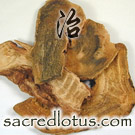 Da Huang6 gPurgatives
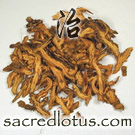 Huang Lian3 gClear Heat and Dry Dampness
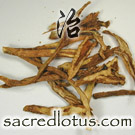 Huang Qin3 gClear Heat and Dry Dampness
Preparation & dosage
How is Xie Xin Tang prepared?
Classically, the three herbs are steeped briefly in freshly boiled water rather than simmered as a standard decoction, then strained and drunk warm. This short infusion (pao) extracts a lighter, more qi-level action that drains fire without pulling Da Huang’s full purgative strength — appropriate when the goal is to clear heat rather than aggressively purge the bowels.
Where heat-forced bleeding is more pronounced, practitioners have traditionally prepared the herbs as a standard short decoction instead, which draws out a stronger purgative and blood-moving effect from Da Huang. Either method is taken as a bitter, cold liquid; the formula is generally used for a limited course until the acute heat sign resolves, then stopped or modified.
Source: Bensky & Barolet, Formulas & Strategies (classical infusion-vs-decoction preparation method). Traditional-use framing; not medical advice.
Classical preparation: steep in freshly boiled water (brief infusion, not a long decoction) and drink warm; a standard short decoction is used instead when a stronger purgative/bleeding-stopping effect is needed. Reference relative amounts (2:1:1 ratio): Da Huang 6 g; Huang Lian 3 g; Huang Qin 3 g. Reference only; not a prescription.
Safety — read before use
What are the cautions for Xie Xin Tang?
Xie Xin Tang is a strongly bitter, cold, purgative formula for excess heat — it is inappropriate for cold or deficiency patterns and is not meant for extended, unsupervised use. Da Huang in particular is a stimulant laxative; overuse or prolonged use can injure Spleen-Stomach yang qi, causing abdominal cramping, diarrhea, and cold limbs.
- Avoid in deficiency-cold presentations — a pale tongue, thin/weak pulse, cold limbs, or loose stools indicate the wrong pattern; using this formula there can worsen digestion and deplete yang.
- Pregnancy and lactation: Da Huang is a purgative with documented uterine-stimulant risk in some contexts — use only under professional guidance, and generally avoided.
- Not for hard or painful abdominal masses: the epigastric fullness this formula addresses is classically soft and non-tender; a hard, painful, or persistent mass needs proper medical evaluation, not self-treatment.
- Any active or unexplained bleeding (epistaxis, hematemesis, or blood in stool) should be medically evaluated before or alongside herbal treatment — this is traditional-use content, not a substitute for care of an acute bleed.
- Drug interactions: a pharmacology review of this formula’s constituents describes reinforcing pharmacodynamic and pharmacokinetic interactions among Da Huang, Huang Lian, and Huang Qin compounds (PMID 27965575); as with other anthraquinone- and berberine-containing formulas, discuss use with a practitioner if taking other medications.
Source: Bensky & Barolet, Formulas & Strategies (cautions for bitter-cold purgative formulas); PubMed 27965575 (interaction review). Traditional-use framing; not medical advice.
Originally Appeared In:
- Essentials from the Golden Cabinet (Jin Gui Yao Lue)
Notes:
Is this the same formula as other formulas called Xie Xin Tang?
No — several unrelated formulas share the name “Xie Xin Tang” (“Drain the Epigastrium Decoction”), and this Sacred Lotus sources & references (slug xie-xin-tang) is confirmed by its stored composition — Da Huang 6 g, Huang Lian 3 g, Huang Qin 3 g — to be the three-herb, pure-heat version, also known as San Huang Xie Xin Tang or Da Huang Huang Lian Huang Qin Xie Xin Tang. Readers researching “Xie Xin Tang” elsewhere may encounter a different formula; the composition is the reliable way to tell them apart.
- vs the original two-herb Shang Han Lun 154 formula: Zhang Zhongjing’s original text names only Da Huang and Huang Lian, prepared as a brief hot-water infusion. The commentator Cheng Wuji held that Huang Qin belongs in the recipe (an omission in transmission), and the resulting three-herb version — matching this Sacred Lotus sources & references — is the one most commonly used and taught today.
- vs the Ban Xia Xie Xin Tang family (Ban Xia Xie Xin Tang, Sheng Jiang Xie Xin Tang, Gan Cao Xie Xin Tang): despite the shared name, these are structurally different formulas that harmonize a mixed cold-heat epigastric glomus using Ban Xia, Gan Jiang, Ren Shen, Zhi Gan Cao, and Da Zao alongside Huang Lian and Huang Qin (no Da Huang, no purgation). They treat disharmony from a mistakenly purged exterior condition with both cold and heat signs, not the pure excess-heat/bleeding pattern this formula addresses.
Preparation note (see also preparation): the classical method — steeping briefly in freshly boiled water rather than decocting — is specific to draining fire lightly at the qi level; a full decoction pulls a stronger purgative action from Da Huang and is used when heat-forced bleeding is more urgent.
Source: Bensky & Barolet, Formulas & Strategies (formula-family differentiation and Cheng Wuji commentary); Sacred Lotus sources & references confirms which version this entry is.
Clinical Studies & Research:
Is there modern research on Xie Xin Tang?
Yes, but it is mostly preclinical mechanistic work plus one large population-based clinical association study; direct trial evidence for the classical bleeding/pi indications is limited. The strongest clinical signal comes from a Taiwanese national-database cohort study, while cell and animal studies explore metabolic and gut-barrier mechanisms consistent with the formula’s traditional heat-draining, anti-inflammatory reputation.
- Breast cancer mortality (retrospective cohort, clinical): a Taiwan National Health Insurance Research Database study matched 5,387 Chinese-herbal-medicine users (including San-Huang-Xie-Xin-Tang) to 5,387 non-users among breast cancer patients (2000–2011) and found lower cancer mortality among users, strengthening with cumulative dose; the full three-herb formula outperformed single constituent herbs (PMID 36831555). This is an association from real-world prescribing data, not a randomized trial, and is not evidence the formula treats cancer.
- Obesity/lipid metabolism (preclinical): in 3T3-L1 preadipocytes and a high-fat-diet rat model, Dahuang Huanglian Xiexin Decoction reduced fat accumulation and modulated adipocyte differentiation via inhibition of endoplasmic-reticulum stress (PMID 39002709).
- Gut dysbiosis (preclinical, network pharmacology + experimental validation): the decoction attenuated intestinal dysbiosis via the IL-17 signaling pathway, with network analysis identifying candidate active compounds and targets (PMID 38688354).
- Constituent interactions (pharmacology review): a review of Da Huang, Huang Lian, and Huang Qin’s combined pharmacodynamics and pharmacokinetics describes mutually reinforcing interactions among the three herbs’ active compounds (PMID 27965575).
Sources: PubMed 36831555; PubMed 39002709; PubMed 38688354; PubMed 27965575. Research context, not a therapeutic claim; the classical bleeding and epigastric-fullness indications remain supported mainly by traditional textual and clinical-experience sources, not controlled trials.
Sources & References
Compiled and edited by Thomas Dehli, Founder & Editor, Sacred Lotus Updated
The information here is referenced from numerous sources — teachers, practitioners, class notes from Five Branches University, the books below, and the published research literature, with citations given as resolvable PubMed identifiers. Where sources disagree, I have flagged the discrepancies directly. If facts couldn't be verified, I have left them out. How we source our content.
Reference information for students and practitioners — not medical advice. Consult a qualified practitioner. Terms of use.
Chinese Formulas Books & References
 https://amzn.to/4fYI3f8
 https://amzn.to/4j55NRA
 https://amzn.to/4gMROyv
 https://amzn.to/4h7msSK