
Xian Fang Huo Ming Yin
Sublime Formula for Sustaining Life
- Category
- Formulas that Clear Heat
- Subcategory
- Formulas that Clear Heat and Relieve Toxicity
- Ingredients
- 13 herbs
Actions
What does Xian Fang Huo Ming Yin do?
Xian Fang Huo Ming Yin clears heat-toxin and invigorates the blood to resolve early-stage yang-type (hot, red, swollen) sores and abscesses. It combines a strong heat-toxin-clearing action with blood-moving, swelling-reducing, and pain-relieving herbs, addressing both the toxic heat and the local qi-and-blood stagnation it causes.
The thirteen ingredients (per Sacred Lotus sources & references) divide by role:
- Chief: Jin Yin Hua (9 g) — strongly clears heat-toxin, the formula's core anti-toxic-heat herb for sores and abscesses.
- Deputies: Dang Gui and Chi Shao invigorate the blood and disperse local stasis; Ru Xiang and Mo Yao (the classic blood-moving pair) reduce swelling and stop pain.
- Assistants: Zhe Bei Mu and Tian Hua Fen clear heat and soften hardness, dispersing nodulation; Bai Zhi and Fang Feng vent heat-toxin outward through the exterior and relieve pain; Chuan Shan Jia and Zao Jiao Ci (paired) penetrate the channels to unblock stasis and promote drainage of pus; Chen Pi regulates qi so the blood-moving herbs act freely and the formula does not stagnate.
- Envoy: Gan Cao harmonizes the other herbs and adds its own toxin-clearing action.
Source: Sacred Lotus sources & references + Bensky & Barolet, Formulas & Strategies (chief/deputy/assistant/envoy analysis, "Formulas that Clear Heat and Resolve Toxicity"). Traditional-use framing; not medical advice.
Indications
What is Xian Fang Huo Ming Yin used for?
Xian Fang Huo Ming Yin treats early-stage, yang-type (hot) sores, carbuncles, and abscesses caused by toxic heat with qi-and-blood stagnation — traditionally regarded as one of the principal formulas of the TCM external-medicine tradition, used before a lesion has pointed or ruptured.
Its classic clinical presentation:
- Local signs: redness, swelling, burning or throbbing pain, and firm heat over the lesion — carbuncles, furuncles/boils, styes, breast abscess/mastitis, and similar toxic-heat sores.
- Systemic signs: may accompany fever and chills in the early, unresolved stage.
Tongue and pulse: tongue red (often most notably on the underside) with a thin white or yellow coating; pulse rapid and forceful (or rapid and slippery).
Source: Sacred Lotus sources & references/identity + Bensky & Barolet, Formulas & Strategies. Traditional-use framing; not medical advice.
Western Uses:
What is Xian Fang Huo Ming Yin used for in modern practice?
In modern practice Xian Fang Huo Ming Yin is referenced, traditionally, for acute localized bacterial-type skin and soft-tissue infections — boils, carbuncles, styes, and mastitis/breast abscess — contexts where Western medicine recognizes localized inflammation, redness, and swelling. This is a reference to the formula's traditional external-medicine use, not a claim that it treats any diagnosed infection; acute infection needs appropriate medical evaluation and care.
Separately, more recent laboratory research has explored this formula's anti-inflammatory and immune-modulating activity in animal models of rheumatoid arthritis (see Research) — a modern research direction distinct from its classical dermatological indication, and still preclinical.
Source: traditional-use correlates summarized from Bensky & Barolet, Formulas & Strategies; reference only, not a treatment claim.
Ingredients
13 substances in Xian Fang Huo Ming Yin — each links to its full herb monograph.
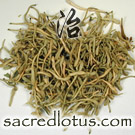 Jin Yin Hua9 gClear Heat and Eliminate Toxins
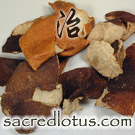 Chen Pi9 gRegulate the Qi
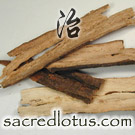 Chi Shao3 gCool the Blood
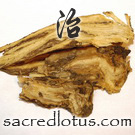 Dang Gui6-12 gTonify Blood
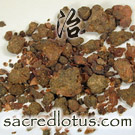 Mo Yao3 gInvigorate Blood and Remove Stagnation
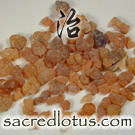 Ru Xiang3 gInvigorate Blood and Remove Stagnation
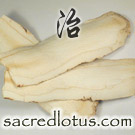 Bai Zhi3 gWarm, Spicy Herbs that Release the ExteriorNo specimen photographChuan Shan Jia3 gInvigorate Blood and Remove Stagnation
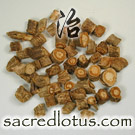 Fang Feng3 gWarm, Spicy Herbs that Release the Exterior
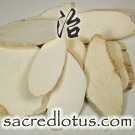 Tian Hua Fen3 gCool and Transform Phlegm-Heat
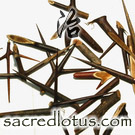 Zao Jiao Ci3 gWarm Herbs that Transform Phlegm-Cold
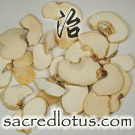 Zhe Bei Mu3 gCool and Transform Phlegm-Heat
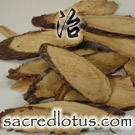 Gan Cao3 gTonify Qi
Preparation & dosage
How is Xian Fang Huo Ming Yin prepared, and what caution applies?
Xian Fang Huo Ming Yin is prepared as a water decoction (tang), classically cooked with equal parts water and wine to boost its blood-invigorating, sore-resolving action; the cooked herbs can also be applied topically to the affected area. Ru Xiang and Mo Yao (resins) and the aromatics are added later or briefly cooked.
Important note. The classical formula lists Chuan Shan Jia (pangolin scales) — an ILLEGAL product from a critically endangered animal that must not be used; legitimate modern versions omit or substitute it (e.g. Wang Bu Liu Xing, Zao Jiao Ci). A practitioner-directed formula for early-stage toxic sores. Available as granules.
Source: Sacred Lotus sources & references (composition and preparation note) + Bensky & Barolet, Formulas & Strategies; conservation/legal note from CITES.
Decoction (reference relative amounts, per Sacred Lotus sources & references): Jin Yin Hua 9 g; Chen Pi 9 g; Dang Gui 6-12 g; Gan Cao, Zhe Bei Mu, Tian Hua Fen, Chi Shao, Ru Xiang, Mo Yao, Fang Feng, Bai Zhi, Zao Jiao Ci 3 g each. Chuan Shan Jia (traditionally 3 g) should not be sourced today — see cautions. Reference only.
Safety — read before use
What are the cautions for Xian Fang Huo Ming Yin?
Xian Fang Huo Ming Yin is a strong heat-clearing, blood-moving formula for acute, excess toxic-heat patterns, so it is inappropriate once that pattern is not present. It should not be used for yin-type sores (pale, flat, not hot) or for lesions that have already ruptured and are draining — different formulas apply once toxic heat is resolving. It is meant for short-term use in the acute stage, not extended dosing.
- Spleen/Stomach or qi-and-blood deficiency: use with caution — the bitter, cold, and blood-invigorating herbs can burden weak digestion.
- Pregnancy: contains multiple blood-invigorating herbs (Dang Gui, Chi Shao, Ru Xiang, Mo Yao) — use only under professional guidance.
- Conservation/legal note: the classical formula includes Chuan Shan Jia (pangolin scale), which should not be sourced or used today — all pangolin species are CITES Appendix I (commercial international trade banned since January 2017) and pangolin scale was removed from the Chinese Pharmacopoeia in 2020 for the same conservation reasons. See the Chuan Shan Jia herb monograph for full detail and commonly cited substitutes (e.g. Wang Bu Liu Xing); this formula already pairs Chuan Shan Jia with Zao Jiao Ci, which shares the channel-penetrating, pus-expelling action.
Source: Bensky & Barolet, Formulas & Strategies (cautions for heat-toxin/blood-stagnation formulas); CITES Appendices (pangolin species Appendix I, effective Jan 2017); China's 2020 Pharmacopoeia revision. Traditional-use framing; not medical advice.
Originally Appeared In:
- Revised Fine Formulas for Women (Jiao Zhu Fu Ren Liang Fang)
Notes:
How is Xian Fang Huo Ming Yin different from Wu Wei Xiao Du Yin and Si Miao Yong An Tang?
All three formulas clear heat-toxin for sores and abscesses, but differ in scope and target site. Xian Fang Huo Ming Yin is the broadest of the three, adding substantial blood-invigorating and qi-regulating herbs alongside its heat-toxin clearing, making it suited to larger or more complex early-stage abscesses with marked local swelling and pain.
- vs Wu Wei Xiao Du Yin: a simpler, more purely heat-toxin-clearing formula (five herbs) for smaller, more superficial boils and sores without the additional blood-moving emphasis.
- vs Si Miao Yong An Tang: targets toxic-heat sores of the limbs and vessels (classically, gangrenous, vessel-type presentations) rather than the general carbuncle/abscess picture Xian Fang Huo Ming Yin addresses.
Sourcing note: because Chuan Shan Jia (pangolin scale) is no longer available or appropriate to source, contemporary preparations typically use the formula without it, relying on Zao Jiao Ci (already present) for the channel-penetrating/pus-expelling action, or add Wang Bu Liu Xing.
Source: Bensky & Barolet, Formulas & Strategies ("Formulas that Clear Heat and Resolve Toxicity" chapter comparisons); standard materia medica consensus on Chuan Shan Jia substitution.
Clinical Studies & Research:
Is there modern research on Xian Fang Huo Ming Yin?
Yes, but modern pharmacology research has focused on anti-inflammatory and immune-modulating activity in animal models of rheumatoid arthritis (RA) — a different application from the formula's classical dermatological (toxic-heat sores) use. In a collagen-induced-arthritis mouse model, the formula reduced cartilage destruction and pannus formation, down-regulated pro-inflammatory cytokines (IL-1β, TNF-α, IFN-γ, IL-6), and suppressed NF-κB and JAK/STAT signaling, with effects comparable to the conventional drug leflunomide. A separate, more recent study of a modified version found it reduced IL-1β-induced inflammatory proliferation of rat synovial cells by regulating T-lymphocyte migration and differentiation via the NF-κB pathway.
- Collagen-induced arthritis, mouse model (preclinical): down-regulated CD3+ T-cell and CD3-CD19+ B-cell proliferation/differentiation and pro-inflammatory cytokines, comparable to leflunomide (PMID 28056922; PMC 5216578; DOI 10.1186/s12906-016-1526-x).
- Modified formula, rat synoviocytes (preclinical): alleviated IL-1β-induced synovial cell inflammation by regulating T-lymphocyte migration/differentiation via NF-κB signaling (PMID 36849102; DOI 10.1016/j.jep.2023.116297).
Sources: PubMed 28056922 / PMC 5216578 / DOI 10.1186/s12906-016-1526-x; PubMed 36849102 / DOI 10.1016/j.jep.2023.116297. Research context, not a therapeutic claim; findings are preclinical and target a different (RA) application than the formula's classical dermatological use.
Sources & References
Compiled and edited by Thomas Dehli, Founder & Editor, Sacred Lotus Updated
The information here is referenced from numerous sources — teachers, practitioners, class notes from Five Branches University, the books below, and the published research literature, with citations given as resolvable PubMed identifiers. Where sources disagree, I have flagged the discrepancies directly. If facts couldn't be verified, I have left them out. How we source our content.
Reference information for students and practitioners — not medical advice. Consult a qualified practitioner. Terms of use.
Chinese Formulas Books & References
 https://amzn.to/4fYI3f8
 https://amzn.to/4j55NRA
 https://amzn.to/4gMROyv
 https://amzn.to/4h7msSK