

Liu Shen Wan
Six Miracle Pill
- Category
- Formulas that Clear Heat
- Subcategory
- Formulas that Clear Heat and Relieve Toxicity
- Ingredients
- 6 herbs
Actions
What does Liu Shen Wan do?
Liu Shen Wan (“Six Miracle Pill”) clears Heat-toxin and reduces the swelling and pain of an acute, localized Heat-toxin flare-up — its classic use is as a fast-acting throat and skin remedy, not a general tonic. The name refers to the six potent substances that make up the formula.
The six ingredients divide by role:
- Chief: Niu Huang (Calculus Bovis, ox gallstone) and Zhen Zhu (Margarita, pearl) — together they clear Heat-toxin directly and are traditionally credited with promoting the healing of damaged tissue.
- Deputies: Chan Su (Venenum Bufonis, dried toad-skin secretion) and Xiong Huang (realgar, an arsenic-sulfide mineral) — further resolve toxin and disperse painful, hot swelling.
- Assistants: She Xiang (Moschus, musk) and Bing Pian (Borneolum, borneol) — aromatic, orifice-opening substances traditionally used to carry the formula’s action into swollen or obstructed tissue.
Source: Sacred Lotus sources & references + Bensky & Barolet, Formulas & Strategies (chief/deputy/assistant analysis for Heat-clearing, toxin-resolving formulas). Encyclopedic reference; not medical advice, not administration or dosing guidance.
Indications
What is Liu Shen Wan used for?
Traditionally, Liu Shen Wan is applied to acute, localized Heat-toxin presentations of the throat and skin — most classically sudden, severe sore throat with redness and swelling (including tonsillitis) and mouth or tongue sores.
- Throat: acute pharyngitis/tonsillitis with red, swollen, painful throat tissue.
- Skin/external: early-stage boils, carbuncles, erysipelas, and swollen, tender lymph nodes (including mumps), where it has traditionally been used both internally and as a topical paste.
Liu Shen Wan is a fixed, potent patent formula built around this acute local Heat-toxin pattern rather than a specific tongue/pulse presentation; this database does not carry separate tongue/pulse fields for it.
Source: Sacred Lotus sources & references/category + Bensky & Barolet, Formulas & Strategies (Heat-clearing, toxin-resolving category). Encyclopedic reference; not medical advice.
Western Uses:
What is Liu Shen Wan used for in modern practice?
Liu Shen Wan remains one of China’s best-known commercial Chinese patent medicines, still manufactured for acute sore throat and tonsillitis by makers of record such as Leiyunshang Pharmaceutical. Modern research on it is mostly preclinical mechanism work, plus one clinical systematic review: a 2025 meta-analysis of 21 randomized trials found it, combined with conventional care, outperformed conventional care alone as an adjunctive treatment for herpes zoster and postherpetic neuralgia (PMID 41394132; see research).
These modern-use references describe how the formula is studied and sold historically — they are not a claim that it treats any diagnosed disease. Because several of its ingredients are toxic or regulated (see cautions), contemporary sourcing, sale, and any use are subject to local law and require licensed-practitioner oversight.
Source: Leiyunshang Pharmaceutical company/product history (manufacturer of record) + PubMed 41394132 (adjunctive herpes zoster/PHN meta-analysis). Encyclopedic/historical reference only, not a treatment claim.
Ingredients
6 substances in Liu Shen Wan — each links to its full herb monograph.
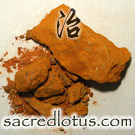 Xiong Huang3 gSubstances for External Application
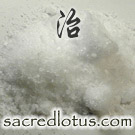 Bing Pian3 gAromatic Substances that Open the OrificesNo specimen photographShe Xiang4.5 gAromatic Substances that Open the Orifices
Preparation & dosage
How is Liu Shen Wan prepared?
Liu Shen Wan is a fixed, commercially manufactured patent pill, not a formula compounded to order by a practitioner. Classically, the six ingredients are ground to a fine powder and bound with wine into very small pills (traditionally on the order of a few millimeters across), with Chan Su dissolved into the wine base during processing.
Since 1984 its exact formula and manufacturing process have been protected in China as one of the “Four Major Secret Prescriptions,” and its production technique was listed as National Intangible Cultural Heritage in 2008 — so modern manufacturing detail is proprietary to licensed producers (e.g., Leiyunshang Pharmaceutical) rather than independently reproducible. This entry documents that history; it is not a preparation guide.
Source: Leiyunshang Pharmaceutical company/product history; Sacred Lotus sources & references. Encyclopedic/historical reference only.
Historically labeled by manufacturers as a small number of pills per adult dose (commercial patent-medicine packaging). Because Liu Shen Wan combines multiple toxic and restricted substances (Chan Su, Xiong Huang, She Xiang) with a narrow margin between a labeled reference dose and cardiotoxic or heavy-metal exposure, no dose is given here as usage guidance. Any use requires a licensed TCM practitioner, jurisdiction-appropriate legality, and quality-verified sourcing.
Safety — read before use
What are the cautions for Liu Shen Wan?
Liu Shen Wan is built from several substances that are toxic, tightly restricted, or sourced from an endangered species — this section documents those facts for reference. It is not instructions for obtaining, preparing, or administering the formula. Any use of Liu Shen Wan belongs with a licensed TCM practitioner, under jurisdiction-appropriate law, using quality-verified sourcing.
- Chan Su (toad venom): classified as toxic. Its bufadienolide compounds (bufalin, cinobufagin) are potent cardiotoxins that act on the heart similarly to cardiac glycosides (digoxin). Documented poisoning from toad-venom-containing preparations presents with bradycardia, arrhythmia, and hyperkalemia resembling digitalis overdose, and has been fatal (PMID 35860707); it can also produce false readings on some digoxin immunoassays.
- Xiong Huang (realgar): an arsenic-sulfide (As₄S₄) mineral. Comparative toxicology found realgar and realgar-containing Liu Shen Wan markedly less acutely toxic than soluble arsenite/arsenate in animal models (PMID 21129479), but arsenic-containing minerals remain restricted or regulated substances in many jurisdictions and carry chronic-exposure (liver/kidney) risk if sourcing or use is not verified.
- She Xiang (musk): the dried secretion of the musk deer, an endangered, CITES-listed species (flagged as toxic/endangered in this database). It is also traditionally regarded as a strong blood-mover historically used to induce miscarriage, making pregnancy an absolute traditional contraindication.
- Formula-wide: traditionally contraindicated in pregnancy and in infants; because of its potent, fast-acting toxic ingredients, traditional sources restrict it to short-term use for an acute presentation, not ongoing or preventive use.
Sources: PubMed 35860707 (toad-venom cardiac-intoxication case series); PubMed 21129479 (realgar/Liu Shen Wan comparative arsenic toxicology); herb-level toxicity/caution entries for Chan Su, Xiong Huang, and She Xiang in this database. Public-safety reference only; not medical advice, not administration or dosing guidance.
Originally Appeared In:
- Handbook of Traditional Chinese Medicinal Preparations (Zhong Yao Zhi Ji Shou Ce)
Notes:
What is the history of Liu Shen Wan, and how does it compare to An Gong Niu Huang Wan?
Liu Shen Wan was introduced in 1864 by Suzhou’s Leiyunshang pharmacy (founded 1734), and became one of China’s best-known patent medicines: in 1984 its formula was designated one of China’s “Four Major Secret Prescriptions,” and its production technique was added to the National Intangible Cultural Heritage list in 2008.
It shares aromatic, orifice-opening ingredients (Niu Huang, She Xiang, Bing Pian) with the classic emergency formula An Gong Niu Huang Wan, but the two are not interchangeable: An Gong Niu Huang Wan is reserved for a medical emergency — Heat entering the Pericardium, with high fever and loss of consciousness — while Liu Shen Wan is a narrower, localized throat-and-skin Heat-toxin remedy.
Source: Leiyunshang Pharmaceutical company/product history; Bensky & Barolet, Formulas & Strategies (Heat-clearing, toxin-resolving formula category, orifice-opening comparison). Encyclopedic/historical reference only.
Clinical Studies & Research:
Is there modern research on Liu Shen Wan?
Yes — mostly preclinical mechanism studies, plus one clinical systematic review. A 2025 systematic review and meta-analysis of 21 randomized controlled trials (1,478 participants) found Liu Shen Wan combined with conventional treatment outperformed conventional treatment alone for herpes zoster, shortening vesicle-healing time and pain duration and lowering the rate of postherpetic neuralgia, with a low rate of reported adverse events (PMID 41394132).
- Secondary bacterial infection after influenza (preclinical): in cultured lung cells and mice, Liu Shen Wan reduced Staphylococcus aureus adhesion to influenza-infected cells and lessened resulting lung injury (PMID 33766755).
- Bone cancer pain (preclinical): in a rat bone-cancer-pain model, Liu Shen Wan and its constituent bufalin reduced pain-related inflammatory signaling via PI3K/Akt and TRPV1 pathways (PMID 39587385).
- Sepsis (preclinical): in a mouse cecal-ligation-and-puncture sepsis model, Liu Shen Wan improved survival and lowered TNF-alpha and oxidative-stress markers (PMID 16782549).
- Arsenic toxicology (safety-relevant): realgar and realgar-containing Liu Shen Wan showed markedly lower acute arsenic toxicity than soluble arsenite/arsenate in mice (PMID 21129479).
Sources: PubMed 41394132; PubMed 33766755; PubMed 39587385; PubMed 16782549; PubMed 21129479. Research context only; not a therapeutic claim, and not guidance on obtaining or using the formula.
Sources & References
Compiled and edited by Thomas Dehli, Founder & Editor, Sacred Lotus Updated
The information here is referenced from numerous sources — teachers, practitioners, class notes from Five Branches University, the books below, and the published research literature, with citations given as resolvable PubMed identifiers. Where sources disagree, I have flagged the discrepancies directly. If facts couldn't be verified, I have left them out. How we source our content.
Reference information for students and practitioners — not medical advice. Consult a qualified practitioner. Terms of use.
Chinese Formulas Books & References
 https://amzn.to/4fYI3f8
 https://amzn.to/4j55NRA
 https://amzn.to/4gMROyv
 https://amzn.to/4h7msSK