

Qing Ying Tang
Clear the Nutritive Level Decoction
- Category
- Formulas that Clear Heat
- Ingredients
- 9 herbs
Actions
What does Qing Ying Tang do?
Qing Ying Tang (Clear the Nutritive Level Decoction) clears heat from the nutritive (ying) level, resolves fire toxin, and nourishes yin while “venting” the pathogen back out toward the qi level. It is the classic Wen Bing (warm-disease) formula for the point in a febrile illness where heat has moved past the exterior (wei) and qi levels and begun to scorch the nutritive level and disturb the Heart/spirit — before it has fully entered the blood (xue) level and caused frank bleeding.
The nine ingredients divide by role:
- Chief: Xi Jiao (Cornu Rhinoceri Asiatici — in current practice substituted with Shui Niu Jiao, water buffalo horn) and Sheng Di Huang together clear heat, cool the blood, resolve toxin, and nourish yin at the core of the nutritive-level pattern.
- Deputies: Xuan Shen and Mai Men Dong nourish yin and generate fluids, reinforcing Sheng Di Huang against the fluid-damage caused by prolonged heat.
- Assistants: Jin Yin Hua and Lian Qiao clear heat toxin and perform the formula’s signature move — “venting heat, transforming qi” (tòu rè zhuán qì), drawing the pathogen from the deeper nutritive level back out to the qi level where it can be resolved; Huang Lian drains Heart fire; Dan Zhu Ye (Herba Lophatheri) clears Heart heat and guides it out via urination; Dan Shen clears heat and cools and invigorates the blood, preventing heat from congealing blood into stasis.
Source: Sacred Lotus sources & references + Bensky & Barolet, Formulas & Strategies; Chen & Chen, Chinese Herbal Formulas and Applications (chief/deputy/assistant analysis). Traditional-use framing; not medical advice.
Indications
What is Qing Ying Tang used for?
Qing Ying Tang addresses heat that has entered the nutritive (ying) level in a warm-febrile (Wen Bing) disease — the third of the four stages (wei, qi, ying, xue) that Ye Tianshi used to track how heat penetrates the body. At this stage the pathogen has begun to disturb the Heart/spirit and the blood, but has not yet caused the frank bleeding seen once heat reaches the deeper blood level.
Its classic clinical presentation:
- Fever pattern: high fever that is notably worse at night, reflecting the nutritive level’s association with yin and the night.
- Spirit disturbance: restlessness, agitation, insomnia; in more severe cases, mild disorientation or delirious speech as heat harasses the Heart.
- Emerging blood-level signs: a faint, indistinct rash just beginning to appear (an early sign that heat is starting to move into the blood).
- Thirst pattern: little or no pronounced thirst, or thirst without a strong desire to drink — because the heat and fluid damage are already at a deep level, distinguishing this from the pronounced thirst of qi-level Bai Hu Tang patterns.
Tongue and pulse: a deep red (crimson/“scarlet”) and dry tongue is the hallmark sign of nutritive-level heat; the pulse is thin and rapid.
Source: Sacred Lotus sources & references fields + Bensky & Barolet, Formulas & Strategies (Wen Bing four-level differentiation). Traditional-use framing; not medical advice.
Western Uses:
What is Qing Ying Tang used for in modern practice?
In modern practice Qing Ying Tang is referenced for high-fever states with agitation and an emerging rash, historically applied within the Wen Bing framework to conditions such as epidemic febrile illness, encephalitis/meningitis, sepsis, and eruptive fevers (e.g., measles, scarlet fever) presenting with high night fever and faint petechiae. Contemporary Chinese clinical and laboratory research has also explored it, in combination with conventional care, for severe acute pancreatitis-associated lung injury and for blood-heat pattern psoriasis.
These biomedical correlates are offered as a reference to the formula’s traditional use, not as a claim that it treats any disease. Any use for a diagnosed condition — especially a high fever, altered consciousness, or bleeding disorder — requires urgent evaluation by a qualified practitioner and, where indicated, emergency medical care; it is not a substitute for either.
Source: traditional-use correlates summarized from Bensky & Barolet, Formulas & Strategies; modern research context from PubMed (see research). Reference only, not a treatment claim.
Ingredients
9 substances in Qing Ying Tang — each links to its full herb monograph.
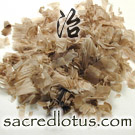 Xi Jiao9 gCool the Blood
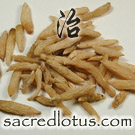 Mai Men Dong9 gTonify Yin
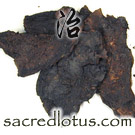 Sheng Di Huang15 gCool the Blood
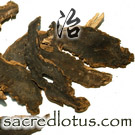 Xuan Shen9 gCool the Blood
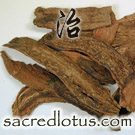 Dan Shen6 gInvigorate Blood and Remove Stagnation
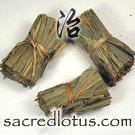 Dan Zhu Ye3 gDrain Fire
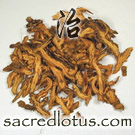 Huang Lian4.5 gClear Heat and Dry Dampness
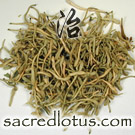 Jin Yin Hua9 gClear Heat and Eliminate Toxins
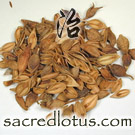 Lian Qiao6 gClear Heat and Eliminate Toxins
Preparation & dosage
How is Qing Ying Tang prepared?
Qing Ying Tang is prepared as a water decoction taken warm, traditionally formulated for acute, short-term use during a febrile illness rather than as a long-term tonic. Because Xi Jiao (or its modern substitute Shui Niu Jiao) is a hard horn material, it is traditionally decocted separately for an extended time (or taken as a fine powder) and then combined with the strained decoction of the remaining herbs; Shui Niu Jiao in particular needs a much longer decoction time than the softer root and leaf herbs in the formula.
Source: Bensky & Barolet, Formulas & Strategies (preparation notes for horn/mineral ingredients in decoctions). Traditional-use framing; not medical advice.
Water decoction, taken warm, for acute short-term use. Reference relative amounts (per Sacred Lotus sources & references): Xi Jiao/Shui Niu Jiao 9 g (Shui Niu Jiao substitute typically dosed much higher, up to 30 g, and decocted separately for longer); Sheng Di Huang 15 g; Xuan Shen 9 g; Mai Men Dong 9 g; Jin Yin Hua 9 g; Lian Qiao 6 g; Huang Lian 4.5 g; Dan Zhu Ye (Herba Lophatheri) 3 g; Dan Shen 6 g. Reference only; not a prescription.
Safety — read before use
What are the cautions for Qing Ying Tang?
Qing Ying Tang is a strongly cold, yin-nourishing formula reserved for genuine nutritive-level heat in an acute febrile illness — it is not appropriate for heat that remains only at the exterior or qi level, or for cold/deficiency patterns. Using it too early, before heat has actually reached the nutritive level, or in someone without true heat, risks damaging Spleen/Stomach yang and driving the pathogen deeper rather than resolving it.
- Xi Jiao (rhinoceros horn) is not used today: the source animal is endangered and the trade is banned; modern practice substitutes Shui Niu Jiao (water buffalo horn, Cornu Bubali) at a substantially higher dose, or omits it with the remaining herbs adjusted by a practitioner.
- Weak digestion: the rich yin tonics (Sheng Di Huang, Xuan Shen, Mai Men Dong) and bitter-cold herbs (Huang Lian) can burden a weak or cold Spleen, causing loose stools or reduced appetite.
- Acute, high-stakes presentation: the pattern this formula addresses — high fever, altered spirit, emerging rash — warrants prompt professional and, where appropriate, emergency medical evaluation; it is not a home remedy for undiagnosed high fever.
- Pregnancy and pediatric/geriatric use: contains strongly cold and blood-invigorating herbs (Dan Shen); use only under professional guidance.
Source: Bensky & Barolet, Formulas & Strategies (cautions for nutritive/blood-level clearing formulas); CITES status of rhinoceros horn is a documented regulatory/conservation fact. Traditional-use framing; not medical advice.
Originally Appeared In:
- Systematic Differentiation of Warm Diseases (Wen Bing Tiao Bian)
Notes:
How is Qing Ying Tang different from Xi Jiao Di Huang Tang and Qing Wen Bai Du Yin?
These three formulas track progressively deeper (or broader) heat within Ye Tianshi’s four-level (wei-qi-ying-xue) model of warm-febrile disease. Choosing among them depends on which level the heat has actually reached.
- vs Xi Jiao Di Huang Tang (Rhinoceros Horn and Rehmannia Decoction): that formula treats heat that has moved a stage deeper, into the blood (xue) level, with frank bleeding (e.g., nosebleeds, blood in stool, dark rash) — it cools blood and stops bleeding but lacks Qing Ying Tang’s heat-venting herbs (Jin Yin Hua, Lian Qiao), because at the blood level there is no longer a qi-level pathway to vent heat back out through.
- vs Qing Wen Bai Du Yin (Clear the Epidemic and Resolve Toxin Beverage): that formula is a larger combination addressing heat simultaneously blazing at the qi, ying, and xue levels (built around Bai Hu Tang plus nutritive/blood-clearing herbs) — used for more severe, multi-level epidemic heat-toxin patterns than Qing Ying Tang’s single-level presentation.
Key modifications: add Da Qing Ye, Ban Lan Gen, or Zi Cao when the rash is more pronounced; add Shi Gao and Zhi Mu when qi-level heat (marked thirst, sweating) is still prominent alongside the nutritive-level signs; reduce or omit Huang Lian if Stomach heat is not marked, to protect fluids and digestion; add Ling Yang Jiao (antelope horn, now also restricted/substituted) or Gou Teng if there is wind-stirring (tremor, convulsion).
Source: Bensky & Barolet, Formulas & Strategies (Wen Bing formula comparisons and modifications).
Clinical Studies & Research:
Is there modern research on Qing Ying Tang?
Yes, though it is limited — a mix of a small clinical trial and animal studies rather than large-scale evidence. A randomized controlled trial in patients with blood-heat pattern psoriasis compared Qing Ying Tang against a conventional retinoid and reported improvement in skin lesions and TCM syndrome scores alongside reduced IL-17/IL-23/IL-22/IL-21, framed by the authors as related to IL-23/Th17 pathway regulation. Separately, an animal study in a severe-acute-pancreatitis model found the formula reduced lung injury markers comparably to dexamethasone, via upregulation of the aquaporin-1 water-channel protein.
- Blood-heat pattern psoriasis (clinical, n=72): Qing Ying Tang vs. acitretin over 12 weeks, with improved skin-lesion and quality-of-life scores and reduced IL-17/IL-23/IL-22/IL-21 (PMID 30868829).
- Pancreatitis-associated acute lung injury (animal model): Qing Ying Tang reduced lung edema and inflammatory markers via upregulation of aquaporin-1, performing comparably to dexamethasone (PMID 25371738).
Sources: PubMed 30868829; PubMed 25371738. Research context, not a therapeutic claim; direct evidence for the formula's classic Wen Bing indication (acute febrile illness with rash) remains limited in the modern literature.
Sources & References
Compiled and edited by Thomas Dehli, Founder & Editor, Sacred Lotus Updated
The information here is referenced from numerous sources — teachers, practitioners, class notes from Five Branches University, the books below, and the published research literature, with citations given as resolvable PubMed identifiers. Where sources disagree, I have flagged the discrepancies directly. If facts couldn't be verified, I have left them out. How we source our content.
Reference information for students and practitioners — not medical advice. Consult a qualified practitioner. Terms of use.
Chinese Formulas Books & References
 https://amzn.to/4fYI3f8
 https://amzn.to/4j55NRA
 https://amzn.to/4gMROyv
 https://amzn.to/4h7msSK