

Dan Zhu Ye (Lophatherum Stem and Leaves)
Herba Lophatheri Gracilis Lophatherum Stem and Leaves
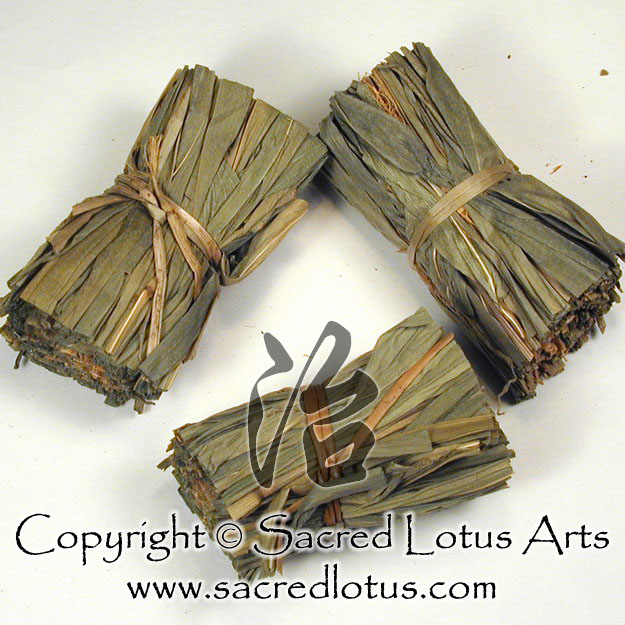
Materia Medica Data
- Category
- Herbs that Drain Fire
- Temperature
- Cold
- Nature & Flavour
- Sweet, Bland, Cold
- Channels Entered
- HT, SI, ST
- Latin (pharmaceutical)
- Herba Lophatheri Gracilis
- Chinese
- 淡竹叶
- Tone Marks
- dàn zhú yè
- Translation
- Bland Bamboo Leaves
Chinese Herb Actions
What is Dan Zhu Ye used for in Chinese medicine?
Dan Zhu Ye (Lophatherum, the stem and leaves of Lophatherum gracile) clears heat and relieves irritability while draining damp-heat downward through the urine. It is a mainstay for feverish restlessness and thirst in the early stages of warm-febrile disease, and for heat that has moved from the Heart into the Small Intestine channel, showing up as scanty, dark, painful urination alongside mouth and tongue sores.
Its main traditional actions:
- Clears heat and relieves vexation/irritability — feverish disease with thirst, agitation, and a restless, unsettled feeling; a classic ingredient in early wind-heat formulas.
- Drains damp-heat via the urine — a mild diuretic action used specifically for heat that has “shifted” from the Heart to the Small Intestine channel, producing acute, scanty, dark, and painful urination.
- Clears Heart and Stomach heat — heat rising to the mouth causing mouth and tongue sores, canker sores, and swollen, painful gums.
- Supports fluid-generating, heat-clearing formulas — combined with fluid-nourishing and exterior-releasing herbs in early-stage warm disease.
Source: cross-referenced against multiple online sources and Sacred Lotus sources & references, consistent with Bensky & Chen & Chen materia medica consensus.
Chinese Herb Dosage
What is the typical dosage of Dan Zhu Ye?
Roughly 6–9 g in decoction is standard, occasionally increased to around 15 g for stronger heat-clearing in more severe febrile-irritability presentations. The part used is the dried stem and leaves (not the root), added directly to a standard water decoction along with the other herbs in the formula.
Source: Sacred Lotus sources & references; cross-referenced against multiple online sources and standard materia medica dosage ranges. Reference only — not a prescription.
Chinese Herb Contraindications & Cautions
Are there cautions for Dan Zhu Ye?
Sacred Lotus sources record pregnancy as a caution for Dan Zhu Ye. Being cold and bland/draining by nature, it is also traditionally avoided in the absence of true heat signs — for example, frequent urination without heat, or Spleen-Stomach deficiency-cold with loose stools — where its cooling, diuretic action could aggravate the underlying pattern.
Source: Sacred Lotus sources & references; cross-referenced against multiple online sources for standard materia medica cautions.
Chinese Herb Toxicity & Overdose
Low. Dan Zhu Ye is a food-grade plant material — it is sold and consumed in China as an everyday cooling tea — and no significant toxicity is reported at standard decoction doses. Reference note, not a safety guarantee.
Source: cross-referenced against multiple online sources; materia medica consensus.
Herb-Drug Interactions
No well-established clinical herb–drug interactions are documented. Because Dan Zhu Ye has a mild diuretic action, practitioner awareness is reasonable for patients already taking prescription diuretics — this is a precautionary, theoretical note rather than a demonstrated clinical interaction.
Western / Biomedical Research
Chinese Herb Clinical Studies & Research
Provided as research context — a summary of published biomedical study, not a therapeutic or medical claim.
Is there modern research on Dan Zhu Ye (Lophatherum gracile)?
Yes — growing preclinical research on anti-inflammatory, bone-protective, and antibacterial activity, with clinical trial evidence still limited. Most studies to date are laboratory and animal work rather than human trials.
- Anti-inflammatory (neutrophils) — an extract of Lophatherum gracile suppressed markers of neutrophil activation in a dose-dependent way, acting through JNK signaling and calcium mobilization pathways; cell-based research.
- Bone protection (preclinical) — a water extract suppressed RANKL-stimulated osteoclast formation and prevented bone loss in an ovariectomized (postmenopausal-model) mouse study.
- Antibacterial (preclinical) — luteolin isolated from the plant showed activity against multidrug-resistant E. coli, with proposed use as a natural antibacterial/preservative agent; laboratory research, not a treatment claim.
Overall, findings support the traditional heat-clearing, anti-inflammatory reputation of the herb, but direct human clinical trials are still lacking.
Sources: PMID 32800928 (neutrophilic anti-inflammatory activity, Journal of Ethnopharmacology); PMID 36430416 (osteoclastogenesis/osteoporosis model, International Journal of Molecular Sciences); PMID 38983919 (luteolin antibacterial activity, Frontiers in Pharmacology). Research context, not a therapeutic claim.
Chinese Herb Notes
How is Dan Zhu Ye different from Zhu Ye (bamboo leaf)?
Despite the near-identical name, Dan Zhu Ye and true bamboo leaf (Zhu Ye) come from entirely different plants and are a well-known naming trap in Chinese herbal study. Dan Zhu Ye is the stem and leaf of Lophatherum gracile, a grass in the Poaceae family that is not bamboo at all — it just carries an old name meaning “bland/light bamboo leaf.” Zhu Ye (Herba Bambusae) is the leaf of a true bamboo species (e.g. Phyllostachys nigra var. henonis). Both clear heat and relieve irritability, but they are sourced from unrelated botanical families and are not interchangeable substitutions in a formula.
Note: Some classical formulas, including Zhu Ye Shi Gao Tang, are traditionally built on true bamboo leaf (Zhu Ye), while Sacred Lotus sources currently link this Dan Zhu Ye (Lophatherum) entry to that formula. We believe this reflects the common real-world substitution/overlap between the two herbs in modern practice rather than an error, but flag it here pending owner review; the formula link is left unchanged.
Common combinations: Dan Zhu Ye pairs with Jin Yin Hua, Lian Qiao, and Bo He in Yin Qiao San (Honeysuckle and Forsythia Powder) to clear early wind-heat with thirst and irritability, and with Sheng Di Huang, Mu Tong, and Gan Cao Shao in Dao Chi San (Guide Out the Red Powder) for Heart fire spilling into the Small Intestine — mouth sores with painful, dark urination. It also appears in numerous other heat-clearing formulas such as Qing Ying Tang, Qing Wen Bai Du Yin, San Ren Tang, and Xiao Ji Yin Zi. (Traditional formula context, not treatment advice.)
Source: Sacred Lotus sources & references (formula links); cross-referenced against multiple online sources for materia medica differentiation.
Sources & References
Compiled and edited by Thomas Dehli, Founder & Editor, Sacred Lotus Updated
The information here is referenced from numerous sources — teachers, practitioners, class notes from Five Branches University, the books below, and the published research literature, with citations given as resolvable PubMed identifiers. Where sources disagree, I have flagged the discrepancies directly. If facts couldn't be verified, I have left them out. How we source our content.
Reference information for students and practitioners — not medical advice. Consult a qualified practitioner. Terms of use.
Chinese Herbs Books & References
 https://amzn.to/3WfB3DK
 https://amzn.to/3DR1VUh
 https://amzn.to/42aMz73
 https://amzn.to/3PuD4bt