
Yin Qiao San
Honeysuckle and Forsythia Powder
- Category
- Formulas that Release the Exterior
- Subcategory
- Formulas that Release Exterior Wind-Heat
- Ingredients
- 10 herbs
Actions
What does Yin Qiao San do?
Yin Qiao San releases the exterior with acrid-cool (xin liang) herbs and clears heat toxin, the classic strategy for the earliest, wei (defensive)-level stage of a wind-heat invasion. It is built around Jin Yin Hua (Flos Lonicerae Japonicae) and Lian Qiao (Fructus Forsythiae Suspensae), a paired heat-toxin-clearing core that gives the formula its name.
- Releases wind-heat from the exterior — Bo He, Dan Dou Chi, Jing Jie, and Niu Bang Zi vent heat outward through mild, acrid-cool diaphoresis rather than the strong acrid-warm sweating used for wind-cold.
- Clears heat and resolves toxin — Jin Yin Hua and Lian Qiao address the heat-toxin component behind sore throat, swelling, and febrile heat.
- Benefits the throat and stops cough — Jie Geng and Gan Cao open the lung qi, ease throat pain, and promote expectoration; Niu Bang Zi also disperses swelling.
- Generates fluids and relieves thirst — Lu Gen clears heat while protecting fluids, addressing the thirst that accompanies early heat injury.
- Clears heat from the upper burner — Dan Zhu Ye drains heat and calms irritability/restlessness.
Source: Bensky & Barolet, Formulas & Strategies; Chen & Chen, Chinese Herbal Formulas and Applications.
Indications
What is Yin Qiao San used for?
Yin Qiao San is used for the earliest stage of an external wind-heat invasion — fever with only mild chills, sore or swollen throat, thirst, and a headache — before heat has penetrated more deeply. It is one of the most frequently reached-for formulas at the first sign of a "hot" cold or seasonal flu onset.
- Fever that is more pronounced than any accompanying chills, with little or no sweating
- Sore, red, or swollen throat
- Thirst, sometimes with a dry mouth
- Headache and mild body aches
- Cough, usually with thick or yellowish phlegm
- Red tongue tip with a thin white or thin yellow coating
- Floating, rapid pulse
Source: Bensky & Barolet, Formulas & Strategies; Wu Ju-tong, Wen Bing Tiao Bian (1798/1813).
Western Uses:
What conditions is Yin Qiao San used for in modern practice?
Yin Qiao San releases an exterior wind-heat with heat-toxin (fever, sore throat, slight thirst, and a headache at the onset of an acute illness), so it is referenced for the early stage of many febrile and infectious conditions: influenza, upper respiratory infections, acute bronchitis, acute endometritis, measles, acute tonsillitis, mumps (parotitis), and the early stage of epidemic encephalitis B or meningitis.
A critical safety note. Encephalitis and meningitis are life-threatening EMERGENCIES — high fever with a severe headache, stiff neck, drowsiness, confusion, or a rash requires immediate emergency care, not herbs. Measles is a serious, vaccine-preventable illness. This formula is chosen for the early wind-heat pattern and is emphatically not a treatment for these diagnoses. Traditional-use correlates only, not a treatment claim.
Source: Sacred Lotus sources & references (pattern) + Bensky & Barolet, Formulas & Strategies; biomedical correlates as reference only. Not medical advice.
Ingredients
10 substances in Yin Qiao San — each links to its full herb monograph.
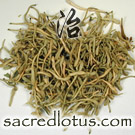 Jin Yin Hua9-15 gClear Heat and Eliminate Toxins
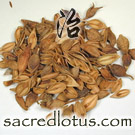 Lian Qiao9-15 gClear Heat and Eliminate Toxins
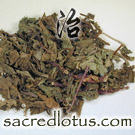 Bo He3-6 gCool, Spicy Herbs that Release the Exterior
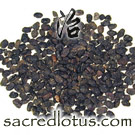 Dan Dou Chi3-6 gCool, Spicy Herbs that Release the Exterior
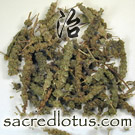 Jing Jie6-9 gWarm, Spicy Herbs that Release the Exterior
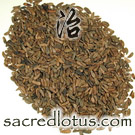 Niu Bang Zi9-12 gCool, Spicy Herbs that Release the Exterior
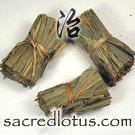 Dan Zhu Ye3-6 gDrain Fire
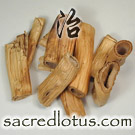 Lu Gen15-30 gDrain Fire
 Gan Cao3-6 gTonify Qi
 Jie Geng3-6 gWarm Herbs that Transform Phlegm-Cold
Preparation & dosage
How is Yin Qiao San prepared?
Yin Qiao San was originally a coarse powder (san) steeped briefly like a tea rather than simmered as a standard decoction, because its acrid-cool, aromatic herbs lose their venting action if overcooked; it is more often prepared today as a light, short decoction or taken as a granule/pill.
- Classical method: Wu Ju-tong instructed that the powdered herbs be brewed briefly in a covered vessel with fresh reed (Lu Gen) decoction and taken warm and frequently through the day — described in the original text as needing only a short steep, never a prolonged boil, likened to brewing a delicate tea rather than cooking a heavy tonic decoction.
- Do not over-decoct: Bo He and Dan Dou Chi in particular are light and aromatic; their volatile, exterior-releasing property dissipates with extended heat, so when prepared as a decoction they are conventionally added near the end of cooking (commonly cited as roughly the last 5 minutes) rather than simmered with the rest of the herbs.
- Modern forms: patent versions (e.g., Yin Qiao Jie Du Pian tablets, or granule/powder formulations) are widely used for convenience and are dosed more frequently than a typical two-dose-a-day decoction, echoing the classical instruction to take it often in small amounts during the acute early stage.
Source: Wu Ju-tong, Wen Bing Tiao Bian (1798/1813); Bensky & Barolet, Formulas & Strategies.
Safety — read before use
What are the cautions for Yin Qiao San?
Yin Qiao San is not appropriate for a plain wind-cold exterior pattern (chills predominating, no sore throat, thin white tongue coat, absence of heat signs), where its cool, venting herbs would be mismatched to a cold condition.
- Not for exterior wind-cold without heat signs — acrid-warm formulas (e.g., Ma Huang Tang, Gui Zhi Tang) are the classical category match for that pattern instead.
- Formulated for a superficial, early-stage pattern; if heat has already moved beyond the wei (defensive) level into the qi level or deeper (e.g., high fever, marked thirst, strong sweating), the formula is generally understood as insufficient on its own and stronger heat-clearing strategies are indicated.
- As a light, dispersing formula, it is traditionally not intended for prolonged or repeated use once the acute exterior stage has resolved.
Source: Bensky & Barolet, Formulas & Strategies; Chen & Chen, Chinese Herbal Formulas and Applications.
Originally Appeared In:
- Systematic Differentiation of Warm Diseases (Wen Bing Tiao Bian)
Notes:
How does Yin Qiao San differ from Sang Ju Yin?
Yin Qiao San and Sang Ju Yin are both acrid-cool, wind-heat exterior formulas from the same Wen Bing lineage, but Yin Qiao San is weighted toward fever and heat-toxin (sore throat, thirst) while Sang Ju Yin is weighted toward cough with milder exterior heat signs.
- Yin Qiao San — stronger heat-toxin-clearing action (Jin Yin Hua, Lian Qiao) for more pronounced fever, sore/swollen throat, and thirst; a heavier, more diaphoretic formula overall.
- Sang Ju Yin — built around Sang Ye and Ju Hua, lighter and more focused on the lungs; used when cough is the predominant complaint and fever/toxin signs are comparatively mild. Sources commonly describe it as a lighter, "shallower" formula than Yin Qiao San.
How does Yin Qiao San differ from acrid-warm exterior formulas?
Yin Qiao San releases the exterior with acrid-cool, cooling herbs for wind-heat, whereas formulas such as Ma Huang Tang and Gui Zhi Tang release the exterior with acrid-warm, warming herbs for wind-cold — using either category for the wrong pattern is a classic formulary mismatch. The presence of sore throat, thirst, and a tongue with a yellow (rather than plain white) coating is the traditional marker pointing toward the acrid-cool category.
Classical source: Yin Qiao San was created by Wu Ju-tong (Wu Tang) and recorded in his 1798 manuscript Wen Bing Tiao Bian ("Systematic Differentiation of Warm Diseases", first printed 1813), the foundational text of the Wen Bing (Warm Disease) school and the source of the formula's defining "acrid-cool release" (xin liang jie biao) method for treating warm-heat pathogens at the wei level.
Well-known variant: Yin Qiao Jie Du Pian is a widely available patent-medicine tablet form based on this formula, used for the same early-stage wind-heat presentation.
Source: Wu Ju-tong, Wen Bing Tiao Bian (1798/1813); Bensky & Barolet, Formulas & Strategies; Chen & Chen, Chinese Herbal Formulas and Applications.
Clinical Studies & Research:
Is there modern research on Yin Qiao San?
Yin Qiao San (Yinqiaosan) has been studied clinically as part of a combination decoction for H1N1 influenza and in laboratory models of influenza A infection, with early-phase human safety data in children.
- A multicenter randomized trial in 410 patients with confirmed H1N1 influenza found that a combined Maxingshigan-Yinqiaosan decoction, oseltamivir, and the two together each significantly shortened time to fever resolution versus no treatment, with the herb-drug combination giving an added reduction over oseltamivir alone.
- A mouse-model study of Yinqiaosan decoction reported that it modulated T-cell-receptor and PI3K signaling to reduce excessive inflammatory activation during influenza A virus infection, improving survival in the model.
- A small open-label pilot study in 21 children with documented hypersensitivity to standard antipyretics found Yin Qiao San generally well tolerated on oral provocation, though its fever-reducing effect in that trial was modest.
Sources: PMID 21844547; PMC 11382312; PMID 26539405.
Sources & References
Compiled and edited by Thomas Dehli, Founder & Editor, Sacred Lotus Updated
The information here is referenced from numerous sources — teachers, practitioners, class notes from Five Branches University, the books below, and the published research literature, with citations given as resolvable PubMed identifiers. Where sources disagree, I have flagged the discrepancies directly. If facts couldn't be verified, I have left them out. How we source our content.
Reference information for students and practitioners — not medical advice. Consult a qualified practitioner. Terms of use.
Chinese Formulas Books & References
 https://amzn.to/4fYI3f8
 https://amzn.to/4j55NRA
 https://amzn.to/4gMROyv
 https://amzn.to/4h7msSK