

Dan Shen (Salvia Root)
Radix Salviae Miltiorrhizae Salvia Root
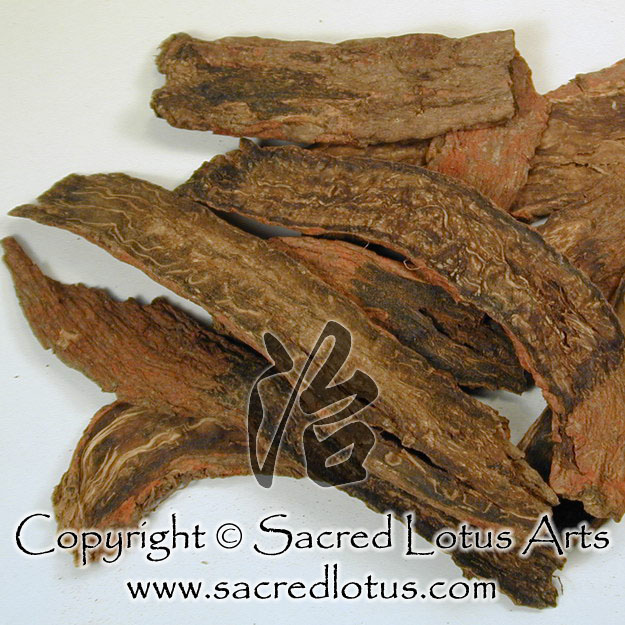
Materia Medica Data
- Temperature
- Slightly Cold
- Nature & Flavour
- Bitter, Slightly Cold
- Channels Entered
- HT, PER, LIV
- Latin (pharmaceutical)
- Radix Salviae Miltiorrhizae
- Chinese
- 丹参
- Tone Marks
- dān shēn
- Translation
- Cinnabar Root
Chinese Herb Actions
What is Dan Shen used for in Chinese medicine?
Dan Shen (Salvia Root, also known as Cinnabar Root) is a bitter, slightly cold herb that primarily invigorates the blood and dispels stasis, while also clearing heat and calming the spirit — it is one of the most widely used herbs in the invigorate-blood category, entering the Heart, Pericardium, and Liver channels.
Its core traditional actions:
- Invigorates the blood and dispels stasis — for gynecological disorders such as irregular menstruation, amenorrhea, and post-partum abdominal pain; for chest, epigastric, and abdominal pain; for traumatic injury; and to disperse masses and accumulations.
- Clears heat and relieves irritability — for restlessness, irritability, palpitations, and insomnia arising from heat that has entered the nutritive (ying) level, and for Heart- and Kidney-yin-deficiency patterns.
- Cools the blood and reduces toxic swellings — for toxic sores and breast abscesses, and for the heat-in-the-blood picture of febrile disease (delirium, high fever, unconsciousness, irritability, insomnia, purpura, or subcutaneous bleeding).
- Nourishes the blood and calms the spirit (shen) — for palpitations and insomnia arising from heat in the ying/xue levels, heat in the Heart, or Heart-blood deficiency.
Source: Sacred Lotus herb identity and legacy monograph; cross-checked against independent TCM materia medica references (Bensky-style category grouping for herbs that invigorate blood and dispel stasis). Traditional-use framing; not medical advice.
Chinese Herb Dosage
What is the typical dosage of Dan Shen?
Roughly 5–15 g in decoction, with some cardiovascular-focused formulas citing doses up to 30 g. The site’s identity data give two overlapping standard ranges — 6–15 g (Bensky-style) and 5–10 g, up to a 30 g maximum (Chen & Chen–style) — consistent with independent TCM references, which converge on roughly 5–15 g as the routine range and note that higher amounts (up to ~30 g) appear in some formulas aimed at cardiovascular circulation.
Source: Sacred Lotus Sacred Lotus sources & references on dosage (Bensky- and Chen & Chen–style ranges); cross-checked against independent TCM reference summaries. Reference only — not a prescription.
Chinese Herb Contraindications & Cautions
Are there cautions or incompatibilities for Dan Shen?
Yes — Dan Shen is contraindicated in pregnancy and in several bleeding- or deficiency-related patterns, and it is one of the classical “shen” herbs traditionally held incompatible with Li Lu (Veratrum). Because its primary action is to invigorate blood and dispel stasis, the materia medica advises against its use in patterns where that action could aggravate bleeding or deficiency:
- Pregnancy (blood-invigorating action risks disturbing the fetus).
- Hypermenorrhea, hemoptysis, or hematuria.
- Yin-deficiency (Yin Xu) patterns.
- A pathogen present at the qi level (heat has not yet entered the blood/nutritive level).
- Post-partum bleeding.
- Early or obstructed menses where the underlying cause is blood deficiency rather than stasis.
- A restless fetus due to blood deficiency (insufficient blood to nourish/anchor).
Classical herb–herb incompatibility: the site’s own incompatibility records list Dan Shen as incompatible with Li Lu (Veratrum) — Dan Shen is one of the “shen”-named herbs (alongside Ren Shen, Dang Shen, Xuan Shen, Sha Shen/Bei Sha Shen, and Ku Shen) traditionally grouped with Xi Xin as incompatible with Li Lu under the classical Eighteen Incompatibilities (十八反, shí bā fǎn).
Note: a modern pharmacological study found that Veratrum nigrum (Li Lu) suppresses the estrogenic activity of Salvia miltiorrhiza (Dan Shen) in animal and cell models — offering a possible mechanistic rationale for the classical prohibition, though this is an antagonism-of-effect finding rather than evidence of acute toxic synergy. Treat it as limited, single-study preclinical context, not an established toxicology literature on this specific pair.
Source: Sacred Lotus legacy monograph cautions; Sacred Lotus herb_cautions incompatibility record (Dan Shen–Li Lu), cross-checked against the classical Eighteen Incompatibilities enumeration; PMID 29747756 (Veratrum nigrum–Salvia miltiorrhiza pharmacodynamic interaction study). Reference only, not usage guidance.
Chinese Herb Toxicity & Overdose
Generally well tolerated at traditional oral doses, with allergic reactions and a cluster of mild, reversible side effects reported — most of the documented adverse-reaction data concerns the injectable (IV) Danshen preparations used in Chinese hospital settings, rather than the oral decoction described here.
- Allergic reactions — skin and respiratory allergic reactions have been documented, particularly with Danshen injection preparations; research has specifically investigated the allergens responsible.
- Other reported effects — dizziness, headache, and gastrointestinal upset appear in the safety literature. Dry mouth, general weakness, a numb/swollen feeling in the hands, shortness of breath, anxiety, and tachycardia are also commonly listed in TCM safety references, though this specific symptom cluster is less rigorously sourced in the peer-reviewed literature than the allergic-reaction and GI findings.
- Reported symptoms are generally described as mild and self-limiting, resolving gradually without needing to stop treatment.
Source: PMID 39138643 (allergenic mechanisms of Danshen injection, 2024); general TCM safety-literature summaries (dizziness, headache, GI upset); Sacred Lotus legacy monograph (broader symptom list carried forward; not independently source-verified item-by-item). Reference note, not a safety guarantee.
Herb-Drug Interactions
Yes — Dan Shen has a well-documented interaction with warfarin: it decreases warfarin clearance and increases its bioavailability, potentiating anticoagulation and raising bleeding risk. This is one of the better-established herb–drug interactions in the TCM literature, first reported in Hong Kong case reports in the 1990s and studied mechanistically since.
- Case reports — two classic Hong Kong reports describe warfarin potentiation (elevated INR/prothrombin time, bleeding risk) in patients taking danshen-containing preparations alongside warfarin.
- Mechanism — danshen inhibits platelet aggregation and affects coagulation/fibrinolysis; pharmacokinetic studies show danshen decreases warfarin clearance and prolongs its half-life, increasing systemic exposure. Tanshinones (major lipophilic Dan Shen constituents) inhibit warfarin hydroxylation, and Dan Shen extracts affect cytochrome P450 enzymes involved in warfarin metabolism.
- Human data — a clinical study in patients on Compound Danshen Dripping Pills (a Dan Shen–containing patent formula) found the interaction affects warfarin dose/concentration requirements, with the effect size differing by CYP genetic polymorphism.
Practitioner and patient awareness is warranted; concurrent use with warfarin (and plausibly other anticoagulant/antiplatelet drugs) is generally best avoided or closely monitored.
Source: PMID 9159606 (Yu et al., 1997, first Hong Kong case report); PMID 9768962 (Izzat et al., 1998, second Hong Kong case report); PMID 11302416 (Chan, 2001, review of mechanism and three cases); PMID 19577456 (tanshinone inhibition of warfarin hydroxylation); PMID 16597370 (Danshen induction of cytochrome P450); PMID 22718621 (review, Danshen–CYP450 interactions); PMID 31053296 (human study, Compound Danshen Dripping Pills and warfarin dosing by CYP genotype). Research context; consult a qualified practitioner before combining Dan Shen with anticoagulant medication.
Western / Biomedical Research
Chinese Herb Clinical Studies & Research
Provided as research context — a summary of published biomedical study, not a therapeutic or medical claim.
Is there modern research on Dan Shen (Salvia miltiorrhiza)?
Yes — Dan Shen is one of the most extensively studied Chinese herbs for cardiovascular disease, with strong preclinical/mechanistic support and promising but methodologically modest clinical evidence, mostly for multi-herb Dan Shen–containing patent formulas rather than the single herb alone. Its two major classes of active constituents are lipophilic tanshinones (e.g., tanshinone IIA) and water-soluble salvianolic acids/depsides.
- Clinical meta-analyses (formula-level) — a systematic review and meta-analysis of randomized trials found Compound Danshen Dripping Pills (a patent formula combining Dan Shen, Sanqi, and Borneol) comparable to isosorbide dinitrate for angina-pectoris symptoms; a separate meta-analysis of 20 RCTs (2,574 coronary-heart-disease patients) found Compound Danshen Dripping Pills added to percutaneous coronary intervention (PCI) reduced major adverse cardiac events versus PCI alone. Both concern a multi-herb formula, not isolated Salvia miltiorrhiza, and independent reviews have flagged inconsistent trial quality in this literature — treat as clinically promising rather than conclusively proven by rigorous Western-standard RCTs.
- Mechanism (preclinical) — pharmacology reviews describe antiplatelet/antithrombotic, antioxidant, vasodilatory, and anti-fibrotic actions relevant to cardiovascular and organ-fibrosis disease models, attributed mainly to tanshinones and salvianolic acids. Cell and animal research, not clinical proof on its own.
Overall: well-characterized pharmacology and an active, ongoing clinical research program, but the strongest human-trial evidence applies to combination patent formulas, and rigorous single-herb clinical proof remains limited.
Sources: PMID 25585358 (meta-analysis, Compound Danshen Dripping Pills vs. isosorbide dinitrate for angina); PMID 33281912 (meta-analysis, 20 RCTs, Compound Danshen Dripping Pills + PCI for coronary heart disease); PMID 27748194 (Salvia miltiorrhiza cardiovascular pharmacology review); PMID 36204239 (Salvia miltiorrhiza anti-fibrosis pharmacology review). Research context, not a therapeutic claim.
Chinese Herb Notes
What formulas is Dan Shen found in, and how does it combine with other herbs?
Dan Shen appears across a wide span of classical formulas — from heat-clearing, blood-cooling decoctions to Heart-calming and blood-invigorating prescriptions — reflecting its dual identity as both a blood-invigorator and a heat-clearing, spirit-calming herb.
- Qing Ying Tang (“Clear the Nutritive-Level Decoction”) — uses Dan Shen’s heat-clearing, blood-cooling action for heat that has penetrated the ying level.
- Dan Shen Yin (“Dan Shen Drink”) — a formula built around Dan Shen itself, for blood stasis with chest and epigastric pain.
- Huo Luo Xiao Ling Dan (“Effective Miraculous Pill to Invigorate the Collaterals”) — draws on its blood-invigorating, stasis-dispelling action for pain from blood stasis and channel obstruction.
- Tian Wang Bu Xin Dan (“Emperor of Heaven’s Special Pill to Tonify the Heart”) — uses Dan Shen’s blood-nourishing, spirit-calming action alongside yin tonics for Heart- and Kidney-yin-deficiency insomnia and palpitations.
- Sheng Tie Luo Yin (“Iron Filings Decoction”) and Ding Xian Wan (“Arrest Seizures Pill”) — both use Dan Shen’s blood-cooling, heat-clearing, spirit-settling properties in formulas for phlegm-heat and manic/epileptic-type disorders.
Source: Sacred Lotus formula–herb records; formula names and functions per standard materia medica. Formula context, not treatment advice.
This herb is incompatible with:
- Li Lu (Radix Et Rhizoma Veratri)
Sources & References
Compiled and edited by Thomas Dehli, Founder & Editor, Sacred Lotus Updated
The information here is referenced from numerous sources — teachers, practitioners, class notes from Five Branches University, the books below, and the published research literature, with citations given as resolvable PubMed identifiers. Where sources disagree, I have flagged the discrepancies directly. If facts couldn't be verified, I have left them out. How we source our content.
Reference information for students and practitioners — not medical advice. Consult a qualified practitioner. Terms of use.
Chinese Herbs Books & References
 https://amzn.to/3WfB3DK
 https://amzn.to/3DR1VUh
 https://amzn.to/42aMz73
 https://amzn.to/3PuD4bt