

Tian Wang Bu Xin Dan (Emperor of Heaven's Special Pill to Tonify the Heart)
Tian Wang Bu Xin Dan
Emperor of Heaven's Special Pill to Tonify the Heart
- Category
- Formulas that Calm the Spirit
- Ingredients
- 13 herbs
Actions
What does Tian Wang Bu Xin Dan do?
Tian Wang Bu Xin Dan (Emperor of Heaven's Special Pill to Tonify the Heart) nourishes Heart and Kidney yin, enriches the blood, and calms the spirit (an shen). It is built for the restless, depleted picture that follows sustained overwork, chronic illness, or emotional strain, when yin and blood have grown too thin to anchor the Shen (spirit) and mild deficient heat flares upward.
Its ingredients divide roughly by role:
- Chief: Sheng Di Huang — used at roughly four times the weight of most companion herbs in the formula's composition, it nourishes Kidney yin, cools the blood, and generates fluids, rebuilding the Kidney "water" that should rise to cool and steady the Heart.
- Deputies: Xuan Shen, Tian Men Dong, and Mai Men Dong deepen the yin-nourishing, deficient-heat-clearing effect; Dang Gui and Dan Shen nourish and gently move Heart blood so the heavier tonics do not stagnate.
- Assistants — the three "shen" spirit-calming herbs: Suan Zao Ren, Bai Zi Ren, and Yuan Zhi are combined for a stronger, threefold an shen (spirit-calming) effect than any single herb gives alone — together they nourish the Heart, settle palpitations, and quiet the mind toward sleep.
- Additional assistants: Ren Shen tonifies qi so the body can transform the yin and blood tonics into usable substance rather than sitting inert; Fu Ling supports the Spleen and helps quiet the Heart; Wu Wei Zi astringes leaking fluids (checking night sweats) while adding its own mild spirit-calming action.
- Envoy: Jie Geng carries the formula's effect upward to the chest and Heart, acting as a guide for the other herbs.
Source: composition and relative amounts per the Sacred Lotus formula database; chief/deputy/assistant/envoy role analysis cross-referenced against multiple online sources and standard formulary texts (Bensky & Barolet, Formulas & Strategies; Chen & Chen, Chinese Medical Herbology and Pharmacology). Traditional-use framing; not medical advice.
Indications
What is Tian Wang Bu Xin Dan used for?
Tian Wang Bu Xin Dan treats Heart-and-Kidney yin deficiency with blood deficiency and deficient heat — the pattern behind chronic insomnia, anxiety, and mental restlessness that develops when yin and blood are too depleted to nourish and anchor the Shen (spirit), letting deficient heat disturb the Heart.
Its classic clinical presentation:
- Insomnia — difficulty falling or staying asleep, often with vivid or disturbing dreams; one of the most common reasons the formula is sought out today.
- Palpitations and anxiety — an uneasy, racing-heart sensation that worsens with fatigue, stress, or mental exertion.
- Poor memory and mental restlessness — forgetfulness, difficulty concentrating, and a wandering, unsettled mind.
- Night sweats — a hallmark of deficient heat forcing fluids out during sleep.
- Dry mouth and mouth or tongue sores — Heart fire flaring upward along its channel and opening (the tongue).
- Dry, constipated stools — from the underlying fluid and yin deficiency rather than heat-excess constipation.
Tongue and pulse: a red tongue with little or no coating; a thin, rapid pulse — the classic signature of yin deficiency with deficient heat.
Source: pattern, tongue, and pulse fields and composition per the Sacred Lotus formula database; clinical indications cross-referenced against multiple online sources and Bensky & Barolet, Formulas & Strategies. Traditional-use framing; not medical advice.
Western Uses:
What conditions is Tian Wang Bu Xin Dan used for in modern practice?
Tian Wang Bu Xin Dan nourishes Heart and Kidney yin and calms the spirit (insomnia, palpitations, poor memory, night sweats and a dry mouth from yin deficiency), so it is referenced for yin-deficiency conditions with an agitated spirit: nervous exhaustion (neurasthenia), insomnia, hypertension, and hyperthyroidism.
It is chosen for the Heart-and-Kidney-yin-deficiency pattern, not for a diagnosis. Hypertension and thyroid disease require medical diagnosis and management, and persistent insomnia deserves assessment of its cause. Traditional-use correlates only, not a treatment claim.
Source: Sacred Lotus sources & references (pattern) + Bensky & Barolet, Formulas & Strategies; biomedical correlates as reference only. Not medical advice.
Ingredients
13 substances in Tian Wang Bu Xin Dan — each links to its full herb monograph.
 Sheng Di Huang120 gCool the Blood
 Bai Zi Ren30 gNourish the Heart and Calm the Spirit
 Dang Gui30 gTonify Blood
 Mai Men Dong30 gTonify Yin
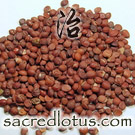 Suan Zao Ren30 gNourish the Heart and Calm the Spirit
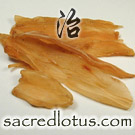 Tian Men Dong30 gTonify Yin
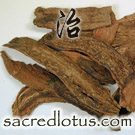 Dan Shen15 gInvigorate Blood and Remove Stagnation
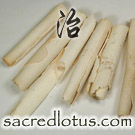 Fu Ling15 gRegulate Water and Drain Dampness
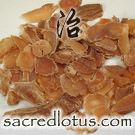 Ren Shen15 gTonify Qi
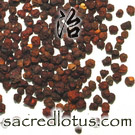 Wu Wei Zi30 gAstringe, Stabilize, Bind
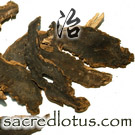 Xuan Shen15 gCool the Blood
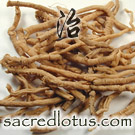 Yuan Zhi15 gNourish the Heart and Calm the Spirit
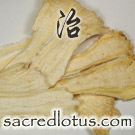 Jie Geng15 gWarm Herbs that Transform Phlegm-Cold
Preparation & dosage
How is Tian Wang Bu Xin Dan prepared?
Classically the herbs are ground to a fine powder and formed into small honey pills (wan, or "dan" — a special pill), traditionally taken with warm water or a light salt-water decoction before bed. The same herbs are also commonly prepared today as a granule extract or a standard water decoction, generally taken once or twice daily.
Historically, some versions of this and related "settle the spirit" pill formulas were finished with a thin cinnabar (Zhu Sha) coating, believed to add a stronger spirit-anchoring effect. The composition recorded in the Sacred Lotus formula database does not include Zhu Sha; see cautions for the safety reasoning behind that modern omission.
Source: classical pill (dan/wan) preparation method cross-referenced against multiple online sources and standard formulary texts (Bensky & Barolet; Chen & Chen).
Reference relative amounts per the Sacred Lotus formula database (as pills or decoction): Sheng Di Huang 120 g; Tian Men Dong, Mai Men Dong, Dang Gui, Wu Wei Zi, Bai Zi Ren, and Suan Zao Ren 30 g each; Ren Shen, Xuan Shen, Dan Shen, Fu Ling, Yuan Zhi, and Jie Geng 15 g each. As granules, commonly dosed around 3–6 g, 2–3 times daily, often taken in the evening for insomnia. As a decoction, a standard water-decoction of the same relative amounts, once daily. Reference only; not a prescription.
Safety — read before use
What are the cautions for Tian Wang Bu Xin Dan?
Tian Wang Bu Xin Dan is a rich, yin-and-blood-tonifying formula, so it is generally unsuitable for Spleen deficiency with dampness, loose stools, or poor digestion, and for cold patterns. Its heavy, cloying tonics (especially Sheng Di Huang and the moistening yin herbs) can further burden a weak Spleen and worsen bloating, loose stool, or poor appetite.
- Avoid or modify for Spleen-qi deficiency with dampness (loose stools, poor appetite, abdominal distension) — the formula's rich tonics can aggravate digestive weakness.
- Not appropriate for cold patterns or pure excess-heat/excess-fire presentations without an underlying deficiency — this is a deficiency-pattern formula, not a heat-clearing one.
- Ren Shen is classically considered incompatible with Li Lu (Veratrum nigrum), one of the "eighteen incompatible medicinals," and should be used cautiously in acute excess conditions.
- Historical cinnabar (Zhu Sha) coating — a public-safety note, not a feature of this formula's recorded composition: some older or imported preparations of this and related spirit-settling pills have used a Zhu Sha (cinnabar, a mercury sulfide mineral) coating or filler. Mercury compounds can accumulate and cause toxicity with repeated use, which is why Zhu Sha is restricted or prohibited in many jurisdictions today and is generally omitted from modern manufactured products, including the composition recorded in the Sacred Lotus formula database. Anyone offered a cinnabar-coated or cinnabar-containing product should be aware of this risk and seek products without it.
- Pregnancy, nursing, and diagnosed sleep, anxiety, or psychiatric conditions: use only under a qualified practitioner alongside appropriate care — not a substitute for medical or psychiatric treatment.
Source: cautions cross-referenced against multiple online sources and standard Materia Medica cautions (Bensky & Barolet); cinnabar/mercury safety information from general pharmacological and regulatory literature on Zhu Sha, presented as neutral public-safety reference.
Originally Appeared In:
- Secret Investigations into Obtaining Health (She Sheng Mi Pou)
Notes:
How does Tian Wang Bu Xin Dan differ from Suan Zao Ren Tang and Gui Pi Tang?
All three formulas treat insomnia, but they target different roots, and mixing them up is a common practical mistake.
- vs Suan Zao Ren Tang: Suan Zao Ren Tang nourishes Liver blood and clears deficient heat for a "wired but tired" insomnia — restlessness, irritability, and difficulty settling down, often after illness or exhaustion, with a much smaller, sharper herb count centered on Suan Zao Ren itself. Tian Wang Bu Xin Dan works the Heart-Kidney axis instead, with a broader combination of yin, blood, and spirit-calming herbs, and is more associated with night sweats, dry mouth, and mouth sores from deficient heat rather than Liver-blood-deficiency irritability.
- vs Gui Pi Tang: Gui Pi Tang tonifies Heart and Spleen qi and blood together, and is preferred when digestive weakness (poor appetite, loose stool, fatigue, pale complexion) accompanies the Heart pattern — a warmer, more qi-and-blood-oriented formula built around Ren Shen, Huang Qi, and Bai Zhu. Tian Wang Bu Xin Dan is cooler and yin-oriented, better suited when heat signs (red tongue, night sweats, dry mouth) dominate over digestive weakness.
- In short: Liver blood + deficient heat → Suan Zao Ren Tang; Heart-Spleen qi and blood deficiency → Gui Pi Tang; Heart-Kidney yin and blood deficiency with deficient heat → Tian Wang Bu Xin Dan.
Classical source: Tian Wang Bu Xin Dan is classically attributed to She Sheng Mi Pi (Secret Rescriptions from a Ritual of Preserving Life), a Ming-dynasty text, and appears in essentially every major modern formulary compendium under this or a closely related composition.
Common modifications: add Long Gu and Mu Li for more pronounced palpitations and a startle-prone spirit; add Huang Lian and Zhi Zi when Heart fire and irritability are more marked; reduce or omit Dang Gui and increase Suan Zao Ren/Bai Zi Ren when insomnia is the dominant complaint and digestion is sensitive.
Source: comparative differentiation logic and classical source attribution cross-referenced against multiple online sources and standard formulary texts (Bensky & Barolet; Chen & Chen).
Clinical Studies & Research:
Is there modern research on Tian Wang Bu Xin Dan?
Yes — it is one of the better-studied classical formulas for insomnia, with both clinical and mechanistic research, though quality varies and results are mixed.
- Insomnia (systematic review): a systematic review and meta-analysis of 14 randomized controlled trials (1,256 participants) found Tian Wang Bu Xin Dan associated with better outcomes than conventional Western medicine for insomnia (odds ratio 2.71; Pittsburgh Sleep Quality Index weighted mean difference −1.82), while cautioning that the included trials were of generally poor methodological quality and that the formula "seems to be generally safe" but needs more rigorous confirmation (PMID 31019540).
- Cancer-related insomnia (pilot RCT): a small randomized, open-label pilot trial (22 participants) comparing the formula (as "Cheonwangbosimdan," its Korean name) with cognitive-behavioral therapy for insomnia in cancer patients found both approaches trended toward reduced insomnia with no significant difference between them, while the herbal-medicine group showed significantly greater improvement in anxiety scores (PMID 32627605).
- Mild cognitive impairment (placebo-controlled pilot trial, negative finding): a 24-week randomized, placebo-controlled pilot trial (48 participants) found the formula safe but did not find a significant improvement in cognitive function, quality of life, daily activities, or depression compared with placebo in people with mild cognitive impairment (PMID 40644493).
- Composition/pharmacognosy: HPLC fingerprint analysis found that including Jie Geng (Radix Platycodi) in the decoction increased overall extract yield and improved the dissolution of other active compounds, supporting its traditional role as an assistant/envoy herb rather than a purely aromatic-carrier addition (PMID 19385174).
- Gut-brain mechanism (preclinical, rat model): a 2026 study found the formula produced dose-dependent improvements in intestinal transit and reduced anxiety- and depression-like behavior in a rat model of functional constipation, proposing a brain-gut-axis mechanism involving MAPK/ERK/JNK signaling and normalization of HPA-axis activity (PMID 41654070).
Sources: PubMed 31019540; PubMed 32627605; PubMed 40644493; PubMed 19385174; PubMed 41654070. Research context, not a therapeutic claim; evidence ranges from preclinical/animal work to small pilot trials, and at least one rigorous trial found no significant benefit for a specific outcome (cognitive function in mild cognitive impairment).
Sources & References
Compiled and edited by Thomas Dehli, Founder & Editor, Sacred Lotus Updated
The information here is referenced from numerous sources — teachers, practitioners, class notes from Five Branches University, the books below, and the published research literature, with citations given as resolvable PubMed identifiers. Where sources disagree, I have flagged the discrepancies directly. If facts couldn't be verified, I have left them out. How we source our content.
Reference information for students and practitioners — not medical advice. Consult a qualified practitioner. Terms of use.
Chinese Formulas Books & References
 https://amzn.to/4fYI3f8
 https://amzn.to/4j55NRA
 https://amzn.to/4gMROyv
 https://amzn.to/4h7msSK