
Actions
What does Ding Xian Wan do?
Ding Xian Wan (Arrest Seizures Pill) extinguishes internal wind, transforms phlegm, clears heat, and calms the spirit — addressing wind, phlegm, and fire together, the three pathogenic factors classically implicated in recurring seizure disorders (xian zheng).
The sixteen ingredients divide by role:
- Chiefs: Tian Ma and Dan Nan Xing — Tian Ma is the principal herb for extinguishing Liver wind and stopping tremor/spasm; bile-processed Dan Nan Xing is cold and bitter, clearing phlegm-heat while also helping to calm wind.
- Deputies: Chuan Bei Mu clears phlegm-heat alongside Dan Nan Xing; Quan Xie and Jiang Can are wind-extinguishing animal substances that penetrate the channels and strongly arrest convulsions, reinforcing Tian Ma from a different angle.
- Assistants: Ban Xia (ginger-processed), Chen Pi, Fu Ling, and Fu Shen dry damp and transform phlegm while strengthening the Spleen — the traditional source of phlegm production; Shi Chang Pu and Yuan Zhi are a classic paired combination that opens the Heart's sensory orifices and resolves phlegm misting the mind; Dan Shen and Mai Men Dong nourish yin and cool Heart blood, tempering the warm, drying action of the phlegm-transforming and wind-extinguishing herbs; Hu Po, Deng Xin Cao, and Zhu Sha are heavy, mineral or resin-like substances that anchor and calm an agitated spirit and help clear Heart heat.
Discrepancy: multiple online sources list Gan Cao (and sometimes fresh ginger juice or bamboo juice) as an additional envoy/binding ingredient, reflecting how the historical pill mass was classically bound. This site’s own 16-herb composition does not carry a Gan Cao row and instead includes Deng Xin Cao (Medulla Junci) as a named ingredient — a variant independently cross-referenced against multiple online sources, which match this site’s own record gram-for-gram. We follow this site’s 16-herb composition as authoritative here and do not assign Gan Cao a role.
Source: this site’s own composition record + Bensky & Barolet, Formulas & Strategies-style chief/deputy/assistant analysis, cross-referenced against multiple online sources. Traditional-use framing; not medical advice.
Indications
What is Ding Xian Wan used for?
Ding Xian Wan treats recurring seizure disorders (xian zheng) driven by wind-phlegm, with an underlying heat component — phlegm that has been stirred by internal wind and complicated by fire, surging upward to obstruct the Heart's sensory orifices.
Its classic clinical presentation:
- Acute episode: sudden loss of consciousness or collapse, tonic-clonic convulsions or spasm, upward-staring or rolling eyes, clenched jaw, and phlegm rattling in the throat, sometimes with frothing at the mouth or a cry at onset.
- Recovery phase: gradual return of consciousness, fatigue, and grogginess following the episode; the pattern is characteristically recurrent.
- Underlying signs: irritability, restlessness, or mental dullness between episodes, consistent with lingering phlegm-heat.
Tongue and pulse: a white and greasy tongue coat; a wiry and slippery pulse.
Source: this site’s own pattern/tongue/pulse record, cross-referenced against multiple online sources for the classical indications (traced to Cheng Guo-peng's Yi Xue Xin Wu [Medical Revelations], 1732, Qing dynasty). Traditional-use framing; not medical advice.
Western Uses:
What is Ding Xian Wan used for in modern practice?
In modern practice Ding Xian Wan (tracked in the pharmacology literature as "Dingxian Pill") is referenced in the context of epilepsy and other recurring seizure disorders — loosely mapped from its traditional wind-phlegm-fire pattern. Contemporary TCM literature explores it, and cinnabar-free or modified versions of it, as a traditional adjunct alongside standard anti-seizure medication under professional supervision, rather than as a standalone replacement.
These biomedical correlates are offered as a reference to the formula’s traditional use, not as a claim that it treats any diagnosed condition. Direct human clinical-trial evidence for the classical formula itself remains limited; current research is concentrated in animal models and pharmacological review (see research). Epilepsy and seizure disorders require diagnosis and ongoing management by a qualified medical practitioner.
Source: traditional-use correlates summarized from Bensky & Barolet-style indications and a 2025 peer-reviewed review of TCM interventions for epilepsy (PMID 40098198); reference only, not a treatment claim.
Ingredients
16 substances in Ding Xian Wan — each links to its full herb monograph.
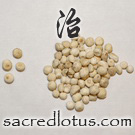 Ban Xia30 gGinger friedWarm Herbs that Transform Phlegm-Cold
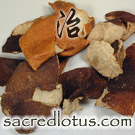 Chen Pi21 gRegulate the Qi
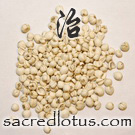 Chuan Bei Mu30 gCool and Transform Phlegm-Heat
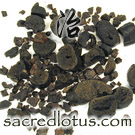 Dan Nan Xing15 gCool and Transform Phlegm-Heat
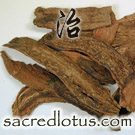 Dan Shen60 gInvigorate Blood and Remove Stagnation
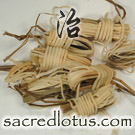 Deng Xin Cao15 gRegulate Water and Drain Dampness
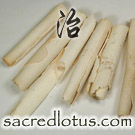 Fu Ling30 gRegulate Water and Drain Dampness
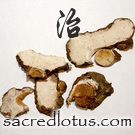 Fu Shen30 gRegulate Water and Drain Dampness
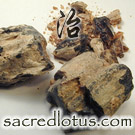 Hu Po15 gAnchor, Settle, and Calm the Spirit
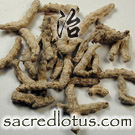 Jiang Can15 gExtinguish Wind and Stop Tremors
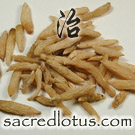 Mai Men Dong60 gTonify Yin
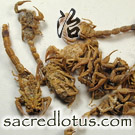 Quan Xie15 gExtinguish Wind and Stop Tremors
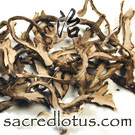 Shi Chang Pu15 gAromatic Substances that Open the Orifices
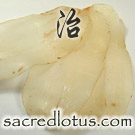 Tian Ma30 gExtinguish Wind and Stop Tremors
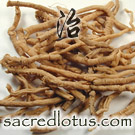 Yuan Zhi21 gNourish the Heart and Calm the SpiritNo specimen photographZhu Sha9 grefined with waterAnchor, Settle, and Calm the Spirit
Preparation & dosage
How is Ding Xian Wan prepared?
Classically the herbs are ground to a fine powder and formed into pills (wan), historically bound and coated using Zhu Sha; the same formula is also prepared as a water decoction with the ingredients scaled to the reference amounts below. Ban Xia is typically ginger-processed before use, and Zhu Sha is traditionally levigated ("refined with water") into a fine powder rather than used as a raw mineral.
Source: classical pill (wan) preparation per Cheng Guo-peng's Yi Xue Xin Wu (1732), cross-checked against modern decoction notes from multiple online sources. Reference description, not preparation instructions.
Reference relative amounts (per this site’s own composition record): Dan Shen, Mai Men Dong 60 g; Tian Ma, Chuan Bei Mu, Ban Xia (ginger-processed), Fu Ling, Fu Shen 30 g; Chen Pi, Yuan Zhi 21 g; Dan Nan Xing, Shi Chang Pu, Quan Xie, Jiang Can, Hu Po, Deng Xin Cao 15 g; Zhu Sha (refined with water) 9 g. Herb-by-herb ranges independently cross-referenced against multiple online sources. Reference only; not a prescription. Because Zhu Sha (cinnabar) is a mercury-based mineral, note that historical and many contemporary preparations reduce, omit, or substitute it (see cautions).
Safety — read before use
What are the cautions for Ding Xian Wan?
Ding Xian Wan historically contains Zhu Sha (cinnabar), a mercury-sulfide mineral with recognized toxicity. This is noted here as a public-safety reference fact, not as guidance for use: cinnabar carries risk of cumulative mercury exposure with potential kidney, liver, and nervous-system effects, and cinnabar-containing products are restricted or prohibited by a number of contemporary drug-safety regulators. For this reason, modern manufacture of this and related formulas frequently omits Zhu Sha or substitutes a non-mineral spirit-calming herb.
- Formula-level fit: designed for wind-phlegm(-heat) seizure patterns; per multiple online sources, it requires significant modification (or is inappropriate) for seizures rooted primarily in Liver-fire-with-phlegm-heat, Liver/Kidney yin deficiency, or Spleen/Stomach deficiency without phlegm-heat.
- Constitution: the formula's cold, bitter, phlegm-clearing, and heavily sedating substances are not suited to frail, deficient, or cold-predominant presentations without an underlying phlegm-heat pattern.
- Pregnancy: contains mineral (Zhu Sha) and strongly channel-penetrating animal substances (Quan Xie, Jiang Can) — classically cautioned or avoided in pregnancy per standard Materia Medica references.
- Medical context: epilepsy and seizure disorders are diagnosed medical conditions requiring evaluation and ongoing management by a qualified practitioner; this content is a traditional-use reference, not treatment or dosing guidance.
Source: this site’s own composition record (Zhu Sha identified as an ingredient) + standard Materia Medica cautions for cinnabar, Quan Xie, and Jiang Can (Bensky & Barolet), cross-referenced against multiple online sources. Public-safety reference framing; not medical or administration advice.
Originally Appeared In:
- Medical Revelations (Yi Xue Xin Wu)
Notes:
How is Ding Xian Wan different from Di Tan Tang, An Gong Niu Huang Wan, and Zhi Bao Dan?
All four formulas clear phlegm obstructing the Heart's sensory orifices, but they target different severities and patterns.
- vs Di Tan Tang: Di Tan Tang scours stubborn phlegm to restore speech and consciousness in the aftermath of wind-stroke against a background of qi deficiency; Ding Xian Wan is built specifically for recurring seizure episodes driven by wind-phlegm-fire rather than a single post-stroke event.
- vs An Gong Niu Huang Wan and Zhi Bao Dan: these "Three Treasures"-family formulas are reserved for acute, severe phlegm-heat clouding the orifices (high fever with coma or delirium); Ding Xian Wan addresses the calmer, chronic, recurrent pattern of epilepsy-type seizures rather than an acute febrile emergency.
Common variation: because Zhu Sha (cinnabar) carries recognized toxicity (see cautions), contemporary reformulations of Ding Xian Wan often omit it or substitute a non-mineral spirit-calming herb.
Source: comparative formula-category placement cross-referenced against multiple online sources, and standard formula-differentiation logic per Bensky & Barolet.
Clinical Studies & Research:
Is there modern research on Ding Xian Wan?
Yes, though it is concentrated in animal-model pharmacology (tracked in the literature as "Dingxian Pill") rather than human clinical trials of the classical 16-herb formula. In pentylenetetrazol (PTZ)-kindled rats, Dingxian pill dose-dependently reduced seizure severity and abnormal hippocampal electrical activity while improving spatial learning and memory, and downregulated several epilepsy-associated genes.
- Anticonvulsant effect (PTZ-kindled rats): Dingxian pill reduced seizure grade and improved cognitive performance versus control, with downregulation of Egr3, Nrg1, Arc, and Ptgs2 gene expression in the hippocampus (PMID 31011358).
- Combined with a conventional anticonvulsant (PTZ chronic-epilepsy rats): Dingxian pill plus valproic acid suppressed seizure activity and improved cognitive outcomes more than either treatment alone, with reduced neuro-excitatory markers (PMID 36994516).
- Review context: a 2025 peer-reviewed review of TCM interventions for epilepsy names Ding Xian Pill as one of three representative classical anti-epileptic prescriptions, noting candidate active constituents (gastrodin, tanshinone IIA, salvianolic acid B) and proposed signaling pathways (PMID 40098198).
Sources: PubMed 31011358; PubMed 36994516; PubMed 40098198. Research context, not a therapeutic claim; evidence is preclinical/animal and review-level, not randomized human clinical trials of the classical formula itself.
Sources & References
Compiled and edited by Thomas Dehli, Founder & Editor, Sacred Lotus Updated
The information here is referenced from numerous sources — teachers, practitioners, class notes from Five Branches University, the books below, and the published research literature, with citations given as resolvable PubMed identifiers. Where sources disagree, I have flagged the discrepancies directly. If facts couldn't be verified, I have left them out. How we source our content.
Reference information for students and practitioners — not medical advice. Consult a qualified practitioner. Terms of use.
Chinese Formulas Books & References
 https://amzn.to/4fYI3f8
 https://amzn.to/4j55NRA
 https://amzn.to/4gMROyv
 https://amzn.to/4h7msSK