

Actions
What does Zhi Sou San do?
Zhi Sou San gently diffuses and descends Lung qi, transforms phlegm, and disperses lingering wind — stopping a cough that persists after the main phase of an external invasion has already resolved. Its defining trait is balance: the formula is neither strongly warm nor strongly cold, so it does not have to be matched precisely to whether the original invasion was wind-cold or wind-heat, which is exactly why it suits this in-between, residual stage of a cough.
- Diffuses and descends Lung qi together — Jie Geng opens/lifts Lung qi while Bai Qian directs it back down, restoring the Lung's normal up-and-down rhythm rather than pushing in only one direction.
- Stops cough and transforms phlegm — Zi Wan and Bai Bu both moisten the Lung and calm cough without being heavily drying or heavily moistening.
- Disperses residual exterior wind — Jing Jie clears any lingering surface wind mildly, without the strong diaphoretic force needed for an acute, fresh invasion.
- Regulates qi to support phlegm transformation — Chen Pi dries dampness and moves qi so phlegm does not re-accumulate.
Source: composition confirmed from Sacred Lotus sources & references; action/role analysis cross-referenced against multiple online sources and Bensky & Barolet, Formulas & Strategies. Traditional-use framing; not medical advice.
Indications
What is Zhi Sou San used for?
Zhi Sou San treats a lingering cough left over after an external wind invasion, once fever, chills, and other acute exterior signs have mostly settled but the cough itself has not. It is a formula for the tail end of a cold or flu-type illness, not for its acute onset.
- Persistent cough continuing after the main cold/flu symptoms have resolved or largely improved.
- Mild itchy throat or a tickling sensation that triggers coughing.
- Thin white sputum, or a dry, irritating cough with little phlegm.
- Slight residual chills, mild nasal congestion, or a faint sense that the exterior has not fully cleared.
- A cough that has lingered for days to weeks without the sharper heat or dryness signs of a more advanced pattern.
Tongue and pulse: a normal-bodied tongue with a thin white coat, and a floating pulse — both indicating a mild, still partly-exterior condition rather than deep interior heat, cold, or deficiency.
Source: indications cross-referenced against multiple online sources and Bensky & Barolet, Formulas & Strategies; tongue/pulse fields from Sacred Lotus sources & references. Traditional-use framing; not medical advice.
Western Uses:
What conditions is Zhi Sou San used for in modern practice?
Zhi Sou San gently disperses lingering wind in the Lungs and stops cough (a nagging cough with a slight itchy throat that lingers after a cold, or comes and goes), so it is referenced for persistent post-viral and mild cough conditions: cough, whooping cough (pertussis), flu, and chronic tracheitis.
It is chosen for the wind-in-the-Lungs pattern, not for a diagnosis. Whooping cough is a serious, vaccine-preventable infection (dangerous in infants), and a cough lasting more than three weeks, or with blood, breathlessness or fever, requires medical assessment. Traditional-use correlates only, not a treatment claim.
Source: Sacred Lotus sources & references (pattern) + Bensky & Barolet, Formulas & Strategies; biomedical correlates as reference only. Not medical advice.
Ingredients
7 substances in Zhi Sou San — each links to its full herb monograph.
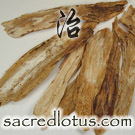 Bai Bu960 gRelieve Coughing and Wheezing
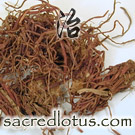 Zi Wan960 gRelieve Coughing and Wheezing
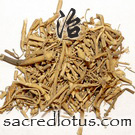 Bai Qian960 gWarm Herbs that Transform Phlegm-Cold
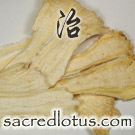 Jie Geng960 gWarm Herbs that Transform Phlegm-Cold
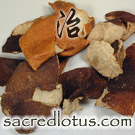 Chen Pi480 gRegulate the Qi
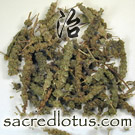 Jing Jie960 gWarm, Spicy Herbs that Release the Exterior
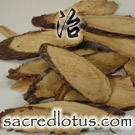 Gan Cao360 gTonify Qi
Preparation & dosage
How is Zhi Sou San prepared?
Despite its name (“san” = powder), Zhi Sou San is most often prepared today as a standard water decoction; the classical alternative is to grind the herbs to a coarse powder and take it as a draft with warm water. Either method uses the same seven herbs at the same relative proportions.
Where prepared as a decoction, the herbs are simmered together for roughly 15–20 minutes and taken warm, generally for a limited course until the residual cough resolves. Because the formula is intentionally mild, it is often adjusted with additional herbs (see notes) rather than used unmodified once clear heat, cold, or deficiency signs emerge.
Source: preparation method (decoction vs. classical powder) cross-referenced against multiple online sources and Bensky & Barolet, Formulas & Strategies. Traditional-use framing; not medical advice.
Safety — read before use
What are the cautions for Zhi Sou San?
Zhi Sou San is a deliberately mild, balanced formula for a lingering residual cough — it is not strong enough for an acute, high-fever exterior invasion, and it is not suited to a cough from more advanced heat, dryness, or deficiency patterns without modification.
- Not for acute, severe exterior invasion — a fresh cough with high fever, marked chills, and strong exterior signs calls for a stronger releasing formula; Zhi Sou San is intended for the residual stage after the acute phase has largely passed.
- Not for Lung heat with thick yellow phlegm — a cough with copious yellow or green sputum, fever, or a red tongue with yellow coat indicates heat that this mild formula is not built to clear; it is traditionally modified with cooling herbs, or a different heat-clearing formula is used instead.
- Not for chronic deficiency-type cough — a dry, non-productive cough with five-palm heat, night sweats, or a thin, rapid pulse suggests underlying Lung/Kidney yin deficiency, which needs a tonifying rather than a dispersing approach.
- Bai Bu (Stemona) dose awareness: Bai Bu is traditionally noted to be irritating to the digestive tract and mildly toxic in overdose; the formula uses it at standard dispensing amounts, not the higher doses used for its separate anthelmintic/insecticidal applications.
- Gan Cao (licorice) content: as with other licorice-containing formulas, prolonged or high-dose use is traditionally cautioned in the presence of edema, hypertension, or low potassium.
Source: cautions cross-referenced against multiple online sources and Bensky & Barolet, Formulas & Strategies. Reference note, not medical advice.
Originally Appeared In:
- Medical Revelations (Yi Xue Xin Wu)
Notes:
How does Zhi Sou San differ from other cough formulas, and how is it modified?
Zhi Sou San occupies the middle ground among classical cough formulas — it is neither as warming as the formulas used for fresh wind-cold cough nor as cooling as those for wind-heat cough, which is precisely why it is reserved for the lingering, residual stage after the acute exterior pattern has resolved.
- vs San Ao Tang (Three Unprocessed Ingredients Decoction) or other acute wind-cold cough formulas: those formulas use stronger, more warming diaphoretics for a fresh, still-acute invasion; Zhi Sou San is deliberately gentler, for after the acute phase has mostly passed.
- vs Sang Ju Yin (Mulberry Leaf and Chrysanthemum Drink): Sang Ju Yin is cooling and used for an acute wind-heat cough with more marked heat signs (sore throat, thirst, yellow phlegm); Zhi Sou San's balanced, near-neutral temperature makes it inappropriate once clear heat signs are present.
- vs Xing Su San (Apricot Kernel and Perilla Leaf Powder): Xing Su San targets cough from cool-dryness with a drier, more constrained presentation; Zhi Sou San is used more generally for a lingering cough regardless of the preceding pathogen's temperature.
Common modifications: for more pronounced residual heat signs, cooling herbs such as Huang Qin are traditionally added; for a still-unresolved stronger exterior wind, the dose of Jing Jie may be increased or a stronger wind-releasing herb added; for more copious phlegm, additional phlegm-transforming herbs are used alongside Chen Pi.
Classical source: Yi Xue Xin Wu (“Medical Revelations”), by the Qing-dynasty physician Cheng Guo-peng, 1732.
Source: formula comparison and modifications cross-referenced against multiple online sources and Bensky & Barolet, Formulas & Strategies; classical attribution from the same reference.
Clinical Studies & Research:
Is there modern research on Zhi Sou San?
Yes — a meta-analysis of 46 randomized trials found Zhi Sou San more effective than conventional cough medicine with fewer adverse reactions, and more recent network-pharmacology and animal studies explore its mechanism in asthma-related cough. Research on this formula centers on cough and cough-variant asthma, consistent with its traditional indication.
- Cough (meta-analysis of RCTs): a 2017 meta-analysis pooling 46 randomized controlled trials (4,007 participants total) comparing Zhi Sou San against conventional Western cough medicine found a substantially higher total effective rate (OR 4.45, 95% CI 3.62–5.47), greater FEV1 improvement, fewer adverse reactions, and a lower recurrence rate, though the authors noted trial-quality limitations and called for larger, more rigorous studies (PMID 28798807; PMC 5536149; DOI 10.1155/2017/9436352).
- Cough-variant asthma (network pharmacology): a 2022 analysis identified 137 active ingredients and 86 potential targets for Zhi Sou San, proposing that it acts partly by regulating the Th17/Treg immune balance and IL-17/TNF signaling; accompanying animal experiments found improved lung function and reduced inflammatory markers (PMID 35815290; PMC 9259218; DOI 10.1155/2022/1698571).
- Allergic asthma (preclinical, mechanism): in an ovalbumin-induced allergic asthma mouse model, bioactive components isolated from the formula's constituent herbs relaxed airway smooth muscle by simultaneously suppressing muscarinic-3 and activating beta-2-adrenergic receptor signaling, reducing inflammatory infiltration and mucus overproduction (PMID 38874436; DOI 10.1080/10286020.2024.2365442).
Sources: PMID 28798807 (PMC 5536149, DOI 10.1155/2017/9436352); PMID 35815290 (PMC 9259218, DOI 10.1155/2022/1698571); PMID 38874436 (DOI 10.1080/10286020.2024.2365442). Research context on cough and asthma-related mechanisms, not a therapeutic claim beyond the formula's traditional residual-cough indication.
Sources & References
Compiled and edited by Thomas Dehli, Founder & Editor, Sacred Lotus Updated
The information here is referenced from numerous sources — teachers, practitioners, class notes from Five Branches University, the books below, and the published research literature, with citations given as resolvable PubMed identifiers. Where sources disagree, I have flagged the discrepancies directly. If facts couldn't be verified, I have left them out. How we source our content.
Reference information for students and practitioners — not medical advice. Consult a qualified practitioner. Terms of use.
Chinese Formulas Books & References
 https://amzn.to/4fYI3f8
 https://amzn.to/4j55NRA
 https://amzn.to/4gMROyv
 https://amzn.to/4h7msSK