
Ban Xia Bai Zhu Tian Ma Tang Bàn Xià Bái Zhú Tiān Má Tāng
Pinellia, Atractylodis Macrocephalae, and Gastrodia Decoction
- Category
- Formulas that Treat Phlegm
- Ingredients
- 8 herbs
Actions
What does Ban Xia Bai Zhu Tian Ma Tang do?
Ban Xia Bai Zhu Tian Ma Tang dries dampness and transforms phlegm, extinguishes internal wind, and strengthens the Spleen so it stops generating the phlegm in the first place. It treats dizziness and headache caused by wind-phlegm disturbing the head — a pattern built on top of underlying Spleen deficiency, so the formula must clear the phlegm-wind that is already causing symptoms while also repairing the Spleen function that keeps producing more of it.
- Dries dampness and transforms phlegm — Ban Xia's core action, addressing the sticky, turbid phlegm that obstructs the clear yang from reaching the head.
- Extinguishes wind and stops dizziness/tremor — Tian Ma's signature action, calming the internal wind that phlegm has stirred up and that manifests as vertigo and headache.
- Strengthens the Spleen and drains dampness — Bai Zhu and Fu Ling address the root Spleen deficiency that allows dampness to accumulate and condense into phlegm.
- Regulates qi to aid phlegm resolution — Ju Hong moves qi on the principle that treating phlegm first requires treating qi movement.
- Harmonizes the middle jiao — Sheng Jiang, Da Zao, and Gan Cao support Stomach-Spleen harmony and moderate Ban Xia's drying, irritating nature.
Source: composition confirmed from Sacred Lotus sources & references; action analysis cross-referenced against multiple online sources and Bensky & Barolet, Formulas & Strategies. Traditional-use framing; not medical advice.
Indications
What is Ban Xia Bai Zhu Tian Ma Tang used for?
Ban Xia Bai Zhu Tian Ma Tang treats dizziness or vertigo with headache caused by wind-phlegm rising to disturb the head — a pattern rooted in Spleen deficiency, where dampness condenses into phlegm, phlegm generates internal wind, and the combination obstructs the clear yang qi that should reach the head.
- Dizziness or vertigo, sometimes severe enough that the room feels like it is spinning, worse with head movement.
- Headache with a sensation of heaviness or distension, often described as a “wrapped” or pressured feeling.
- A stifling sensation in the chest, with profuse phlegm or a feeling of phlegm obstructing the throat.
- Nausea, poor appetite, and generalized heaviness or lethargy from underlying Spleen deficiency.
- Palpitations or a restless feeling that can accompany more pronounced wind-phlegm disturbance.
Tongue and pulse: a swollen tongue with tooth marks and a white, sticky coating, and a slippery, wiry pulse — the swelling and sticky coat pointing to Spleen deficiency with phlegm-damp, the slippery wiry pulse to phlegm combined with wind.
Source: pattern/tongue/pulse from Sacred Lotus sources & references; clinical presentation cross-referenced against multiple online sources plus Bensky & Barolet, Formulas & Strategies. Traditional-use framing; not medical advice.
Western Uses:
What conditions is Ban Xia Bai Zhu Tian Ma Tang used for in modern practice?
Ban Xia Bai Zhu Tian Ma Tang treats wind-phlegm rising to the head — dizziness/vertigo and headache on a base of Spleen deficiency — a picture most often referenced for Ménière's disease and other vertigo presentations with a heavy, phlegmy quality.
The formula is selected for the wind-phlegm pattern, not for a named diagnosis. Vertigo that is sudden, severe, or comes with hearing loss, double vision, weakness, or difficulty speaking requires prompt medical assessment, as some causes are serious; Ménière's itself is a medical diagnosis best confirmed and managed by a clinician. Traditional-use correlate only, not a treatment claim.
Source: Sacred Lotus sources & references (pattern) + Bensky & Barolet, Formulas & Strategies; biomedical correlate as reference only. Not medical advice.
Ingredients
8 substances in Ban Xia Bai Zhu Tian Ma Tang — each links to its full herb monograph.
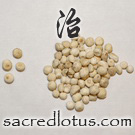 Ban Xia4.5 gWarm Herbs that Transform Phlegm-Cold
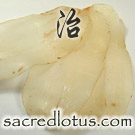 Tian Ma3 gExtinguish Wind and Stop Tremors
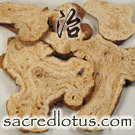 Bai Zhu18 gTonify Qi
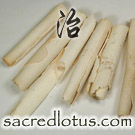 Fu Ling3 gRegulate Water and Drain Dampness
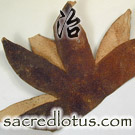 Ju Hong3 gRegulate the Qi
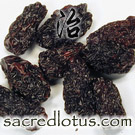 Da Zao2 piecesTonify Qi
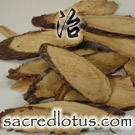 Gan Cao1.5 gTonify Qi
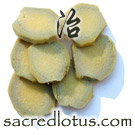 Sheng Jiang1 SliceWarm, Spicy Herbs that Release the Exterior
Preparation & dosage
How is Ban Xia Bai Zhu Tian Ma Tang prepared?
Ban Xia Bai Zhu Tian Ma Tang is prepared as a standard water decoction of all eight herbs, taken warm, with processed (not raw) Ban Xia and fresh Sheng Jiang. The herbs are simmered together for roughly 20–30 minutes, consistent with standard decoction practice for formulas built on an Er Chen Tang base.
Only processed (zhi) Ban Xia is used, never the raw, more irritating form. Bai Zhu is typically used in a notably larger dose relative to the other herbs (it is the heaviest single ingredient in the classical recipe), reflecting the emphasis on rebuilding Spleen qi alongside resolving the acute wind-phlegm disturbance. Sheng Jiang is added as the fresh, uncooked rhizome and Da Zao as whole dried jujube fruits, following the standard Er Chen Tang-family convention.
Source: classical and modern decoction practice cross-referenced against multiple online sources and Bensky & Barolet, Formulas & Strategies; per-herb amounts confirmed from Sacred Lotus sources & references. Traditional-use framing; not medical advice.
Safety — read before use
What are the cautions for Ban Xia Bai Zhu Tian Ma Tang?
This formula is built for wind-phlegm dizziness with Spleen deficiency — it is not appropriate for dizziness caused by Liver yang rising or Liver-Kidney yin deficiency, and it relies on processed rather than raw Ban Xia. Correctly distinguishing a phlegm-damp presentation (swollen, sticky-coated tongue; slippery pulse) from a yin-deficiency/yang-rising presentation (red tongue, wiry-thin pulse) is central to using it appropriately.
- Not for Liver yang rising or yin-deficiency dizziness: a red tongue with little coating, a thin wiry pulse, and accompanying irritability, tinnitus, or insomnia point to a different mechanism (see Tian Ma Gou Teng Yin below) and call for a yin-nourishing, yang-anchoring strategy instead of phlegm transformation.
- Ban Xia (Pinellia) processing: only the processed form is used; raw Pinellia is irritating to the throat and is traditionally listed as incompatible with aconite (Wu Tou/Fu Zi)-containing formulas under the “eighteen antagonisms.”
- Pregnancy: traditionally used with caution given Ban Xia's descending, phlegm-transforming action; use should be supervised by a qualified practitioner.
- Gan Cao (licorice) content: long-term or high-dose use is traditionally cautioned in the presence of edema, hypertension, or low potassium, and licorice is known to interact with certain corticosteroid and diuretic medications.
- Persistent or worsening dizziness: vertigo has many possible causes beyond wind-phlegm; persistent, severe, or neurologically concerning symptoms warrant proper medical evaluation rather than reliance on herbal treatment alone.
Source: cautions cross-referenced against multiple online sources and Bensky & Barolet, Formulas & Strategies (contraindications; eighteen antagonisms); Sacred Lotus sources & references confirm the formula's Ban Xia and Gan Cao content. Reference note, not medical advice.
Originally Appeared In:
- Medical Revelations (Yi Xue Xin Wu)
Notes:
How does Ban Xia Bai Zhu Tian Ma Tang differ from Tian Ma Gou Teng Yin?
Both formulas treat dizziness and headache and both use Tian Ma, but they address opposite mechanisms — phlegm obstruction from Spleen deficiency versus Liver yang rising from Liver-Kidney yin deficiency — and share almost no other ingredients. Distinguishing the two by tongue and pulse, not by symptom alone, is the traditional differentiating principle.
- vs Tian Ma Gou Teng Yin (Gastrodia and Uncaria Decoction): a later formula (from the modern formulary Za Bing Zheng Zhi Xin De) built around Tian Ma and Gou Teng with Shi Jue Ming, Zhi Zi, Huang Qin, Yi Mu Cao, Sang Ji Sheng, Du Zhong, and Ye Jiao Teng — it calms Liver yang, extinguishes Liver wind, and nourishes Liver-Kidney yin, for headache, dizziness, tinnitus, irritability, and insomnia with a red tongue and thin wiry pulse. It contains no phlegm-transforming or Spleen-strengthening herbs, because its mechanism is yin deficiency allowing yang to rise, not phlegm-damp obstructing the head.
- Shared herb, different context: Tian Ma appears in both because it extinguishes wind regardless of the wind's origin, but here it works alongside Ban Xia, Bai Zhu, and Fu Ling to resolve phlegm, whereas in Tian Ma Gou Teng Yin it works alongside Gou Teng and Shi Jue Ming to subdue Liver yang.
Classical source and lineage: the version reflected here — Ban Xia, Tian Ma, Bai Zhu, Fu Ling, Ju Hong, Gan Cao, Sheng Jiang, Da Zao — comes from Cheng Guopeng's Qing-dynasty formulary Yi Xue Xin Wu (Medical Revelations, 1732). A differently-composed, larger formula sharing the same name also appears earlier in Li Dongyuan's Pi Wei Lun (Treatise on the Spleen and Stomach, Jin-Yuan dynasty), built for an internal-damage pattern with additional qi-tonifying and draining herbs; the two are historically distinct prescriptions that happen to share a title, and the composition confirmed in Sacred Lotus sources & references matches the Cheng Guopeng version most commonly used in current practice.
Source: formula-family differentiation and classical lineage cross-referenced against multiple online sources and Bensky & Barolet, Formulas & Strategies; classical attributions from the Yi Xue Xin Wu and Pi Wei Lun.
Clinical Studies & Research:
Is there modern research on Ban Xia Bai Zhu Tian Ma Tang?
Yes — modern research on Banxia Baizhu Tianma Tang concentrates on two areas that map onto its traditional wind-phlegm indication: vertigo mechanisms and blood-pressure/vasodilatory effects, both studied mainly in animal models. Clinical dizziness in modern practice frequently overlaps with vertebrobasilar insufficiency and hypertension, which is reflected in where the research has focused.
- Posterior circulation ischemia vertigo (preclinical, mechanism): a 2024 rat-model study found the decoction reduced brain tissue damage and improved neurological outcomes in vertebrobasilar-insufficiency-related vertigo, associated with favorable shifts in gut microbiota (increased Lactobacillus) and increased short-chain fatty acid levels (PMID 38810328).
- Antihypertensive and vasodilatory effects (preclinical, isolated vessel and network pharmacology): a 2018 study of an amended (herb-ratio-optimized) version of the formula found vasodilatory effects in isolated rat blood vessels via nitric oxide, prostaglandin, and muscarinic-receptor pathways plus calcium-channel suppression (PMID 29136777); a 2026 bioinformatics-and-animal study of the classical formula identified candidate bioactive compounds and reported reduced blood pressure and dizziness-related behavior in hypertensive rats (PMID 42002996).
Sources: PMID 38810328; PMID 29136777; PMID 42002996. Research context on modern vertigo and hypertension mechanisms, not a therapeutic claim for the formula's classical wind-phlegm indication specifically; the 2018 vasodilation study used an amended, ratio-adjusted version of the formula rather than the classical eight-herb prescription.
Sources & References
Compiled and edited by Thomas Dehli, Founder & Editor, Sacred Lotus Updated
The information here is referenced from numerous sources — teachers, practitioners, class notes from Five Branches University, the books below, and the published research literature, with citations given as resolvable PubMed identifiers. Where sources disagree, I have flagged the discrepancies directly. If facts couldn't be verified, I have left them out. How we source our content.
Reference information for students and practitioners — not medical advice. Consult a qualified practitioner. Terms of use.
Chinese Formulas Books & References
 https://amzn.to/4fYI3f8
 https://amzn.to/4j55NRA
 https://amzn.to/4gMROyv
 https://amzn.to/4h7msSK