

Bulbus Fritillariae Cirrhosae Tendrilled Fritillaria Bulb
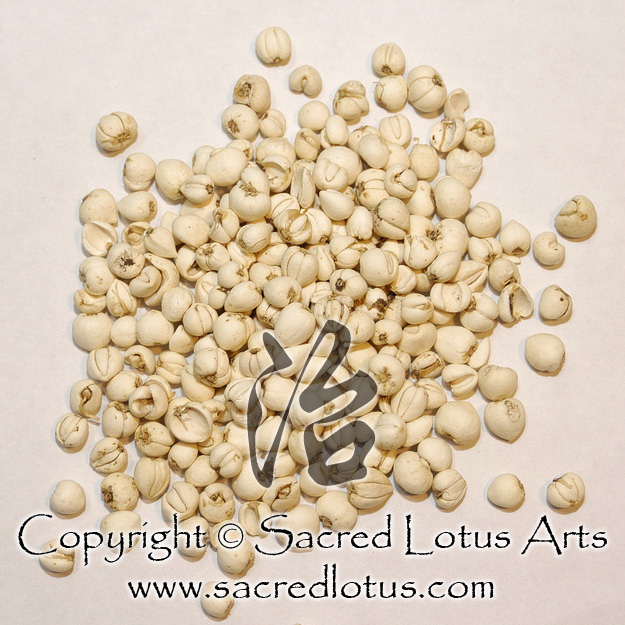
Materia Medica Data
- Temperature
- Cool
- Nature & Flavour
- Bitter, Sweet, Cool
- Channels Entered
- HT, LU
- Latin (pharmaceutical)
- Bulbus Fritillariae Cirrhosae
- Chinese
- 川贝母
- Tone Marks
- chuān bèi mŭ
- Translation
- Shell Mother from Sichuan
Chinese Herb Actions
What is Chuan Bei Mu used for in Chinese medicine?
Chuan Bei Mu (tendrilled fritillaria bulb) is traditionally used to moisten the Lung, transform phlegm, and dissipate nodules — the premium, moistening choice among the fritillarias, best suited to dry, chronic, or yin-deficient cough rather than acute phlegm-heat. Sacred Lotus records its properties as bitter, sweet, and cool, entering the Heart and Lung channels.
Its main traditional actions:
- Moistens the Lung, transforms phlegm, clears heat, stops cough — for a dry, chronic cough or cough with heat signs from yin deficiency: scanty, difficult-to-expectorate sputum, sometimes blood-streaked, with a dry mouth/throat. Also used for cough complicated by qi stagnation (low appetite, a stifling sensation in the chest/abdomen).
- Clears heat and disperses nodules — for phlegm-heat or phlegm-fire nodules and swellings: scrofula, goiter, sores, and Lung or breast abscesses.
Source: Sacred Lotus sources & references; cross-referenced against multiple online sources and materia medica consensus (Bensky, Materia Medica, 3rd ed.; Chen & Chen, Chinese Herbal Medicine: Materia Medica).
Chinese Herb Dosage
What is the typical dosage of Chuan Bei Mu?
Roughly 3–10 g in decoction, or about 1–1.5 g when taken as powder. The lower powder dose reflects both cost (Chuan Bei Mu is one of the more expensive Chinese herbs) and potency — powdered form is traditionally favored for direct swallowing (e.g., stirred into a small amount of liquid) rather than decoction, especially for chronic dry cough.
Source: Sacred Lotus sources & references; cross-referenced against multiple online sources and materia medica consensus (Bensky, Chen & Chen). Reference only — not a prescription.
Chinese Herb Contraindications & Cautions
Are there cautions for Chuan Bei Mu?
Chuan Bei Mu is not appropriate when cough or phlegm is due to cold or damp (its cooling, moistening nature would aggravate a cold-phlegm pattern), and — like the other Bei Mu fritillarias — it is classically listed as incompatible with Wu Tou / Fu Zi (the Aconitum/prepared-aconite group) under the traditional “Eighteen Incompatibilities” (Shi Ba Fan) doctrine.
- Do not use where cough or phlegm is due to cold or dampness.
- Classical incompatibility — traditionally not combined with Wu Tou, Fu Zi, or other Aconitum-group herbs (Shi Ba Fan doctrine); this applies to the Bei Mu fritillarias as a group.
Source: Sacred Lotus sources & references; cross-referenced against multiple online sources and materia medica consensus (Bensky, Chen & Chen).
Chinese Herb Toxicity & Overdose
- Unprocessed Chuan Bei Mu is toxic and should not be taken internally.
Western / Biomedical Research
Chinese Herb Clinical Studies & Research
Provided as research context — a summary of published biomedical study, not a therapeutic or medical claim.
Is there modern research on Chuan Bei Mu (Fritillariae Cirrhosae Bulbus), and is it endangered or commonly adulterated?
Yes on both counts — laboratory research supports its traditional antitussive/expectorant use, and separately there is a large, active body of research on adulteration and authentication because wild Fritillaria cirrhosa is scarce, slow-growing, and one of the most frequently substituted herbs in the Chinese materia medica.
- Antitussive/expectorant/anti-inflammatory pharmacology — isosteroidal alkaloids isolated from Bulbus Fritillariae Cirrhosae (imperialine, chuanbeinone, verticinone, verticine, and related compounds) significantly inhibited cough frequency and increased cough latency in ammonia-induced cough models in mice, increased tracheal phenol-red output (an expectorant-effect assay), and reduced inflammatory ear edema — supporting the traditional cough-and-phlegm use, though this is animal-model, not human clinical, evidence.
- Conservation / cultivated vs. wild — because wild-collected Fritillaria cirrhosa is slow to mature and increasingly scarce, most commercial and clinical supply now relies on cultivated bulbs; a 2026 metabolomics study found cultivated Fritillaria cirrhosa comparable in chemistry and efficacy to wild-type material in a classic Chuan Bei-based cough preparation (Chuan Bei Pi Pa Gao), supporting cultivated sourcing as a sustainable, quality-consistent alternative to wild harvest.
- Adulteration and authentication (an active research area) — because genuine Fritillaria cirrhosa is costly and limited, it is frequently substituted or mixed with other Fritillaria species (F. thunbergii/Zhe Bei Mu, F. pallidiflora, F. wabuensis, and others) or non-Fritillaria look-alikes. Multiple independent groups have developed authentication methods specifically to detect this — laser-induced breakdown spectroscopy, LC-MS/MS with multivariate statistics, Raman and infrared spectroscopy, DNA/PCR-based species identification, ITS1 haplotype amplicon sequencing, and isothermal DNA amplification assays — reflecting how widespread and clinically significant the adulteration problem is judged to be.
- Comparative toxicity/pharmacology across species — a comparative study of acute oral toxicity and traditional pharmacological activity between Fritillaria cirrhosae Bulbus and the substitute Fritillaria pallidiflora Bulbus found pharmacological and toxicological differences between the two, underscoring that species substitution is not a neutral, like-for-like swap.
Note: given how frequently Chuan Bei Mu is adulterated or substituted in commerce, product authentication (verified species, verified supplier) is a genuine quality/safety consideration for this herb specifically — not a generic caveat.
Sources: PMID 22101082 (J Ethnopharmacol. 2012;139(1):189-93, DOI 10.1016/j.jep.2011.10.036); PMID 21958967 (Fitoterapia 2011;82(8):1290-4, DOI 10.1016/j.fitote.2011.09.006); PMID 42135429 / PMC 13369985 (Sci Rep. 2026, DOI 10.1038/s41598-026-52763-6 — cultivated vs. wild); PMID 37107505 / PMC 10138139 (Foods 2023;12(8):1710, DOI 10.3390/foods12081710 — LIBS adulteration test); PMID 39380014 / PMC 11460136 (Chin Med. 2024, DOI 10.1186/s13020-024-01010-z — molecular quantification of adulterants); PMID 38419104 / PMC 10900738 (Chin Med. 2024, DOI 10.1186/s13020-024-00911-3 — ITS1 haplotypes); PMID 30954613 (J Ethnopharmacol. 2019, DOI 10.1016/j.jep.2019.111853 — comparative toxicity vs. F. pallidiflora). Research context, not a therapeutic claim.
Chinese Herb Notes
How is Chuan Bei Mu different from Zhe Bei Mu?
Chuan Bei Mu and Zhe Bei Mu are both “Bei Mu” fritillaria bulbs that transform phlegm-heat, but they come from different Fritillaria species and diverge sharply in temperature and best use — the classic distinction is dry/chronic (Chuan Bei) versus wet/acute (Zhe Bei).
- Chuan Bei Mu (Fritillaria cirrhosa) — bitter, sweet, cool; more moistening and tonifying; the better choice for chronic, dry, or yin-deficient cough with scanty sputum; the costlier, more prized of the two.
- Zhe Bei Mu (Fritillaria thunbergii) — bitter, cold; stronger at clearing heat and dispersing phlegm; the better choice for acute, productive cough from external pathogens or Lung heat with copious phlegm; less expensive and more widely available.
Shared use: both disperse nodules and clear heat for scrofula, goiter, and Lung/breast abscesses — the choice between them is a matter of which is more prominent, dryness/deficiency (Chuan Bei) or acute heat/excess phlegm (Zhe Bei).
Source: Sacred Lotus sources & references; cross-referenced against multiple online sources and materia medica consensus (Bensky, Chen & Chen); Sacred Lotus records for Zhe Bei Mu.
This herb is incompatible with:
- Fu Zi (Radix Lateralis Praeparatus Aconiti Carmichaeli)
- Cao Wu (Radix Aconiti Kusnezoffii Preparata)
- Chuan Wu (Radix Aconiti Preparata)
This herb is from an endangered/protected species and is illegal in the United States
Sources & References
Compiled and edited by Thomas Dehli, Founder & Editor, Sacred Lotus Updated
The information here is referenced from numerous sources — teachers, practitioners, class notes from Five Branches University, the books below, and the published research literature, with citations given as resolvable PubMed identifiers. Where sources disagree, I have flagged the discrepancies directly. If facts couldn't be verified, I have left them out. How we source our content.
Reference information for students and practitioners — not medical advice. Consult a qualified practitioner. Terms of use.
Chinese Herbs Books & References
 https://amzn.to/3WfB3DK
 https://amzn.to/3DR1VUh
 https://amzn.to/42aMz73
 https://amzn.to/3PuD4bt