
Bai He Gu Jin Tang Bǎi Hé Gù Jīn Tāng
Lily Bulb Decoction to Preserve the Metal
- Category
- Formulas that Treat Dryness
- Subcategory
- Formulas that Enrich the Yin and Moisten Dryness
- Ingredients
- 10 herbs
Actions
What does Bai He Gu Jin Tang do?
Bai He Gu Jin Tang nourishes the yin of the Lung and Kidney, clears deficiency (empty) heat, and transforms phlegm to stop cough. Its name — "preserve (strengthen) the Metal" — describes protecting the Lung: when Kidney water is too depleted to moisten the Lung, deficiency fire scorches it, so the formula restores both organs' yin at once.
How the ingredients work together:
- Chiefs — Bai He with Sheng Di Huang and Shu Di Huang — Bai He moistens the Lung and stops cough while the two Rehmannias enrich Kidney yin, nourish blood, and cool the blood.
- Deputies — Mai Men Dong and Xuan Shen — moisten the Lung, enrich yin, and clear the floating deficiency fire that dries and inflames the throat.
- Assistants — Chuan Bei Mu with Dang Gui and Bai Shao — Chuan Bei Mu clears heat, transforms phlegm and stops cough; Dang Gui and Bai Shao nourish and harmonize the blood depleted by chronic yin deficiency.
- Envoys — Jie Geng and Gan Cao — guide the herbs to the Lung, ease the throat, and harmonize the formula.
Source: Bensky & Barolet, Chinese Herbal Medicine: Formulas & Strategies (2nd ed.), Bai He Gu Jin Tang entry. Traditional-use framing; not medical advice.
Indications
What is Bai He Gu Jin Tang used for?
Bai He Gu Jin Tang is used for Lung and Kidney yin deficiency with deficiency heat. The picture is a dry cough — often with blood-streaked sputum — together with a dry, sore throat, wheezing or labored breathing, hot palms and soles, and low-grade tidal fever or night sweats.
Typical presentation:
- Cough — a dry, chronic cough, sometimes with blood-streaked or scanty sticky sputum; wheezing.
- Throat — a dry, sore, or hoarse throat.
- Deficiency-heat signs — hot palms and soles, tidal fever, night sweats.
- Tongue & pulse — a red tongue with little coat; a thin, rapid pulse.
Source: Bensky & Barolet, Formulas & Strategies; pattern, tongue, and channels confirmed against the Sacred Lotus formula record. Traditional-use framing; not medical advice.
Western Uses:
What is Bai He Gu Jin Tang used for in modern practice?
In modern reference sources Bai He Gu Jin Tang is most associated with chronic respiratory conditions read through its Lung-and-Kidney yin-deficiency pattern. Commonly cited associations include chronic bronchitis, bronchiectasis with blood-streaked sputum, chronic pharyngitis or laryngitis, and pulmonary tuberculosis (as an adjunct). This is pattern-based reference framing, not a diagnosis-specific treatment claim.
Reported reference associations include:
- Chronic cough disorders — chronic bronchitis and bronchiectasis with dry or blood-tinged sputum.
- Throat conditions — chronic pharyngitis and laryngitis with dryness and hoarseness.
- Tuberculosis (adjunctive) — the yin-deficiency, deficiency-fire picture, mirroring the formula's modern research focus.
Any such use is decided by pattern differentiation, not by the Western label alone.
Source: Bensky & Barolet, Formulas & Strategies (modern applications). Reference framing only; not a medical claim.
Ingredients
10 substances in Bai He Gu Jin Tang — each links to its full herb monograph.
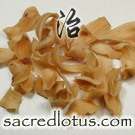 Bai He3 gTonify Yin
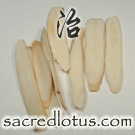 Bai Shao3 gTonify Blood
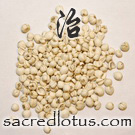 Chuan Bei Mu3 gCool and Transform Phlegm-Heat
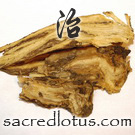 Dang Gui3 gTonify Blood
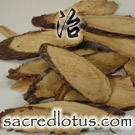 Gan Cao3 gTonify Qi
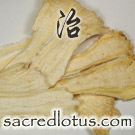 Jie Geng2.4 gWarm Herbs that Transform Phlegm-Cold
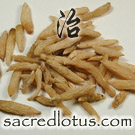 Mai Men Dong4.5 gTonify Yin
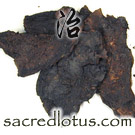 Sheng Di Huang6 gCool the Blood
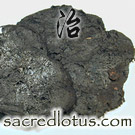 Shu Di Huang9 gTonify Blood
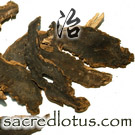 Xuan Shen2.4 gCool the Blood
Preparation & dosage
How is Bai He Gu Jin Tang prepared?
Bai He Gu Jin Tang is prepared as a water decoction (tang) of its yin-and-Lung-moistening herbs (Bai He, Sheng and Shu Di Huang, Mai Men Dong, Xuan Shen and others), taken warm.
The classical doses are modest; modern formulations often increase the amount of all the herbs 2–3 fold to give the rich, moistening yin tonics enough weight to act. It is also available as concentrated granules for sustained use in chronic dryness.
Source: Sacred Lotus sources & references (composition and preparation note) + Bensky & Barolet, Formulas & Strategies.
Decoction. Classical amounts are small (Shu Di Huang 9 g, Sheng Di Huang 6 g, Mai Men Dong 4.5 g, most other herbs 2.4-3 g); modern formulations commonly increase all herbs two- to three-fold. Reference range only, not a prescription.
Safety — read before use
What are the cautions for Bai He Gu Jin Tang?
Bai He Gu Jin Tang is rich and cloying, so it is not suited to Spleen and Stomach deficiency or to damp, phlegm-productive coughs. Its enriching Rehmannia and yin tonics can burden a weak digestion — worsening poor appetite, a stifling fullness, or loose stools — and it is wrong for cough driven by dampness, cold, or an exterior condition.
- Weak digestion / dampness — use with caution or modification when there is poor appetite, loose stools, or copious clear/white phlegm.
- Pattern fit — it addresses dry, deficiency-heat cough; it is not for wind-cold, wind-heat, or damp-phlegm coughs.
- Incompatibility — Chuan Bei Mu (Fritillaria) is classically incompatible with the aconite herbs (Wu Tou / Fu Zi) under the Eighteen Incompatibilities.
Source: Bensky & Barolet, Formulas & Strategies (cautions); classical incompatibility lists. Not medical advice; consult a qualified practitioner.
Originally Appeared In:
- Analytic Collection of Medicinal Formulas (Yi Fang Ji Jie)
Notes:
How does Bai He Gu Jin Tang compare to other formulas, and how is it modified?
Bai He Gu Jin Tang is the deep, chronic member of the Lung-yin-moistening formulas — it reaches to the Kidney and addresses deficiency-heat bleeding. Where lighter formulas moisten only the Lung and Stomach, this one nourishes Lung and Kidney together and is chosen when a dry cough has become chronic and blood-streaked.
Common comparisons and modifications:
- vs Mai Men Dong Tang — Mai Men Dong Tang treats Lung-and-Stomach yin deficiency with rebellious qi (dry, counterflow cough); Bai He Gu Jin Tang treats the deeper Lung-Kidney deficiency with deficiency fire and hemoptysis.
- vs Yang Yin Qing Fei Tang — Yang Yin Qing Fei Tang targets Lung yin deficiency with epidemic throat toxin/heat; Bai He Gu Jin Tang targets chronic yin-deficient cough with blood-streaked sputum.
- vs Sha Shen Mai Men Dong Tang — the latter is milder, for Lung-Stomach dryness after a warm illness, without the Kidney dimension.
- Marked bleeding — classically add cooling hemostatics such as Bai Ji, Ou Jie, or Xian He Cao.
- Strong deficiency heat / night sweats — add Di Gu Pi, Yin Chai Hu, or Zhi Mu.
Source: Bensky & Barolet, Formulas & Strategies (comparisons & modifications). Traditional-use framing; not medical advice.
Clinical Studies & Research:
Is there modern research on Bai He Gu Jin Tang?
Modern study centers on pulmonary tuberculosis, where the formula is used alongside standard drug therapy. A randomized controlled trial of 100 patients with pulmonary TB of the "yin-deficiency, fire-hyperactivity" pattern found that adding Baihe Gujin decoction to anti-tuberculosis therapy lowered cough-severity and erythrocyte-sedimentation-rate scores, shifted regulatory-T-cell and cytokine profiles, and appeared to protect renal function versus drug therapy alone (J Int Med Res, 2020). A 2025 systematic review and meta-analysis of 32 randomized trials (2,761 patients) reported higher clinical-efficacy, lesion-absorption and sputum-conversion rates and fewer adverse reactions when the decoction was added to chemotherapy — though the authors note the pooled trials were of variable quality. Human evidence outside TB remains limited and largely preliminary.
Sources: PubMed 32367748 (RCT, Baihe Gujin + anti-TB therapy); PMC 12106383 (2025 systematic review & meta-analysis, 32 RCTs / 2,761 patients). Research context, not a therapeutic claim.
Sources & References
Compiled and edited by Thomas Dehli, Founder & Editor, Sacred Lotus Updated
The information here is referenced from numerous sources — teachers, practitioners, class notes from Five Branches University, the books below, and the published research literature, with citations given as resolvable PubMed identifiers. Where sources disagree, I have flagged the discrepancies directly. If facts couldn't be verified, I have left them out. How we source our content.
Reference information for students and practitioners — not medical advice. Consult a qualified practitioner. Terms of use.
Chinese Formulas Books & References
 https://amzn.to/4fYI3f8
 https://amzn.to/4j55NRA
 https://amzn.to/4gMROyv
 https://amzn.to/4h7msSK