

Yu Ye Tang
Jade Fluid Decoction
- Category
- Formulas that Treat Dryness
- Subcategory
- Formulas that Enrich the Yin and Moisten Dryness
- Ingredients
- 7 herbs
Actions
What does Yu Ye Tang do?
Yu Ye Tang (Jade Fluid Decoction) simultaneously tonifies qi and nourishes yin to generate fluids and relieve thirst. Created by the early-20th-century physician Zhang Xichun, it was designed for wasting-thirst (xiao ke) driven by combined qi and yin deficiency, where the body can no longer hold onto or transform the fluids it takes in.
The seven ingredients divide by role:
- Chief: Huang Qi and Shan Yao together raise and tonify qi, particularly supporting the Spleen and Kidney, so the body can properly transform and distribute fluids rather than simply losing them.
- Deputies: Zhi Mu and Tian Hua Fen clear heat and richly nourish yin, moistening the dryness that drives the unrelenting thirst.
- Assistants: Ji Nei Jin supports the Spleen’s transportation and transformation so the rich tonics don’t stagnate — a pairing Zhang Xichun favored alongside Shan Yao and Huang Qi; Ge Gen raises clear yang and helps generate fluids.
- Envoy: Wu Wei Zi astringes, helping conserve the qi and fluids the rest of the formula generates rather than letting them leak away.
Source: this site’s own composition record + chief/deputy/assistant/envoy analysis cross-referenced against multiple online sources. Traditional-use framing; not medical advice.
Indications
What is Yu Ye Tang used for?
Yu Ye Tang treats wasting-thirst (xiao ke) from combined qi and yin deficiency — intense thirst that drinking doesn’t relieve, together with frequent, copious, or turbid urination and the fatigue of underlying qi deficiency. Zhang Xichun considered Shan Yao, used in a large dose, one of the most effective single herbs for this pattern and built the rest of the formula around it.
- Qi-deficiency signs: fatigue, shortness of breath, and general weakness alongside the thirst.
- Fluid-loss signs: excessive, sometimes turbid urination that parallels the fluid lost to thirst.
Pulse: deficient and thin, reflecting the underlying qi-and-yin depletion.
Source: this site’s own pattern/pulse record + multiple online sources. Traditional-use framing; not medical advice.
Western Uses:
What is Yu Ye Tang used for in modern practice?
In modern practice Yu Ye Tang is referenced in connection with type 2 diabetes. Its classic presentation of unrelenting thirst and frequent urination parallels the polydipsia and polyuria of diabetes, and TCM literature also discusses it in connection with early diabetic kidney involvement. These biomedical correlates describe the formula’s traditional xiao ke (wasting-thirst) use — they are not a claim that it treats diabetes or any diagnosed disease.
Contemporary study of it (see research) is preclinical — animal and network-pharmacology work on proposed mechanisms — rather than large human clinical trials. Any use for diagnosed diabetes belongs alongside, never instead of, conventional medical care.
Source: traditional-use correlates summarized from multiple online sources + PubMed research context. Reference only, not a treatment claim.
Ingredients
7 substances in Yu Ye Tang — each links to its full herb monograph.
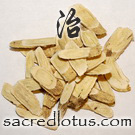 Huang Qi15 gTonify Qi
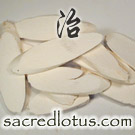 Shan Yao30 gTonify Qi
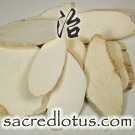 Tian Hua Fen9 gCool and Transform Phlegm-Heat
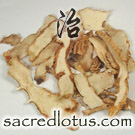 Zhi Mu18 gDrain Fire
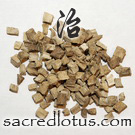 Ge Gen4.5 gCool, Spicy Herbs that Release the Exterior
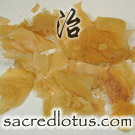 Ji Nei Jin6 gRelieve Food Stagnation
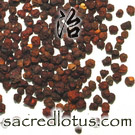 Wu Wei Zi9 gAstringe, Stabilize, Bind
Preparation & dosage
How is Yu Ye Tang prepared?
Yu Ye Tang is taken as a decoction of the seven herbs simmered together and strained, following Zhang Xichun’s original prescription in Yi Xue Zhong Zhong Can Xi Lu (Records of Heart-Felt Experiences in Medicine with Reference to the West). Reference relative amounts (see dosage) are adjusted to the individual by a qualified practitioner.
Source: this site’s own preparation record + formula origin text. Traditional-use framing; not medical advice.
Decoction. Reference relative amounts: Shan Yao 30 g; Zhi Mu 18 g; Huang Qi 15 g; Tian Hua Fen, Wu Wei Zi 9 g; Ji Nei Jin 6 g; Ge Gen 4.5 g. Reference only; adjust to the individual.
Safety — read before use
What are the cautions for Yu Ye Tang?
Yu Ye Tang is built for deficiency-pattern thirst, not thirst from excess heat or from Kidney-yang deficiency. Zhang Xichun distinguished this qi-and-yin-deficiency wasting-thirst from thirst caused by Yang Ming (Stomach/Intestine) excess heat and from thirst caused by Kidney-yang (mingmen fire) deficiency; Yu Ye Tang is not intended for either of those patterns and would not suit them.
- Not for excess-heat thirst: where strong heat/fire signs with a full, forceful pulse predominate, heat-clearing or purging formulas are indicated instead.
- Not for Kidney-yang (mingmen fire) deficiency thirst: that pattern calls for a warming Kidney-yang formula rather than this yin-nourishing one.
- General fit: as with any tonifying formula, herb selection and dosing should be adjusted to the individual by a qualified practitioner, and any use for diagnosed diabetes should complement, not replace, conventional medical care.
Source: multiple online sources (differentiation from Yang Ming excess-heat and Kidney-yang-deficiency thirst, per Zhang Xichun). Traditional-use framing; not medical advice.
Originally Appeared In:
- Records of Heart Felt Experiences in Medicine with References to the West (Yi Xue Zhong Zhong Can Xi Lu)
Notes:
How is Yu Ye Tang different from Yu Quan Wan?
Yu Ye Tang and Yu Quan Wan (Jade Spring Pill) are both classical xiao ke formulas that share Huang Qi, Tian Hua Fen, and Ge Gen, but build the rest of the formula differently. Yu Quan Wan pairs those shared herbs with Ren Shen, Mai Men Dong, Wu Mei, Fu Ling, and Gan Cao, giving a broader qi-tonifying, heat-clearing, fluid-generating formula for xiao ke with irritability and a red, dry tongue.
- Yu Ye Tang centers on Shan Yao and Zhi Mu, reflecting Zhang Xichun’s emphasis on the Spleen-Kidney axis and large-dose Shan Yao as a fluid-generating tonic.
- Yu Quan Wan leans more on Ren Shen and Mai Men Dong for qi and Stomach/Lung yin, with Wu Mei’s sour astringency doing the conserving work Wu Wei Zi does in Yu Ye Tang.
Source: multiple online sources. Traditional-use framing; not medical advice.
Clinical Studies & Research:
Is there modern research on Yu Ye Tang?
Yes, though it remains mostly preclinical — animal and network-pharmacology studies of how the formula may affect blood-glucose regulation, rather than large randomized clinical trials. One study found Yu-Ye Tang normalized gut microbiota and serum metabolites in diabetic rats; another combined network pharmacology with lab validation to propose specific glucose-regulating signaling pathways.
- Gut microbiota & metabolomics (preclinical): 16S rRNA sequencing and metabolomics in type 2 diabetic rats found Yu-Ye Tang corrected microbiota imbalances and beneficially shifted tryptophan and glycerophospholipid metabolism (PMID 37732114).
- Mechanism / network pharmacology (preclinical): network pharmacology plus cell and animal validation proposed that Yuye decoction supports pancreatic beta-cell survival and lowers blood glucose via PI3K/AKT1 and Sirt1/FoxO1 signaling (PMID 36828194).
Sources: PubMed 37732114; PubMed 36828194. Research context, not a therapeutic claim; direct clinical trial evidence in humans remains limited.
Sources & References
Compiled and edited by Thomas Dehli, Founder & Editor, Sacred Lotus Updated
The information here is referenced from numerous sources — teachers, practitioners, class notes from Five Branches University, the books below, and the published research literature, with citations given as resolvable PubMed identifiers. Where sources disagree, I have flagged the discrepancies directly. If facts couldn't be verified, I have left them out. How we source our content.
Reference information for students and practitioners — not medical advice. Consult a qualified practitioner. Terms of use.
Chinese Formulas Books & References
 https://amzn.to/4fYI3f8
 https://amzn.to/4j55NRA
 https://amzn.to/4gMROyv
 https://amzn.to/4h7msSK