
Ling Jiao Gou Teng Tang
Antelope Horn and Uncaria Decoction
- Category
- Formulas that Expel Wind
- Subcategory
- Formulas that Extinguish Internal Wind
- Ingredients
- 10 herbs
Actions
What does Ling Jiao Gou Teng Tang do?
Ling Jiao Gou Teng Tang cools the Liver, extinguishes Wind, clears heat, and nourishes yin to relax the sinews. It is the classic formula for the most severe presentation of internal wind — blazing heat in the Liver channel driving convulsions and spasm — combining strong heat-clearing, wind-extinguishing herbs with yin- and fluid-nourishing herbs so the very heat that stirred the wind does not also scorch the fluids needed to keep the sinews supple.
The ten ingredients divide by role:
- Chief: Ling Yang Jiao (Cornu Saigae Tataricae, antelope horn) and Gou Teng (Ramulus Uncariae cum Uncis) directly cool the Liver, extinguish wind, and stop tremors and spasm — the pairing that gives the formula its name and its emergency-grade wind-extinguishing power.
- Deputies: Sang Ye and Ju Hua assist the chiefs by clearing heat and calming the Liver, reinforcing the wind-extinguishing action from the head and eyes downward.
- Assistants: Sheng Di Huang and Bai Shao nourish yin and blood and soften the Liver to relax the sinews, protecting fluids that intense heat would otherwise consume; Chuan Bei Mu and Zhu Ru clear heat and transform the phlegm that heat can cook out of body fluids; Fu Shen calms the Heart shen, since extreme wind-stirring can agitate the spirit or, in severe cases, cloud consciousness.
- Envoy: Gan Cao harmonizes the formula and, paired with Bai Shao, further relaxes the sinews and eases spasm.
Source: Sacred Lotus sources & references + Bensky & Barolet, Formulas & Strategies (chief/deputy/assistant/envoy analysis for the Cool the Liver and Extinguish Wind formula category). Traditional-use framing; not medical advice.
Indications
What is Ling Jiao Gou Teng Tang used for?
Ling Jiao Gou Teng Tang addresses extreme (blazing) heat stirring Liver wind — the pattern seen at the severe stage of a febrile disease when heat has surged into the Liver channel and generates internal wind rather than simply causing fever. This is an excess-heat wind pattern, distinct from the deficiency-type internal wind of chronic Liver/Kidney yin-deficiency disorders.
Its classic clinical presentation:
- Heat signs: high fever, irritability, restlessness, thirst.
- Wind signs: twitching or tremors of the limbs, muscular spasm, in severe cases convulsions, a stiff neck, or opisthotonos (arching of the neck and back).
- Severe cases: clouded or lost consciousness as the heat and wind disturb the Heart shen.
Tongue and pulse: the tongue is deep red (crimson) and dry, at times appearing burnt with prickles (papillary spikes) reflecting scorching heat; the pulse is wiry and rapid.
Source: Sacred Lotus sources & references on pattern/tongue/pulse + Bensky & Barolet, Formulas & Strategies (Cool the Liver and Extinguish Wind category). Traditional-use framing; not medical advice.
Western Uses:
What is Ling Jiao Gou Teng Tang used for in modern practice?
In modern TCM clinical literature, this Liver-heat-generating-wind pattern is traditionally correlated with acute febrile neurological presentations — high-fever convulsions in children, epidemic (Japanese B) encephalitis and meningitis with convulsion, hypertensive encephalopathy, and eclampsia in pregnancy, all contexts where a sudden surge of heat is followed by involuntary muscular spasm.
These biomedical correlates describe the formula’s traditional use, not a claim that it treats any diagnosed disease; high fever, convulsions, loss of consciousness, and eclampsia are medical emergencies requiring immediate professional and, where indicated, emergency care. Direct clinical-trial evidence for this specific formula is limited — most available evidence is preclinical, on the chief herb (see research) — and should not be confused with the separate, better-studied formula Tian Ma Gou Teng Yin, which shares Gou Teng but treats a different, non-febrile Liver-yang-rising pattern.
Source: traditional-use correlates summarized from Bensky & Barolet, Formulas & Strategies; reference only, not a treatment claim.
Ingredients
10 substances in Ling Jiao Gou Teng Tang — each links to its full herb monograph.
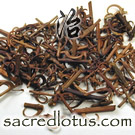 Gou Teng9 gExtinguish Wind and Stop Tremors
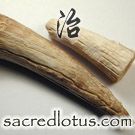 Ling Yang Jiao4.5 gExtinguish Wind and Stop Tremors
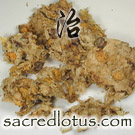 Ju Hua9 gCool, Spicy Herbs that Release the Exterior
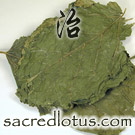 Sang Ye6 gCool, Spicy Herbs that Release the Exterior
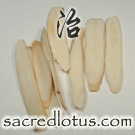 Bai Shao9 gTonify Blood
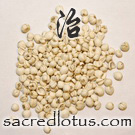 Chuan Bei Mu12 gCool and Transform Phlegm-Heat
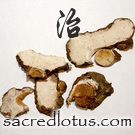 Fu Shen9 gRegulate Water and Drain Dampness
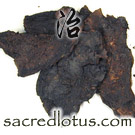 Sheng Di Huang15 gCool the Blood
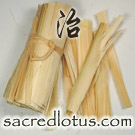 Zhu Ru15 gCool and Transform Phlegm-Heat
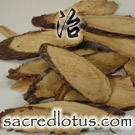 Gan Cao2.4 gTonify Qi
Preparation & dosage
How is Ling Jiao Gou Teng Tang prepared?
Ling Jiao Gou Teng Tang is prepared as a decoction with two herbs handled differently from the rest of the formula. Ling Yang Jiao (or its substitute Shan Yang Jiao) is a hard horn material traditionally shaved thin or ground to a fine powder and either simmered separately for an extended time or stirred into the finished, strained decoction rather than boiled together with the other herbs. Gou Teng is added near the end of cooking (a short final simmer of roughly ten to fifteen minutes), since prolonged boiling is traditionally held to weaken its effect.
Zhu Ru is sometimes used fresh (Xian Zhu Ru) where available. The remaining herbs are decocted together in the usual manner and the strained liquid taken warm, divided across the day.
Source: Bensky & Barolet, Formulas & Strategies and Bensky, Clavey & Stoger, Chinese Herbal Medicine: Materia Medica (preparation notes for Ling Yang Jiao/Shan Yang Jiao and Gou Teng). Traditional-use framing; not medical advice.
Decoction. Reference relative amounts (per Sacred Lotus sources & references): Ling Yang Jiao 4.5 g (or Shan Yang Jiao substitute, at a substantially higher dose); Gou Teng 9 g (add near the end of cooking); Sang Ye 6 g; Ju Hua 9 g; Bai Shao 9 g; Sheng Di Huang 15 g; Chuan Bei Mu 12 g; Zhu Ru 15 g; Fu Shen 9 g; Gan Cao 2.4 g. Reference only; not a prescription.
Safety — read before use
What are the cautions for Ling Jiao Gou Teng Tang?
This formula treats excess heat generating wind and is not appropriate for deficiency-type internal wind — the chronic Liver/Kidney yin-deficiency, Liver-yang-rising pattern (dizziness, headache, tinnitus, without high fever) calls for a different formula such as Zhen Gan Xi Feng Tang, not this one.
- Medical emergency context: high fever with convulsions, loss of consciousness, or eclampsia in pregnancy require prompt professional and emergency medical evaluation; this content is traditional-use reference, not a substitute for that care.
- Cold, heavy formula: the heat-clearing, yin-nourishing herbs are unsuitable for Spleen-deficient or cold patients without modification.
- Ling Yang Jiao sourcing: Ling Yang Jiao (saiga antelope horn) comes from a critically endangered species and is CITES-restricted; Shan Yang Jiao (goat horn, Cornu Caprae hircus), used at a substantially higher dose, is the standard substitute in contemporary practice — noted here as a sourcing and practice fact, not a clinical claim of equivalence.
Source: Bensky & Barolet, Formulas & Strategies (pattern differentiation and cautions for heat-clearing wind-extinguishing formulas); CITES Appendix II listing of Saiga tatarica for the sourcing note. Traditional-use framing; not medical advice.
Originally Appeared In:
- Revised Popular Guide to the Discussion of Cold Induced Disorders (Chong Ding Tong Su Shan Han Lun)
Notes:
How is Ling Jiao Gou Teng Tang different from Zhen Gan Xi Feng Tang and Tian Ma Gou Teng Yin?
All three formulas address Liver wind, but by different mechanisms and at different levels of severity. Ling Jiao Gou Teng Tang is for acute, excess-heat-generated wind with high fever and spasm; the other two treat chronic wind arising from Liver-yang rising rather than blazing heat.
- vs Zhen Gan Xi Feng Tang (Sedate the Liver and Extinguish Wind Decoction): that formula settles ascendant Liver yang and internal wind rooted in Liver/Kidney yin deficiency — headache, dizziness, tinnitus, and in severe cases sudden collapse — without the high fever, acute convulsion, or dry crimson tongue seen here.
- vs Tian Ma Gou Teng Yin: a milder, more chronic formula that shares Gou Teng and calms Liver yang for dizziness, headache, insomnia, and hypertension; it does not address blazing heat or acute convulsion and should not be substituted for this formula in a febrile-wind presentation.
Origin: a Qing-dynasty formula attributed to Yu Gen-chu, from Tong Su Shang Han Lun (Popular Guide to Cold Damage Disorders).
Source: Bensky & Barolet, Formulas & Strategies (formula comparison and source text within the Cool the Liver and Extinguish Wind category).
Clinical Studies & Research:
Is there modern research on Ling Jiao Gou Teng Tang?
Direct clinical-trial evidence on this specific formula is limited; available research is largely preclinical, focused on the chief herb Ling Yang Jiao (saiga antelope horn) and on a closely related decoction. A 2024 rat study found saiga antelope horn suppressed febrile seizures — delaying onset and improving survival in a lipopolysaccharide-plus-hyperthermia seizure model — by rebalancing excitatory/inhibitory neurotransmitters (glutamate/GABA) and inhibiting the arachidonic acid (COX-2) inflammatory pathway, offering a mechanistic account for the herb’s traditional anticonvulsant use in febrile seizures.
- Febrile seizures (preclinical, chief herb): saiga antelope horn delayed seizure onset and reduced hippocampal damage in a rat febrile-seizure model via neurotransmitter and arachidonic-acid-pathway regulation (PMID 38831318).
- Vascular dementia (preclinical, related decoction): a Ling-Yang-Gou-Teng decoction improved learning/memory and reduced oxidative stress and neurovascular-coupling dysfunction in a rat vascular-dementia model (PMID 29545211).
Discrepancy note: much of the published clinical-trial literature retrieved for “Gou Teng” and hypertension concerns the separate formula Tian Ma Gou Teng Yin, not Ling Jiao Gou Teng Tang; those trials are not cited here as evidence for this formula.
Sources: PubMed 38831318; PubMed 29545211. Research context, not a therapeutic claim; direct clinical trial evidence for this formula remains limited.
Sources & References
Compiled and edited by Thomas Dehli, Founder & Editor, Sacred Lotus Updated
The information here is referenced from numerous sources — teachers, practitioners, class notes from Five Branches University, the books below, and the published research literature, with citations given as resolvable PubMed identifiers. Where sources disagree, I have flagged the discrepancies directly. If facts couldn't be verified, I have left them out. How we source our content.
Reference information for students and practitioners — not medical advice. Consult a qualified practitioner. Terms of use.
Chinese Formulas Books & References
 https://amzn.to/4fYI3f8
 https://amzn.to/4j55NRA
 https://amzn.to/4gMROyv
 https://amzn.to/4h7msSK