

Folium Mori Albae White Mulberry Leaf
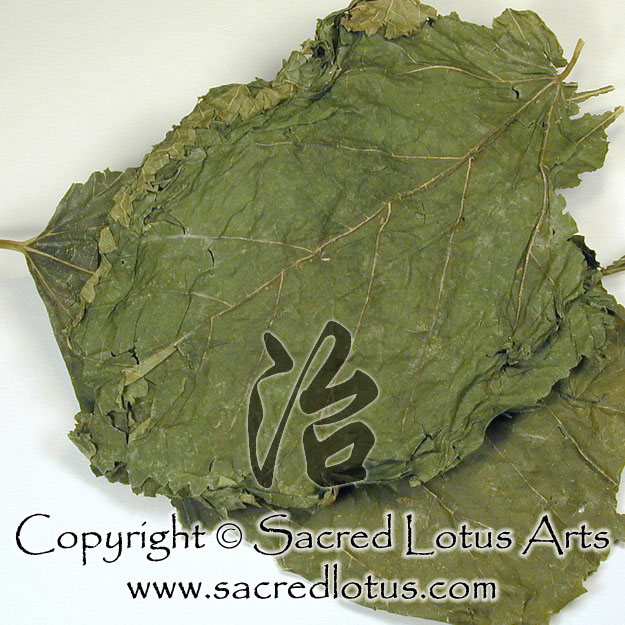
Materia Medica Data
- Temperature
- Cold
- Nature & Flavour
- Sweet, Bitter, Cold
- Channels Entered
- LIV, LU
- Latin (pharmaceutical)
- Folium Mori Albae
- Chinese
- 桑叶
- Tone Marks
- sāng yè
Chinese Herb Actions
What is Sang Ye (mulberry leaf) used for in Chinese medicine?
Sang Ye disperses wind-heat, clears heat from the Lung and eyes, and calms rising Liver yang — it is a mainstay for early-stage wind-heat colds with cough, and for eye redness or irritation from Liver heat.
Its main traditional actions:
- Disperses wind-heat — early wind-heat invasion with fever, sore throat, and headache, particularly with a Lung-heat cough (dry cough, or cough with thick yellow sputum).
- Clears Lung heat — dry, hot cough patterns, often paired with Xing Ren (apricot seed).
- Clears the eyes / clears Liver heat — red, swollen, painful, or irritated eyes from Liver-channel heat, used internally and traditionally as an external eyewash.
- Calms Liver yang — Liver-yin-deficiency patterns with rising yang (eye dryness/blurring, mild dizziness) alongside eye heat.
- Cools the blood — mild heat-type bleeding, such as blood-streaked sputum or mild hematemesis.
Source: cross-referenced against multiple online sources (materia medica consensus); Sacred Lotus sources & references (category, channels, existing indications).
Chinese Herb Dosage
What is the typical dosage of Sang Ye (mulberry leaf)?
Roughly 4.5–15 g decocted, using the dried leaf. For eye conditions, Sang Ye is also traditionally prepared as an external wash/eyebath rather than taken internally.
Source: cross-referenced against multiple online sources (materia medica consensus); Sacred Lotus sources & references. Reference only — not a prescription.
Chinese Herb Contraindications & Cautions
Are there cautions for Sang Ye (mulberry leaf)?
Sang Ye is cool and dispersing, so it is used cautiously in cold-type Lung conditions or in Lung-qi deficiency — it is not indicated for a cough with clear, thin, or cold-type sputum, or for a weak, cold-natured constitution without accompanying heat signs.
Source: cross-referenced against multiple online sources (materia medica consensus).
Western / Biomedical Research
Chinese Herb Clinical Studies & Research
Provided as research context — a summary of published biomedical study, not a therapeutic or medical claim.
Is there modern research on Sang Ye (mulberry leaf) and blood sugar?
Yes — mulberry leaf is rich in 1-deoxynojirimycin (DNJ), a natural alpha-glucosidase inhibitor, and several small human trials have studied standardized leaf extracts for post-meal blood glucose and insulin response. This is a genuinely active modern research area, but it concerns a specific extract/compound and glycemic metabolism — a different question from, and not a substitute for, the herb’s traditional wind-heat/eye/Liver-yang uses.
- Type 2 diabetes, pilot RCT — a randomized, placebo-controlled pilot study of standardized mulberry leaf extract in adults with type 2 diabetes found a significant reduction in post-meal blood glucose versus placebo over three months, with HbA1c trending down but not reaching statistical significance; the authors also flagged a rise in serum creatinine warranting further safety study.
- Normoglycemic adults, RCT — a randomized double-blind placebo-controlled study of a standardized mulberry leaf extract (Reducose) in healthy adults found dose-dependent reductions in post-meal blood glucose rise (roughly 14–22%) and suppressed insulin response, with no significant gastrointestinal side effects.
- Type 2 diabetes, double-blind RCT — a further double-blind, placebo-controlled trial in people with type 2 diabetes reported reduced insulin levels, reduced oxidative-stress markers (malondialdehyde), and increased HDL-cholesterol after 12 weeks, without significant change in other metabolic markers.
These are extract-based human trials, generally small and short-term; they support DNJ-rich mulberry leaf extract as a researched postprandial-glucose ingredient, not a validated treatment for diabetes.
Sources: PMID 28619294 (Mul-DM pilot RCT, Complementary Therapies in Medicine 2017); PMID 28225835 (Reducose RCT, PLoS One 2017); PMID 35623877 (double-blind RCT, Clinical Nutrition ESPEN 2022). Research context, not a therapeutic claim.
Chinese Herb Notes
How is Sang Ye different from Sang Bai Pi, Sang Shen, and Sang Zhi?
All four come from the mulberry tree (Morus alba) but are distinct medicinals with different parts, properties, and actions — they are not interchangeable.
- Sang Ye (leaf) — disperses wind-heat, clears Lung and Liver/eye heat, calms Liver yang; this entry.
- Sang Bai Pi (root bark) — drains Lung heat and calms wheezing/cough, and promotes urination to reduce edema; a separate, more purging Lung herb.
- Sang Shen (fruit) — a yin/blood tonic that nourishes Liver and Kidney yin and moistens the intestines; sweet and nourishing rather than heat-clearing.
- Sang Zhi (twig) — expels wind-dampness from the channels, used for joint and limb pain, especially in the upper body.
Formula context: Sang Ye is the lead herb in Sang Ju Yin (“Mulberry Leaf and Chrysanthemum Decoction”), the classic mild formula for early wind-heat with cough, combined with Ju Hua, Lian Qiao, Bo He, Jie Geng, Xing Ren, Lu Gen, and Gan Cao. It is also the lead herb in Sang Xing Tang (“Mulberry Leaf and Apricot Kernel Decoction”), for a dry, wind-heat cough with dryness, alongside Zhi Zi, Dan Dou Chi, Xing Ren, Zhe Bei Mu, and Bei Sha Shen. (Formula context, not treatment advice.)
Source: cross-referenced against multiple online sources (materia medica consensus); Sacred Lotus sources & references (formula-herb linkage).
Sources & References
Compiled and edited by Thomas Dehli, Founder & Editor, Sacred Lotus Updated
The information here is referenced from numerous sources — teachers, practitioners, class notes from Five Branches University, the books below, and the published research literature, with citations given as resolvable PubMed identifiers. Where sources disagree, I have flagged the discrepancies directly. If facts couldn't be verified, I have left them out. How we source our content.
Reference information for students and practitioners — not medical advice. Consult a qualified practitioner. Terms of use.
Chinese Herbs Books & References
 https://amzn.to/3WfB3DK
 https://amzn.to/3DR1VUh
 https://amzn.to/42aMz73
 https://amzn.to/3PuD4bt