

Qing Zao Jiu Fei Tang
Eliminate Dryness and Rescue the Lungs Decoction
- Category
- Formulas that Treat Dryness
- Ingredients
- 9 herbs
Actions
What does Qing Zao Jiu Fei Tang do?
Qing Zao Jiu Fei Tang (Eliminate Dryness and Rescue the Lungs Decoction) clears warm-dryness from the Lung while simultaneously moistening the Lung and augmenting Lung qi and yin. It is the classic formula for warm-dryness that has attacked the Lung and begun to damage both Lung fluids and Lung qi — a combined-deficiency pattern that a purely cooling or a purely moistening formula alone would not resolve.
The nine ingredients divide by role:
- Chief: Sang Ye (clears and disperses warm-dryness and heat from the Lung, its light floating nature vents the pathogen outward) and Shi Gao (clears intense Lung heat, though used here in a much smaller relative amount than in a pure heat-clearing formula) — the pair that eliminates the dryness-heat itself.
- Deputies: Mai Men Dong, E Jiao, and Hei Zhi Ma (Hu Ma Ren, black sesame seed) richly moisten the Lung and nourish Lung and Stomach yin and fluids, directly treating the dryness damage.
- Assistants: Xing Ren and honey-fried Pi Pa Ye direct rebellious Lung qi downward and stop cough, complementing Sang Ye’s dispersing action.
- Envoys: Ren Shen (or Dang Shen) and Gan Cao augment Lung and Stomach qi and generate fluids, supporting the formula’s ability to rescue Lung qi rather than merely clear heat; Gan Cao also harmonizes the other herbs.
Source: Sacred Lotus sources & references + Bensky & Barolet, Formulas & Strategies (chief/deputy/assistant/envoy analysis). Traditional-use framing; not medical advice.
Indications
What is Qing Zao Jiu Fei Tang used for?
Qing Zao Jiu Fei Tang treats warm-dryness attacking the Lung and damaging Lung qi and yin — classically the pattern seen in early autumn when a dry, warm pathogen invades before fluids and qi have been meaningfully restored, or after a febrile illness has scorched Lung fluids.
Its classic clinical presentation:
- Dryness-heat signs: dry, hacking cough with little or no phlegm (phlegm, if present, is scant and difficult to expectorate), dry throat and dry nose, thirst, chest fullness or oppression, and mild fever.
- Associated signs: headache, dry skin, and a sensation of dry heat may accompany the core presentation.
- Underlying deficiency: the pattern reflects both damaged Lung fluids/yin and weakened Lung qi, not dryness-heat alone.
Tongue and pulse: per this site’s Sacred Lotus, the tongue is dry with little or no coating; the pulse is deficient and rapid.
Source: Sacred Lotus sources & references on pattern/tongue/pulse + Bensky & Barolet, Formulas & Strategies. Traditional-use framing; not medical advice.
Western Uses:
What is Qing Zao Jiu Fei Tang used for in modern practice?
In modern practice Qing Zao Jiu Fei Tang is referenced for dry, unproductive coughs that follow a biomedical pattern of airway/mucosal dryness rather than excess secretions — practitioners have traditionally applied its pattern to acute exacerbations of chronic bronchitis, post-viral or post-infectious dry cough, and autumn dry-cough syndromes. It is also referenced alongside conventional care for radiation-induced pneumonitis, where dryness and Lung-fluid damage parallel the traditional pattern.
Contemporary laboratory research has additionally explored this formula (and modified versions of it) in bleomycin-induced pulmonary fibrosis and lung-cancer cell/animal models (see research). These biomedical correlates are offered as a reference to the formula’s traditional use for Lung dryness, not as a claim that it treats bronchitis, pulmonary fibrosis, radiation pneumonitis, or cancer. Any use for a diagnosed condition belongs with a qualified practitioner and appropriate medical care.
Source: traditional-use correlates summarized from Bensky & Barolet, Formulas & Strategies; reference only, not a treatment claim.
Ingredients
9 substances in Qing Zao Jiu Fei Tang — each links to its full herb monograph.
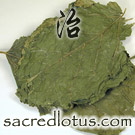 Sang Ye9 gCool, Spicy Herbs that Release the Exterior
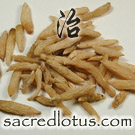 Mai Men Dong3.6 gTonify Yin
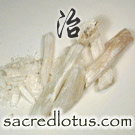 Shi Gao7.5 gDrain Fire
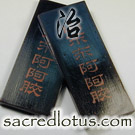 E Jiao2.4 gDissolve in strained decoctionTonify Blood
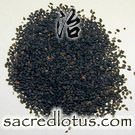 Hei Zhi Ma3 gTonify Yin
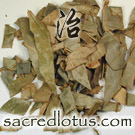 Pi Pa Ye3 gHoney FriedRelieve Coughing and Wheezing
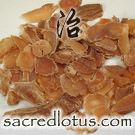 Ren Shen2.1 gTonify Qi
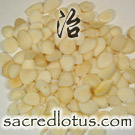 Xing Ren2.1 gRelieve Coughing and Wheezing
 Gan Cao3 gTonify Qi
Preparation & dosage
How is Qing Zao Jiu Fei Tang prepared?
Qing Zao Jiu Fei Tang is prepared as a decoction, traditionally taken warm. Two ingredients need special handling: Pi Pa Ye is honey-fried and its irritating leaf hairs brushed off before use, and E Jiao is not decocted with the other herbs — it is dissolved into the hot, strained decoction just before drinking (per the Sacred Lotus sources & references on dosage).
The classic formula from Yu Chang’s Yi Men Fa Lu (1658) uses notably small relative amounts of each herb, reflecting its origin as a gentle, fluid-preserving decoction rather than a heavy heat-purging one.
Source: Sacred Lotus sources & references on dosage + Bensky & Barolet, Formulas & Strategies (classical preparation notes).
Decoction, taken warm. Reference relative amounts (per this site's Sacred Lotus): Sang Ye 9 g; Shi Gao 7.5 g; Mai Men Dong 3.6 g; E Jiao 2.4 g (dissolve into the strained hot decoction, do not decoct with the other herbs); Hei Zhi Ma (Hu Ma Ren) 3 g; Xing Ren 2.1 g; Pi Pa Ye 3 g (honey-fried, hairs removed); Ren Shen 2.1 g; Gan Cao 3 g. Dang Shen commonly substitutes for Ren Shen at 2-3x the amount. Reference only.
Safety — read before use
What are the cautions for Qing Zao Jiu Fei Tang?
Qing Zao Jiu Fei Tang is formulated for warm-dryness with qi-and-yin damage, so it is inappropriate for cough due to cold-damp or phlegm-damp accumulation. Its richly moistening herbs (E Jiao, Hei Zhi Ma/Hu Ma Ren, Mai Men Dong) can aggravate a cough with copious white or thin, watery phlegm, and can burden a weak, damp-prone Spleen.
- Avoid in cold or damp-phlegm patterns — copious, easily expectorated white sputum, a greasy tongue coating, or a Spleen-yang deficient constitution call for a different formula.
- Digestive fit matters: the cloying tonics (E Jiao especially) can cause fullness, poor appetite, or loose stools in a weak digestion; the formula is generally modified rather than pushed if this occurs.
- Shi Gao is cool/cold in nature — used here in a modest relative amount, but caution still applies for those with a Spleen-Stomach yang-deficient, cold constitution.
- Professional guidance is advised in pregnancy and for children, the elderly, or anyone on other medications, as with any multi-herb decoction.
Source: Bensky & Barolet, Formulas & Strategies (cautions for dryness-clearing/yin-nourishing formulas). Traditional-use framing; not medical advice.
Originally Appeared In:
- Precepts for Physicians (Yi Men Fa Lu)
Notes:
How is Qing Zao Jiu Fei Tang different from Sang Xing Tang, Mai Men Dong Tang, and Bai He Gu Jin Tang?
Qing Zao Jiu Fei Tang is reserved for warm-dryness that has progressed to damage both Lung qi and Lung yin — it sits deeper and more depleted than a purely exterior dryness pattern, but is not as severe as the yin-and-blood damage of a chronic dryness formula.
- vs Sang Xing Tang: Sang Xing Tang treats mild, early-stage warm-dryness at the exterior (slight cough, minimal thirst, no qi or yin damage yet); Qing Zao Jiu Fei Tang is used once dryness has penetrated further and Lung qi and fluids are being consumed.
- vs Mai Men Dong Tang: Mai Men Dong Tang addresses rebellious qi with Stomach and Lung yin deficiency (often chronic, with counterflow cough/belching) but does not target an active exterior dryness-heat pathogen the way Qing Zao Jiu Fei Tang does.
- vs Bai He Gu Jin Tang: Bai He Gu Jin Tang treats more advanced Lung and Kidney yin deficiency with blood-streaked sputum, reflecting deeper chronic damage than the acute warm-dryness invasion this formula addresses.
Key modifications: commonly add Chuan Bei Mu or Gua Lou for pronounced phlegm-heat; Dang Shen is a frequent, gentler substitute for Ren Shen; the amount of Shi Gao is adjusted with the severity of heat.
Source: Bensky & Barolet, Formulas & Strategies (formula comparisons and modifications for dryness-clearing formulas).
Clinical Studies & Research:
Is there modern research on Qing Zao Jiu Fei Tang?
Yes, though it is almost entirely preclinical — network-pharmacology, cell, and animal studies exploring pulmonary fibrosis and lung cancer, rather than randomized clinical trials. Multiple groups have used network pharmacology and molecular docking to map candidate active compounds and protein targets, then tested findings in bleomycin-induced pulmonary fibrosis or lung-tumor models.
- Pulmonary fibrosis (preclinical, mechanism): a modified Qing-Zao-Jiu-Fei decoction reduced collagen deposition and fibrosis/oxidative-stress markers in bleomycin-induced pulmonary fibrosis in rats, via modulation of Nrf2/NF-κB and MAPK signaling (PMID 38229198).
- Pulmonary fibrosis (network pharmacology): network pharmacology and molecular docking identified candidate active compounds (including quercetin, epigallocatechin-3-gallate, and kaempferol) and core targets (AKT1, TNF, IL6) potentially underlying anti-fibrotic activity (PMID 37694785).
- Lung cancer (preclinical, mechanism): serum pharmacochemistry combined with proteomics identified prototype active compounds and reported altered protein signaling (PI3K/Akt/mTOR pathway) in lung-cancer tissue (PMID 39888178).
- Lung cancer (preclinical, earlier study): the decoction inhibited tumor growth in a Lewis lung carcinoma model, reportedly via activation of tumor-suppressor genes and suppression of invasion/angiogenesis-related pathways (PMID 28617188).
Sources: PubMed 38229198; PubMed 37694785; PubMed 39888178; PubMed 28617188. Research context, not a therapeutic claim; direct clinical trial evidence remains limited.
Sources & References
Compiled and edited by Thomas Dehli, Founder & Editor, Sacred Lotus Updated
The information here is referenced from numerous sources — teachers, practitioners, class notes from Five Branches University, the books below, and the published research literature, with citations given as resolvable PubMed identifiers. Where sources disagree, I have flagged the discrepancies directly. If facts couldn't be verified, I have left them out. How we source our content.
Reference information for students and practitioners — not medical advice. Consult a qualified practitioner. Terms of use.
Chinese Formulas Books & References
 https://amzn.to/4fYI3f8
 https://amzn.to/4j55NRA
 https://amzn.to/4gMROyv
 https://amzn.to/4h7msSK