
Xing Su San
Apricot Kernel and Perilla Leaf Powder
- Category
- Formulas that Treat Dryness
- Ingredients
- 11 herbs
Actions
What does Xing Su San do?
Xing Su San (Apricot Kernel & Perilla Leaf Powder) gently disperses cool-dryness from the exterior, restores the Lung’s dispersing-and-descending qi dynamic, and transforms phlegm-fluids — the representative formula for cool-dryness (a “minor cold”) attacking the Lung. It warms and disperses without being harshly drying.
How the ingredients work together:
- Chief — Zi Su Ye releases the exterior and disperses cool-dryness; Xing Ren (apricot kernel) directs Lung qi downward, moistens, and stops cough.
- Deputies — Qian Hu descends qi and dispels phlegm; Jie Geng (ascending) paired with Zhi Ke (descending) restores the Lung’s qi dynamic.
- Assistants — Ban Xia, Fu Ling, Chen Pi (with Gan Cao and Sheng Jiang, the Er Chen Tang core) dry damp and transform phlegm; Sheng Jiang & Da Zao harmonize and aid dispersing.
- Envoy — Gan Cao harmonizes and, with Jie Geng, benefits the throat.
Source: Bensky, Chinese Herbal Medicine: Formulas & Strategies; Sacred Lotus formula record (11 substances). Traditional-use framing; not medical advice.
Indications
What is Xing Su San used for?
Xing Su San is used for externally-contracted cool-dryness attacking the Lung. Cool-dryness behaves like a mild wind-cold joined to dryness, so the cough is dry yet still produces thin, watery phlegm, and the exterior signs are those of cold rather than heat.
Typical presentation:
- Cough with thin, watery, white sputum.
- Aversion to cold with an absence of sweating, and a mild headache.
- A stuffy, dry nose and a dry throat.
- A dry, white tongue coat and a wiry pulse.
Source: Sacred Lotus formula record (tongue: dry white coat; pulse: wiry); Bensky, Formulas & Strategies. Reference only, not a diagnosis.
Western Uses:
What is Xing Su San used for in modern practice?
In modern Chinese medicine practice, Xing Su San is applied to cool-dryness and wind-cold-with-phlegm cough presentations — for example autumn “dry” coughs, upper respiratory infections, and early or chronic bronchitis that fit the cool-dryness pattern. These Western labels describe presentations that still must match the TCM pattern; the formula is chosen on the pattern, not the biomedical name.
Source: Bensky, Formulas & Strategies (reported biomedical correlations). Framed by TCM pattern; not a treatment claim or medical advice.
Ingredients
11 substances in Xing Su San — each links to its full herb monograph.
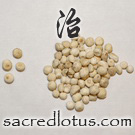 Ban Xia6 gWarm Herbs that Transform Phlegm-Cold
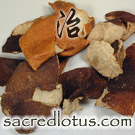 Chen Pi6 gRegulate the Qi
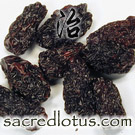 Da Zao2 piecesTonify Qi
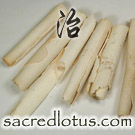 Fu Ling6 gRegulate Water and Drain Dampness
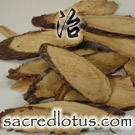 Gan Cao3 gTonify Qi
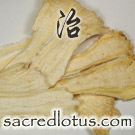 Jie Geng6 gWarm Herbs that Transform Phlegm-Cold
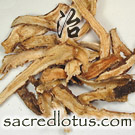 Qian Hu6 gCool and Transform Phlegm-Heat
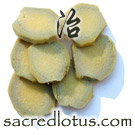 Sheng Jiang6 gWarm, Spicy Herbs that Release the Exterior
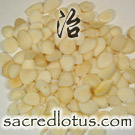 Xing Ren6 gRelieve Coughing and Wheezing
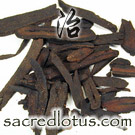 Zhi Ke6 gRegulate the Qi
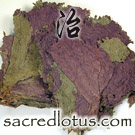 Zi Su Ye6 gWarm, Spicy Herbs that Release the Exterior
Preparation & dosage
How is Xing Su San prepared?
Xing Su San ("Apricot Kernel and Perilla Powder") — a powder by name — is today most often prepared as a water decoction (tang) of Zi Su Ye, Qian Hu, Xing Ren, Jie Geng, Zhi Ke, Chen Pi, Fu Ling, Ban Xia, Sheng Jiang, Da Zao and Gan Cao, taken warm for a cool-dryness cough.
It is a light dispersing formula; Sheng Jiang and Da Zao are cooked in to harmonise. Available as granules.
Source: Sacred Lotus sources & references (composition and preparation note) + Bensky & Barolet, Formulas & Strategies.
Decoction. Su Ye, Xing Ren, Qian Hu, Jie Geng, Zhi Ke, Ban Xia, Chen Pi, Fu Ling, Sheng Jiang (uncooked) 6 g each; Gan Cao 3 g; Da Zao 2 pieces. Originally taken as a powder/draft.
Safety — read before use
What are the cautions for Xing Su San?
Xing Su San is for cool-dryness, not warm-dryness. Matching the thermal nature of the dryness is essential — the wrong one worsens the pattern.
- Not for warm-dryness — a dry cough with scanty sputum, thirst, and heat signs calls for a cool, moistening formula such as Sang Xing Tang instead.
- Not for Lung yin-deficiency dry cough — the warm, drying herbs (Ban Xia, Chen Pi, Sheng Jiang) can further injure the fluids.
- Not for phlegm-heat or damp-heat cough, and it contains Ban Xia (standard pregnancy caution).
Source: Bensky, Formulas & Strategies (cautions & contraindications). Practitioner reference, not medical advice.
Originally Appeared In:
- Systematic Differentiation of Warm Diseases (Wen Bing Tiao Bian)
Notes:
How does Xing Su San compare to Sang Xing Tang, and how is it modified?
The essential contrast is warm-dryness versus cool-dryness — both are “dryness” formulas, but of opposite thermal nature.
- vs Sang Xing Tang — Sang Xing Tang treats warm-dryness with cool, moistening herbs (dry cough, scanty sputum, thirst, heat signs). Xing Su San treats cool-dryness with warm-acrid dispersing plus phlegm-transforming herbs (chills, no sweating, thin white sputum).
- Built on the Er Chen Tang core — because it carries that phlegm-transforming base, it also suits a wind-cold cough with phlegm-damp.
Classical modifications (Wen Bing Tiao Bian): for no sweating with a tight, very wiry pulse, add Qiang Huo; for headache with brow-bone pain, add Bai Zhi; for pronounced heat, add Huang Qin; for accompanying diarrhea and abdominal fullness, add Cang Zhu and Hou Po.
Source: Wu Jutong, Wen Bing Tiao Bian (Systematic Differentiation of Warm Diseases); Bensky, Formulas & Strategies.
Clinical Studies & Research:
Is there modern research on Xing Su San?
Modern research is thin. No robust clinical trials or PubMed-indexed pharmacology are established for the whole formula; secondary sources map its use to cool-dryness cough and early or chronic bronchitis. We report it as traditional practice, not evidence-based therapy.
Source: Bensky, Formulas & Strategies; no dedicated trials found in PubMed/PMC (2026).
Sources & References
Compiled and edited by Thomas Dehli, Founder & Editor, Sacred Lotus Updated
The information here is referenced from numerous sources — teachers, practitioners, class notes from Five Branches University, the books below, and the published research literature, with citations given as resolvable PubMed identifiers. Where sources disagree, I have flagged the discrepancies directly. If facts couldn't be verified, I have left them out. How we source our content.
Reference information for students and practitioners — not medical advice. Consult a qualified practitioner. Terms of use.
Chinese Formulas Books & References
 https://amzn.to/4fYI3f8
 https://amzn.to/4j55NRA
 https://amzn.to/4gMROyv
 https://amzn.to/4h7msSK