
Fructus Citri Aurantii Bitter Orange Peel
Also known as Zhi Qiao
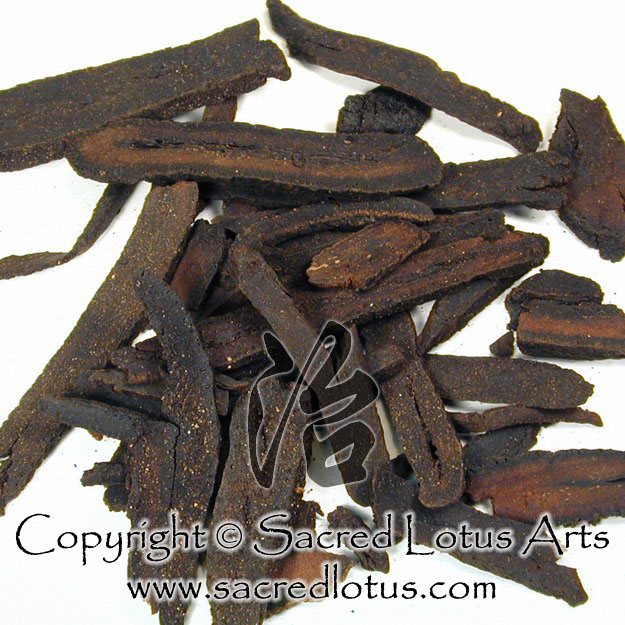
Materia Medica Data
- Category
- Herbs that Regulate the Qi
- Temperature
- Cool
- Nature & Flavour
- Bitter, Cool
- Channels Entered
- SP, ST
- Latin (pharmaceutical)
- Fructus Citri Aurantii
- Chinese
- 枳壳
- Tone Marks
- zhĭ ké
- Also Known As
- Zhi Qiao
Chinese Herb Actions
What is Zhi Ke used for in Chinese medicine?
Zhi Ke (mature bitter-orange peel) is a bitter, slightly cool herb traditionally used to regulate qi and relieve distension and fullness in the chest and abdomen — it is considered milder and better suited to the upper/middle body than its stronger relative Zhi Shi (the immature fruit; see notes).
- Regulates qi and relieves distension — chest, epigastric, and abdominal fullness/distension, focal distension after eating, belching.
- Directs rebellious qi downward and disperses phlegm — cough with chest oppression and copious phlegm; classically paired with Jie Geng so the two herbs direct qi in complementary directions (Xue Fu Zhu Yu Tang, Xing Su San).
- Assists bowel movement in qi-stagnation or deficiency-type constipation — combined with qi- or yang-tonifying herbs for constipation in the elderly or deficient (Ji Chuan Jian, Run Chang Wan).
- Moves qi to assist blood circulation — a supportive role in blood-stasis formulas such as Xue Fu Zhu Yu Tang.
Source: cross-referenced against multiple online sources and Sacred Lotus sources & references (formula composition), consistent with Bensky, Materia Medica (3rd ed.) / Chen & Chen consensus.
Chinese Herb Dosage
What is the typical dosage of Zhi Ke?
Commonly 3–9 g in decoction (up to 10 g in some materia medica), reflecting Zhi Ke’s comparatively gentle nature versus Zhi Shi. Bensky gives roughly 3–9 g; Chen & Chen give roughly 3–10 g.
Source: Sacred Lotus sources & references; Bensky/Chen & Chen standard ranges. Reference only, not a prescription.
Chinese Herb Contraindications & Cautions
Are there cautions for Zhi Ke?
Use with caution in pregnancy, given its qi-moving, distension-relieving action, and in cases of gastric or duodenal ulcer (the herb’s acidity may aggravate acid-related irritation) or Spleen/Stomach deficiency.
- Pregnancy — use with caution.
- Gastric/duodenal ulcer — caution due to the herb’s natural acidity.
- Spleen and Stomach deficiency — use with caution.
- Distinguish from concentrated bitter-orange/p-synephrine supplements (reference note) — standardized “bitter orange” weight-loss/stimulant products sold in the West use concentrated p-synephrine extracts at doses and forms very different from a traditional Zhi Ke decoction; the cardiovascular caution associated with those concentrated products (see research) does not automatically equate to traditional TCM dosing, but is included here as relevant public-safety context given the shared plant source.
Source: cross-referenced against multiple online sources; Bensky/Chen & Chen cautions; PMID 28752649, PMID 36235672, PMID 26948284 (synephrine safety, below).
Chinese Herb Toxicity & Overdose
Low toxicity at traditional decoction doses. The main real-world safety topic connected to Citrus aurantium is p-synephrine content in concentrated, standardized bitter-orange extracts marketed as stimulant or weight-loss supplements — a different preparation and dose than a traditional Zhi Ke decoction. Reviews and a randomized placebo-controlled crossover trial of oral p-synephrine report cardiovascular parameters (blood pressure, heart rate) as generally unchanged at typical supplement doses in healthy subjects, though caution is still raised for concentrated extracts, especially in combination with other stimulants such as caffeine.
Source: PMID 28752649; PMID 36235672; PMID 26948284. Reference note distinguishing traditional TCM use from concentrated supplement products, not a safety guarantee.
Herb-Drug Interactions
No well-established clinical herb–drug interactions are documented for traditional-dose Zhi Ke decoctions. Standardized p-synephrine/bitter-orange extracts have been studied for potential cardiovascular caution when combined with other stimulants (e.g., caffeine) or MAOIs; this concern applies to concentrated supplement products rather than to demonstrated TCM-dose interactions, but is flagged here given the shared plant source. (Flagged for practitioner confirmation.)
Western / Biomedical Research
Chinese Herb Clinical Studies & Research
Provided as research context — a summary of published biomedical study, not a therapeutic or medical claim.
Is there modern research on Zhi Ke (Citrus aurantium)?
Yes — mostly on Fructus Aurantii’s gastrointestinal prokinetic flavonoids, and separately, on p-synephrine safety in concentrated bitter-orange extracts, a related but distinct topic.
- Gastrointestinal motility (preclinical) — a mechanistic study reports that flavonoids from Fructus Aurantii promote gastrointestinal motility; a separate comparative study evaluated different Aurantii Fructus extract fractions for effects on GI motility in mice and rats.
- p-Synephrine safety (bitter-orange extract) — a randomized, placebo-controlled crossover trial found oral p-synephrine did not significantly change cardiovascular parameters in healthy subjects at studied doses; a broader systematic review/meta-analysis and a separate safety/efficacy/mechanistic review reached similarly reassuring conclusions for typical supplement doses, while still noting caution for concentrated extracts or stimulant combinations.
Note: research chemistry papers on “Citrus aurantium” do not always specify fruit maturity (mature Fructus Aurantii/Zhi Ke vs. immature Fructus Aurantii Immaturus/Zhi Shi), so these findings are best read as indicative of the Citrus aurantium species generally rather than proof specific to the mature-fruit (Zhi Ke) form.
Sources: PMID 28839359 (Fructus Aurantii flavonoids and GI motility); PMID 34738432 (comparative extract-fraction study, GI motility); PMID 28752649, PMID 36235672 (bitter-orange/p-synephrine safety reviews); PMID 26948284 (randomized cardiovascular-safety trial of oral p-synephrine). Research context, not a therapeutic claim.
Chinese Herb Notes
What is the difference between Zhi Ke and Zhi Shi?
They come from the same tree, Citrus aurantium, but are harvested at different stages of ripeness — Zhi Ke is the mature (ripe) fruit peel, gentler and directed more toward the upper/middle body (chest, epigastrium); Zhi Shi is the immature (unripe) fruit, substantially stronger and more purging/descending, directed lower in the body (abdomen, bowel).
- Zhi Ke — mature fruit peel; milder qi-regulating action; chest/epigastric distension, cough with chest congestion; a safer choice for weaker patients or longer-term use. Appears in Xue Fu Zhu Yu Tang (blood stasis), Xing Su San (cough), Ji Chuan Jian and Run Chang Wan (deficiency-type constipation), Hao Qin Qing Dan Tang (Gallbladder damp-heat/phlegm), Huai Hua San (hemorrhoidal bleeding), and Ren Shen Bai Du San (exterior wind-cold-damp with qi deficiency).
- Zhi Shi — immature fruit; a much stronger, more “qi-breaking” and descending action; used for severe abdominal distension/pain, food stagnation, constipation, and organ prolapse in more forceful formulas; generally used cautiously (or avoided) in pregnancy and in weak patients without supportive herbs.
- Both regulate qi and relieve distension — the distinction is chiefly one of strength and directional emphasis tied to fruit maturity, not a difference in fundamental action category.
Source: cross-referenced against multiple online sources; Sacred Lotus sources & references (Zhi Shi identity and formula data); Bensky/Chen & Chen consensus.
Sources & References
Compiled and edited by Thomas Dehli, Founder & Editor, Sacred Lotus Updated
The information here is referenced from numerous sources — teachers, practitioners, class notes from Five Branches University, the books below, and the published research literature, with citations given as resolvable PubMed identifiers. Where sources disagree, I have flagged the discrepancies directly. If facts couldn't be verified, I have left them out. How we source our content.
Reference information for students and practitioners — not medical advice. Consult a qualified practitioner. Terms of use.
Chinese Herbs Books & References
 https://amzn.to/3WfB3DK
 https://amzn.to/3DR1VUh
 https://amzn.to/42aMz73
 https://amzn.to/3PuD4bt