
Hao Qin Qing Dan Tang
Artemisia Annua and Scutellaria Decoction to Clear the Gallbladder
- Category
- Formulas that Harmonize
- Ingredients
- 7 herbs
Actions
What does Hao Qin Qing Dan Tang do?
Hao Qin Qing Dan Tang clears Gallbladder heat and transforms phlegm-damp, while harmonizing the Shao Yang and settling rebellious Stomach qi. It is built on the same phlegm-clearing core as Wen Dan Tang (Zhu Ru, Ban Xia, Zhi Ke, Chen Pi) but adds a strong heat-venting pair to address a hotter, damp-heat-dominant version of the classic Shao Yang (alternating fever and chills) pattern.
The seven herbs in the current Sacred Lotus sources & references divide by role:
- Chief: Qing Hao and Huang Qin together vent and clear heat from the Shao Yang and drain Gallbladder fire — Qing Hao's aromatic, penetrating action moves heat outward while Huang Qin's bitter cold dries damp-heat.
- Deputy: Zhu Ru clears heat and transforms phlegm, calming the rebellious Stomach qi that produces nausea and dry heaves.
- Assistants: Ban Xia dries damp and transforms phlegm while downbearing rebellious qi; Chen Pi regulates qi and dries damp; Zhi Ke moves qi and breaks up the fullness and distention in the chest and rib-side; Chi Fu Ling drains damp-heat through the urine.
Discrepancy: Bensky & Barolet's classic formulation (and the composition reported in recent pharmacology studies, e.g. PMID 39712501) adds Bi Yu San (Hua Shi, Gan Cao, and Qing Dai, wrapped and decocted together) as the envoy, draining damp-heat through the urine and cooling toxin. The current Sacred Lotus sources & references for this formula does not list Bi Yu San as an ingredient; it is noted here for completeness but not added to Sacred Lotus sources & references, per the rooted-in-source rule.
Source: Sacred Lotus sources & references + Bensky & Barolet, Formulas & Strategies (chief/deputy/assistant/envoy analysis); Bi Yu San discrepancy cross-checked against PMID 39712501. Traditional-use framing; not medical advice.
Indications
What is Hao Qin Qing Dan Tang used for?
Hao Qin Qing Dan Tang treats damp-heat or phlegm-heat brewing in the Shao Yang (Gallbladder) — a hotter, more turbid variant of the basic Shao Yang pattern (compare Xiao Chai Hu Tang), where damp and phlegm complicate the alternating-fever-and-chills presentation and Gallbladder heat is more pronounced.
Its classic clinical presentation:
- Shao Yang signs: alternating fever and chills with the fever more pronounced than the chills, a bitter taste in the mouth, and fullness or distention in the chest and rib-side (hypochondriac region).
- Phlegm-heat / Stomach signs: nausea, dry heaves, or vomiting of phlegm and saliva, with a sensation of focal distention.
- Damp-heat signs: scanty, dark urine.
Tongue and pulse: in Sacred Lotus, a red tongue with a thick, greasy white or thick, greasy yellow coat, and a slippery, wiry pulse.
Source: Sacred Lotus sources & references on pattern/tongue/pulse + Bensky & Barolet, Formulas & Strategies. Traditional-use framing; not medical advice.
Western Uses:
What is Hao Qin Qing Dan Tang used for in modern practice?
In modern practice Hao Qin Qing Dan Tang is referenced for acute febrile and gastrointestinal-inflammatory conditions matching a damp-heat/phlegm-heat pattern — practitioners have traditionally applied it to conditions such as acute cholecystitis or cholangitis, febrile illness with nausea and digestive upset (including influenza with gastrointestinal involvement), and gastritis, contexts where Western medicine recognizes fever, biliary inflammation, or GI-tract irritation.
These biomedical correlates are offered as a reference to the formula’s traditional use, not as a claim that it treats any disease. Contemporary study is largely preclinical (mouse-model and mechanistic work; see research), with one clinical-guidance document listing it among adjunctive options discussed during COVID-19 (PMID 32489029). Any use for a diagnosed condition belongs with a qualified practitioner and appropriate medical care.
Source: traditional-use correlates summarized from Bensky & Barolet, Formulas & Strategies; modern-context note per PMID 32489029. Reference only, not a treatment claim.
Ingredients
7 substances in Hao Qin Qing Dan Tang — each links to its full herb monograph.
 Ban Xia4.5 gWarm Herbs that Transform Phlegm-Cold
 Chen Pi4.5 gRegulate the Qi
 Fu Ling9 gChi Fu LingRegulate Water and Drain Dampness
 Huang Qin4.5-9 gClear Heat and Dry Dampness
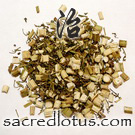 Qing Hao4.5-6 gClear and Relieve Summerheat
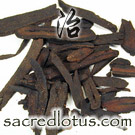 Zhi Ke4.5 gRegulate the Qi
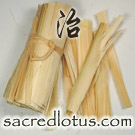 Zhu Ru9 gCool and Transform Phlegm-Heat
Preparation & dosage
How is Hao Qin Qing Dan Tang prepared?
Hao Qin Qing Dan Tang is prepared as a water decoction from the raw or dried herbs, taken warm. Where Bi Yu San (Hua Shi, Gan Cao, Qing Dai) is included, it is classically wrapped in cloth (bao jian) and decocted together with the other herbs so the fine Hua Shi and Qing Dai powder does not cloud or gum the strained liquid.
Source: Bensky & Barolet, Formulas & Strategies (standard decoction method for Bi Yu San-containing formulas).
Water decoction. Reference relative amounts per Sacred Lotus sources & references: Zhu Ru 9 g; Chi Fu Ling 9 g; Huang Qin 4.5-9 g; Qing Hao 4.5-6 g; Ban Xia, Zhi Ke, Chen Pi 4.5 g each. Where Bi Yu San is added classically (not in current Sacred Lotus sources & references), Hua Shi, Gan Cao, and Qing Dai are wrapped and decocted together with the other herbs. Reference only; consult a licensed practitioner for individualized dosing.
Safety — read before use
What are the cautions for Hao Qin Qing Dan Tang?
Hao Qin Qing Dan Tang is built for a damp-heat/phlegm-heat excess pattern, so it is inappropriate where there is no damp-heat and inappropriate for pure deficiency-cold presentations. Its bitter-cold and drying ingredients (Huang Qin, Ban Xia, Chen Pi) can injure fluids or burden a weak, cold Spleen and Stomach if used beyond the acute pattern or in the wrong constitution.
- Avoid or modify in Yin deficiency or in a weak, cold Spleen-Stomach without damp-heat — the bitter-cold, drying herbs are not suited to a dry or cold-deficient constitution.
- Pregnancy: contains qi-moving and downbearing herbs (Zhi Ke, Ban Xia) — use only under professional guidance.
- Duration: intended for the acute Shao Yang damp-heat/phlegm-heat presentation; not typically continued once the pattern resolves.
Source: Bensky & Barolet, Formulas & Strategies (cautions for bitter-cold, damp-draining Shao Yang formulas). Traditional-use framing; not medical advice.
Originally Appeared In:
- Revised Popular Guide to the Discussion of Cold Induced Disorders (Chong Ding Tong Su Shan Han Lun)
Notes:
How is Hao Qin Qing Dan Tang different from Xiao Chai Hu Tang and Wen Dan Tang?
Hao Qin Qing Dan Tang sits between Xiao Chai Hu Tang and Wen Dan Tang — it treats a Shao Yang pattern like Xiao Chai Hu Tang, but with damp-heat and phlegm-heat prominent enough that the phlegm-transforming, damp-draining strategy of a Wen Dan Tang-type formula is layered on top.
- vs Xiao Chai Hu Tang: both address alternating fever and chills with chest/rib-side fullness and a bitter taste, but Xiao Chai Hu Tang uses Chai Hu and supports the middle with Ren Shen, Zhi Gan Cao, and Da Zao; Hao Qin Qing Dan Tang substitutes the more heat-clearing, aromatic Qing Hao for Chai Hu, adds stronger phlegm-transforming and damp-draining herbs, and is used when the fever is markedly more pronounced than the chills and damp-heat/phlegm signs (greasy coat, nausea, scanty dark urine) dominate.
- vs Wen Dan Tang: the shared core of Zhu Ru, Ban Xia, Zhi Ke, and Chen Pi clears phlegm-heat from the Gallbladder and Stomach in both formulas; Hao Qin Qing Dan Tang adds Qing Hao and Huang Qin to vent Shao Yang heat outward (and, classically, Bi Yu San to drain damp-heat through the urine), making it the choice when Shao Yang heat and damp-heat are more pronounced than in Wen Dan Tang's milder phlegm-heat-with-residual-cold presentation.
Source: Bensky & Barolet, Formulas & Strategies (comparative analysis of Shao Yang-harmonizing and phlegm-heat formulas).
Clinical Studies & Research:
Is there modern research on Hao Qin Qing Dan Tang?
Yes, but it is almost entirely preclinical — mouse-model and mechanistic studies on antiviral, anti-inflammatory, and hepatoprotective effects, with the formula also appearing in TCM clinical-guidance literature during acute respiratory illness. Several studies center on influenza-associated damp-heat/febrile patterns, echoing the formula's traditional Shao Yang damp-heat indication.
- Influenza A virus (preclinical, mechanistic): Haoqin Qingdan Tang showed antiviral and anti-inflammatory effects against influenza A virus via the JAK/STAT signaling pathway (PMID 38728923, Phytomedicine, 2024).
- Influenza viral pneumonia (preclinical): in mice, the decoction reduced pulmonary and intestinal injury, downregulating the TLR7/MyD88/NF-κB pathway and remodeling intestinal flora (PMID 39712501 / PMC 11658977, Frontiers in Pharmacology, 2024).
- Febrile dampness-heat syndrome (preclinical): in a mouse model, the decoction downregulated CD14 and toll-like receptor 4 expression, comparably to ribavirin (PMID 27146049, Chinese Journal of Integrative Medicine, 2016).
- Chemotherapy-induced liver injury (preclinical): the decoction reduced oxidative stress and caspase-3-dependent apoptosis in a cyclophosphamide-induced hepatotoxicity model (PMID 26101538, Evidence-Based Complementary and Alternative Medicine, 2015).
- COVID-19 (clinical-guidance context): listed among adjunctive TCM formulas discussed for damp-heat-pattern respiratory illness during the pandemic (PMID 32489029, Zhongguo Zhong Yao Za Zhi, 2020).
Sources: PubMed 38728923; PubMed 39712501 / PMC 11658977; PubMed 27146049; PubMed 26101538; PubMed 32489029. Research context, not a therapeutic claim; direct human clinical-trial evidence remains limited.
Sources & References
Compiled and edited by Thomas Dehli, Founder & Editor, Sacred Lotus Updated
The information here is referenced from numerous sources — teachers, practitioners, class notes from Five Branches University, the books below, and the published research literature, with citations given as resolvable PubMed identifiers. Where sources disagree, I have flagged the discrepancies directly. If facts couldn't be verified, I have left them out. How we source our content.
Reference information for students and practitioners — not medical advice. Consult a qualified practitioner. Terms of use.
Chinese Formulas Books & References
 https://amzn.to/4fYI3f8
 https://amzn.to/4j55NRA
 https://amzn.to/4gMROyv
 https://amzn.to/4h7msSK