
Da Yuan Yin
Reach the Membrane Source Decoction
- Category
- Formulas that Harmonize
- Ingredients
- 7 herbs
Actions
What does Da Yuan Yin do?
Da Yuan Yin (Reach the Membrane Source Decoction) breaks open and vents pestilential warm-toxin qi lodged in the “membrane source” (mo yuan) — a space Wu You-ke, its author, described as neither fully exterior nor interior, near the diaphragm. It disperses the turbid, damp accumulation blocking that space while clearing the heat that develops from the stagnation.
The seven ingredients divide by role:
- Chief: Cao Guo, Hou Po, and Bing Lang together — pungent, drying, and strongly qi-moving, they break up turbid dampness and phlegm accumulation and force the lodged pathogen out of the membrane source.
- Deputy: Huang Qin clears the heat that brews as the pathogen stagnates.
- Assistants: Zhi Mu and Bai Shao nourish yin and blood and temper the hot, drying, aggressive nature of the chief trio, protecting fluids from injury.
- Envoy: Gan Cao harmonizes the formula and moderates the harshness of the other herbs.
Secondary formula references vary on the precise chief/deputy split among Cao Guo, Hou Po, Bing Lang, and Huang Qin (some group all four as chief/deputy together, others give Huang Qin sole chief status); all agree on each herb’s function, so the discrepancy is one of labeling, not action.
Source: Sacred Lotus sources & references + Bensky & Barolet, Formulas & Strategies (chief/deputy/assistant/envoy analysis). Traditional-use framing; not medical advice.
Indications
What is Da Yuan Yin used for?
Da Yuan Yin treats pestilential or warm-toxin qi obstructing the membrane source — a half-exterior, half-interior location distinct from (though related to) the Lesser Yang (Shaoyang) stage, which is why Sacred Lotus categorizes it among formulas that harmonize Lesser Yang-stage disorders.
Its classic presentation:
- Fever pattern: alternating chills and fever, or fever that comes on irregularly, sometimes unremitting.
- Obstruction signs: heaviness of the body and limbs, headache, and a sensation of oppression or distension in the chest and epigastrium.
Tongue and pulse: in Sacred Lotus, the tongue has deep red edges with a foul, thick, and pasty coat (classically likened to a paste of dry flour); the pulse is rapid and wiry.
Source: Sacred Lotus sources & references on pattern/tongue/pulse/category + Bensky & Barolet, Formulas & Strategies. Traditional-use framing; not medical advice.
Western Uses:
What is Da Yuan Yin used for in modern practice?
In modern practice Da Yuan Yin’s traditional membrane-source pattern — irregular fever with a thick, turbid tongue coating — has historically been associated with malarial and other epidemic febrile disorders, the context in which Wu You-ke originally wrote it. Laboratory research on the formula and its fractions has since explored anti-inflammatory, antioxidant, and gut-microbiota effects in models of acute lung injury, damp-heat syndrome, and ulcerative colitis (see research).
These correlates describe traditional use and current preclinical study, not a claim that Da Yuan Yin treats any diagnosed disease. Any use for a medical condition belongs with a qualified practitioner and appropriate medical care.
Source: traditional-use context summarized from Bensky & Barolet, Formulas & Strategies, plus PubMed research summarized below; reference only, not a treatment claim.
Ingredients
7 substances in Da Yuan Yin — each links to its full herb monograph.
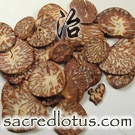 Bing Lang6 gExpel Parasites
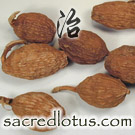 Cao Guo1.5 gAromatic Herbs that Transform and Dissolve Dampness
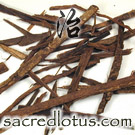 Hou Po3 gAromatic Herbs that Transform and Dissolve Dampness
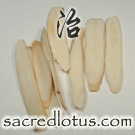 Bai Shao3 gTonify Blood
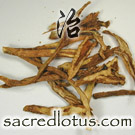 Huang Qin3 gClear Heat and Dry Dampness
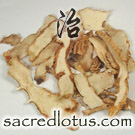 Zhi Mu3 gDrain Fire
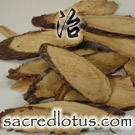 Gan Cao1.5 gTonify Qi
Preparation & dosage
How is Da Yuan Yin prepared?
Da Yuan Yin is prepared as a water decoction of the seven herbs taken together, following the reference proportions below. As with most classical decoctions, exact amounts are adjusted by a practitioner to the individual and the severity of the presentation.
Source: Sacred Lotus sources & references + Bensky & Barolet, Formulas & Strategies. Reference only, not a self-treatment guide.
Decoction. Reference relative amounts: Bing Lang 6 g; Hou Po, Huang Qin, Zhi Mu, Bai Shao 3 g each; Cao Guo, Zhi Gan Cao 1.5 g each. Reference only; a qualified practitioner adjusts amounts to the individual.
Safety — read before use
What are the cautions for Da Yuan Yin?
Da Yuan Yin is a strong, acrid, drying formula meant to break open a specific membrane-source obstruction — it is not a general-purpose formula for ordinary externally-contracted illness or heat alone. Its chief herbs are pungent and drying enough to injure fluids if used past the point the pathogen has been vented, which is why yin-nourishing Zhi Mu and Bai Shao are built in.
- Not for exterior-only or heat-alone patterns without the characteristic turbid-tongue, membrane-source presentation.
- Use cautiously with qi/yin deficiency or a weak digestion: the drying, qi-breaking herbs (especially Bing Lang) can further deplete a frail constitution.
- Pregnancy: Bing Lang’s strong downward-draining, qi-moving action warrants caution — use only under professional guidance.
- Duration: traditionally not continued once the pathogen has been vented, to avoid overly draining qi and fluids.
Source: Bensky & Barolet, Formulas & Strategies (formula and constituent-herb cautions). Traditional-use framing; not medical advice.
Originally Appeared In:
- Discussion of Epidemic Warm Diseases (Wen Yi Lun)
Notes:
How is Da Yuan Yin different from Xiao Chai Hu Tang?
Both formulas treat half-exterior, half-interior disorders with alternating chills and fever, but they target different mechanisms. Xiao Chai Hu Tang harmonizes ordinary Shaoyang-stage cold-damage disease, with a thin white tongue coating; Da Yuan Yin opens the membrane source against a heavier, more turbid pestilential or warm-toxin pathogen, marked by the thick, dirty, pasty tongue coating that is its hallmark diagnostic sign.
- Related formula — Chai Hu Da Yuan Yin: a later modification that adds Chai Hu and other herbs to strengthen the venting/harmonizing action through the Shaoyang alongside the membrane-source-opening strategy.
Source: Bensky & Barolet, Formulas & Strategies (formula comparison, Harmonizing-formulas chapter).
Clinical Studies & Research:
Is there modern research on Da Yuan Yin?
Yes, but it is entirely preclinical — animal and cell studies rather than human clinical trials. Recent pharmacology research on Da-Yuan-Yin decoction (DYY) and its fractions has focused on anti-inflammatory and antioxidant activity in models relevant to its traditional heat/damp-toxin pattern, including acute lung injury, damp-heat syndrome, and ulcerative colitis.
- Acute lung injury (preclinical): an eluting fraction of DYY reduced lung injury markers and inflammatory cytokines (TNF-α, IL-6) and raised antioxidant activity in LPS-induced acute lung injury in mice (PMID 37052973).
- Damp-heat syndrome (preclinical): DYY suppressed neutrophil extracellular trap (NET) formation, inhibited IL-23/JAK2/STAT3 signalling, and modulated gut microbiota and metabolic profiles in a rat damp-heat-syndrome model (PMID 40528429).
- Ulcerative colitis (preclinical): DYY reduced disease activity, colon shortening, and colonic pathology by inhibiting complement activation, LPS-TLR4/NF-κB signalling, and NET formation in a DSS-induced mouse model (PMID 38797378).
Sources: PubMed 37052973; PubMed 40528429; PubMed 38797378. Research context, not a therapeutic claim; no human clinical trial evidence was found for this formula.
Sources & References
Compiled and edited by Thomas Dehli, Founder & Editor, Sacred Lotus Updated
The information here is referenced from numerous sources — teachers, practitioners, class notes from Five Branches University, the books below, and the published research literature, with citations given as resolvable PubMed identifiers. Where sources disagree, I have flagged the discrepancies directly. If facts couldn't be verified, I have left them out. How we source our content.
Reference information for students and practitioners — not medical advice. Consult a qualified practitioner. Terms of use.
Chinese Formulas Books & References
 https://amzn.to/4fYI3f8
 https://amzn.to/4j55NRA
 https://amzn.to/4gMROyv
 https://amzn.to/4h7msSK