

Xue Fu Zhu Yu Tang
Drive Out Stasis in the Mansion of Blood Decoction
- Category
- Formulas that Invigorate the Blood
- Ingredients
- 11 herbs
Actions
What does Xue Fu Zhu Yu Tang do?
Xue Fu Zhu Yu Tang invigorates the blood and dispels blood stasis specifically in the chest — the "mansion of blood" — while simultaneously spreading constrained Liver qi. Its signature move is treating blood stasis and qi stagnation together, since Wang Qing-ren held that stagnant qi is very often what allows blood to become static in the first place.
- Invigorates blood and dispels stasis: Tao Ren, Hong Hua, Chuan Xiong, and Chi Shao actively move stuck blood in and around the chest.
- Nourishes blood while moving it: Dang Gui and Sheng Di Huang keep the strong blood-movers from further depleting blood, so the formula does not simply drain what it is trying to unblock.
- Spreads Liver qi and relieves stagnation: Chai Hu and Zhi Ke (with Gan Cao) form the qi-regulating core, since moving qi helps move blood.
- Directs the qi and blood dynamic up and down: Jie Geng lifts qi to the chest while Chuan Niu Xi guides blood and qi downward and unblocks the channels — the paired up/down action Wang Qing-ren built into the formula.
Source: the Sacred Lotus formula database (composition) + Bensky & Barolet, Formulas & Strategies; Chen & Chen, Chinese Herbal Formulas and Applications (action analysis).
Indications
What is Xue Fu Zhu Yu Tang used for?
Xue Fu Zhu Yu Tang treats blood stasis lodged in the chest, most classically presenting as fixed, sharp chest or hypochondriac pain together with signs of Liver qi stagnation and emotional disturbance. Wang Qing-ren designed it around a cluster of chest-region complaints he considered to share this same root cause.
- Sharp, fixed, stabbing chest or hypochondriac (rib-side) pain
- Chronic or recurrent headache, especially long-standing and resistant to other treatment
- Palpitations, restlessness, and insomnia or restless, disturbed sleep
- Irritability, depression, or a sensation of oppression and choking, including with drinking or swallowing
- Persistent hiccup or dry heaves
- Low-grade (tidal) fever that recurs in the evening
- Dark or purplish lips and complexion, or a purple tongue — visible signs of stasis
- Irregular or painful menstruation (dysmenorrhea) attributed to blood stasis
Source: the Sacred Lotus formula database (pattern/tongue/pulse) + Bensky & Barolet, Formulas & Strategies; cross-referenced against multiple online sources.
Western Uses:
What conditions is Xue Fu Zhu Yu Tang used for in modern practice?
Xue Fu Zhu Yu Tang invigorates blood and moves stasis in the chest ("mansion of blood") with Liver-qi constraint (fixed, stabbing chest pain, palpitations, irritability, and stubborn headache), so it is referenced for blood-stasis conditions of the chest: coronary heart disease, angina pectoris, rheumatic heart disease, costochondritis (cartilage costalgia), functional neurosis, post-trauma or post-concussion syndrome, and external chest injury.
It is chosen for the chest-blood-stasis pattern, not for a diagnosis. Coronary heart disease and angina require medical diagnosis and management, and chest pain must always be assessed as a possible cardiac emergency — not treated as musculoskeletal until that is excluded. This formula is a traditional adjunct, not a substitute. Traditional-use correlates only, not a treatment claim.
Source: Sacred Lotus sources & references (pattern) + Bensky & Barolet, Formulas & Strategies; biomedical correlates as reference only. Not medical advice.
Ingredients
11 substances in Xue Fu Zhu Yu Tang — each links to its full herb monograph.
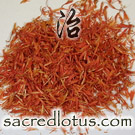 Hong Hua9 gInvigorate Blood and Remove Stagnation
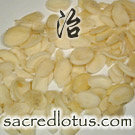 Tao Ren12 gInvigorate Blood and Remove Stagnation
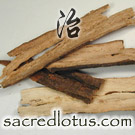 Chi Shao6 gCool the Blood
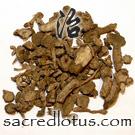 Chuan Niu Xi9 gInvigorate Blood and Remove Stagnation
 Chuan Xiong4.5 gInvigorate Blood and Remove Stagnation
 Chai Hu3 gCool, Spicy Herbs that Release the Exterior
 Dang Gui9 gTonify Blood
 Jie Geng4.5 gWarm Herbs that Transform Phlegm-Cold
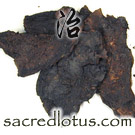 Sheng Di Huang9 gCool the Blood
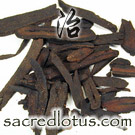 Zhi Ke6 gRegulate the Qi
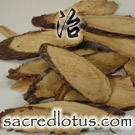 Gan Cao3 gTonify Qi
Preparation & dosage
How is Xue Fu Zhu Yu Tang prepared?
Xue Fu Zhu Yu Tang is traditionally prepared as a water decoction, taken warm, from the eleven raw or lightly processed herbs combined in a single pot. Formularies commonly list Chuan Niu Xi (rather than Huai Niu Xi) for its comparatively stronger blood-invigorating action to match the formula's purpose, and Chi Shao (red peony) rather than Bai Shao (white peony) because the red form invigorates and cools blood rather than tonifying yin.
As with most classical decoctions, the herbs are simmered together in water, strained, and the resulting liquid divided into doses taken across the day; source texts do not describe unusual per-herb processing (such as wine- or vinegar-frying) for this particular formula beyond the herb selection noted above.
Source: Bensky & Barolet, Formulas & Strategies; cross-referenced against multiple online sources for standard decoction method.
Safety — read before use
What are the cautions for Xue Fu Zhu Yu Tang?
Xue Fu Zhu Yu Tang is contraindicated in pregnancy because its blood-invigorating herbs (Tao Ren, Hong Hua, Chuan Xiong, Chuan Niu Xi) can strongly move blood. The same blood-moving action means it also warrants caution wherever bleeding, rather than stasis, is the primary concern.
- Pregnancy: avoid; the formula's core action is contraindicated in pregnant patients.
- Heavy menstrual flow or bleeding disorders: use cautiously, or not at all, when there are active signs of hemorrhage rather than static, non-flowing blood.
- Not for pure deficiency: as a moving, draining-by-nature formula, it is not appropriate where qi and blood deficiency predominate without an underlying stasis pattern.
- Digestive sensitivity: Sheng Di Huang is cooling and can be heavy on a weak Spleen; caution in patients with loose stools or poor digestion.
Source: Bensky & Barolet, Formulas & Strategies; Chen & Chen, Chinese Herbal Formulas and Applications (standard cautions for blood-invigorating formulas). This is general reference information, not individualized guidance.
Originally Appeared In:
- Corrections of Errors Among Physicians (Yi Lin Gai Cuo)
Notes:
How does Xue Fu Zhu Yu Tang differ from the other "Zhu Yu" formulas and from Tao Hong Si Wu Tang / Si Ni San alone?
Xue Fu Zhu Yu Tang is one of a family of blood-invigorating formulas that the Qing-dynasty physician Wang Qing-ren built on the same template, each aimed at a different region of the body where he believed blood stasis commonly lodged. All appear in his 1830 text Yi Lin Gai Cuo (Correction of Errors in the Forest of Medicine), a work notable for its anatomical observations and its systematic approach to blood stasis.
- Xue Fu Zhu Yu Tang targets the chest ("mansion of blood") — chest/rib pain, headache, and the emotional/qi-stagnation symptoms above.
- Ge Xia Zhu Yu Tang ("Drive Out Stasis Below the Diaphragm") targets the upper abdomen — fixed abdominal masses and pain below the diaphragm.
- Shao Fu Zhu Yu Tang ("Drive Out Stasis in the Lower Abdomen") targets the lower abdomen and gynecological stasis — dysmenorrhea, masses, and cold-stasis lower-abdominal pain.
- Shen Tong Zhu Yu Tang ("Drive Out Stasis from the Whole Body") targets chronic, fixed pain in the limbs and body from stasis obstructing the channels.
- Tong Qiao Huo Xue Tang ("Invigorate the Blood in the Orifices") targets the head and face — stasis-pattern headache, hair loss, and a dark, dull complexion.
Within the formula itself, Xue Fu Zhu Yu Tang can be understood as Tao Hong Si Wu Tang (blood-invigorating variant of Si Wu Tang) combined with Si Ni San (Liver-qi-spreading formula), plus Jie Geng and Niu Xi added to carry the combination's action up into the chest and down through the lower body.
Source: Wang Qing-ren, Yi Lin Gai Cuo (1830); Bensky & Barolet, Formulas & Strategies; Scheid et al., Chinese Herbal Medicine: Formulas & Strategies (formula family and lineage); cross-referenced against multiple online sources.
Clinical Studies & Research:
Is there modern research on Xue Fu Zhu Yu Tang?
Xue Fu Zhu Yu Tang has one of the larger modern research bases among classical formulas, concentrated in cardiovascular conditions such as angina and hypertension, reported here as context rather than as a treatment claim. Systematic reviews and meta-analyses of published trials have examined it as an adjunct to standard care for coronary heart disease and blood pressure, alongside a 2024 narrative overview of proposed mechanisms.
- Coronary heart disease / angina: a systematic review and meta-analysis of the decoction added to conventional treatment for angina (PMID 30817611).
- Hypertension: a systematic review and meta-analysis of the formula's effect on blood pressure control (PMID 26496333).
- Mechanistic overview: a 2024 review summarizing proposed active constituents and molecular targets in coronary heart disease research (PMID 38617912).
These are research summaries of published studies, not evidence that the formula treats any diagnosed disease; cardiovascular conditions require qualified medical care.
Sources: PMID 30817611; PMID 26496333; PMID 38617912. Research context only, not a therapeutic claim.
Sources & References
Compiled and edited by Thomas Dehli, Founder & Editor, Sacred Lotus Updated
The information here is referenced from numerous sources — teachers, practitioners, class notes from Five Branches University, the books below, and the published research literature, with citations given as resolvable PubMed identifiers. Where sources disagree, I have flagged the discrepancies directly. If facts couldn't be verified, I have left them out. How we source our content.
Reference information for students and practitioners — not medical advice. Consult a qualified practitioner. Terms of use.
Chinese Formulas Books & References
 https://amzn.to/4fYI3f8
 https://amzn.to/4j55NRA
 https://amzn.to/4gMROyv
 https://amzn.to/4h7msSK