
Bu Yang Huan Wu Tang Bǔ Yáng Huán Wǔ Tāng
Tonify the Yang to Restore Five Tenths Decoction
- Category
- Formulas that Invigorate the Blood
- Ingredients
- 7 herbs
Actions
What does Bu Yang Huan Wu Tang do?
Bu Yang Huan Wu Tang vigorously tonifies qi and uses that qi to power the movement of static blood through the channels and collaterals — Wang Qing-ren's signature application of the principle "qi moves blood" to the sequelae of wind-stroke (hemiplegia and related weakness).
- Vigorously tonifies qi: a very large dose of Huang Qi restores the qi that is deficient and unable to move blood on its own.
- Invigorates blood and dispels stasis: Dang Gui Wei, Chi Shao, Chuan Xiong, Tao Ren, and Hong Hua together disperse the static blood that qi deficiency has allowed to accumulate in the vessels.
- Unblocks the channels and collaterals: Di Long frees the flow of qi and blood through the channels, supporting recovery of movement and sensation.
Source: Sacred Lotus sources & references (composition) cross-referenced against multiple online sources; Bensky & Barolet, Formulas & Strategies (strategy and herb roles). Traditional-use framing; not medical advice.
Indications
What is Bu Yang Huan Wu Tang used for?
Bu Yang Huan Wu Tang is the classical formula for the sequelae stage of wind-stroke (hemiplegia and related weakness) due to Qi deficiency with Blood stasis in the channels — used once the acute event has stabilized, not during active bleeding or the acute crisis itself.
- Hemiplegia or one-sided weakness following stroke, with wasting or atrophy of the affected limbs.
- Facial paralysis or deviation of the mouth and eye on the affected side.
- Slurred speech or difficulty speaking as a stroke sequela.
- Drooling or difficulty controlling saliva from weakness of the facial muscles.
- Frequent urination, dribbling, or urinary incontinence attributed to underlying qi deficiency.
- Constipation from qi too deficient to move the bowels, sometimes seen alongside the above.
Source: Sacred Lotus sources & references (pattern) cross-referenced against multiple online sources; Bensky & Barolet, Formulas & Strategies. Traditional-use framing; not medical advice.
Ingredients
7 substances in Bu Yang Huan Wu Tang — each links to its full herb monograph.
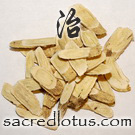 Huang Qi120 gTonify Qi
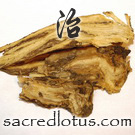 Dang Gui6 gDang Gui WeiTonify Blood
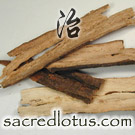 Chi Shao4.5 gCool the Blood
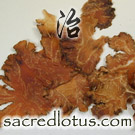 Chuan Xiong3 gInvigorate Blood and Remove Stagnation
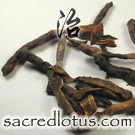 Di Long3 gExtinguish Wind and Stop Tremors
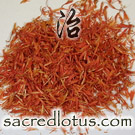 Hong Hua3 gInvigorate Blood and Remove Stagnation
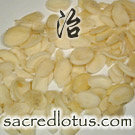 Tao Ren3 gInvigorate Blood and Remove Stagnation
Preparation & dosage
How is Bu Yang Huan Wu Tang prepared?
Traditionally decocted in water and taken warm, as a standard "tang." Our composition data specifies Dang Gui Wei (the tail of the Angelica root) rather than whole Dang Gui, consistent with the formula's emphasis on moving blood over nourishing it.
- Course of treatment: because it addresses the recovery/sequelae stage of stroke rather than an acute crisis, it is traditionally taken over a sustained course (weeks to months) rather than as a short-term dose.
- Modifications: classical and modern practice commonly adds herbs to fit the presentation — e.g., Niu Xi to guide the formula's action downward for lower-limb weakness, or additional warming/tonifying herbs where yang deficiency signs are pronounced.
Source: Sacred Lotus sources & references (composition) cross-referenced against multiple online sources; Bensky & Barolet, Formulas & Strategies.
Safety — read before use
What are the cautions for Bu Yang Huan Wu Tang?
Bu Yang Huan Wu Tang is intended for the stabilized sequelae stage of stroke, not the acute event, and requires correct pattern differentiation before use — the following is general safety reference, not administration guidance.
- Not for the acute phase of stroke or for active bleeding (including hemorrhagic stroke): Wang Qing-ren's formula was designed for the recovery stage, after the acute crisis has been medically stabilized.
- Not for excess or heat-type patterns: stroke sequelae arising from ascendant Liver yang, internal wind-heat, or other excess presentations (rather than qi deficiency) call for a different strategy; using a heavily qi-tonifying formula in an excess pattern is traditionally considered inappropriate.
- Caution alongside anticoagulant or antiplatelet medication: the formula contains several blood-invigorating herbs (Tao Ren, Hong Hua, Chuan Xiong, Chi Shao); professional guidance is advised for anyone on blood-thinning medication or with a bleeding disorder.
- Caution in pregnancy, given the blood-invigorating herbs.
- Professional diagnosis is essential: stroke and stroke-like presentations require medical evaluation; this formula is a traditional adjunct for the qi-deficiency-with-stasis pattern specifically, not a substitute for emergency or standard stroke care.
Source: Bensky & Barolet, Formulas & Strategies (pattern-based cautions) cross-referenced against multiple online sources. Traditional-use framing; not medical advice.
Originally Appeared In:
- Corrections of Errors Among Physicians (Yi Lin Gai Cuo)
Notes:
What is the classical source of Bu Yang Huan Wu Tang?
Bu Yang Huan Wu Tang was created by Wang Qing-ren (1768–1831), a Qing-dynasty physician known for his anatomical observations and his emphasis on blood stasis (yu xue) as a cause of disease, and it appears in his 1830 text Yi Lin Gai Cuo (Correction of Errors in the Forest of Medicine).
How does Bu Yang Huan Wu Tang differ from Xue Fu Zhu Yu Tang?
Both are Wang Qing-ren blood-stasis formulas, but they treat opposite-looking mechanisms: Bu Yang Huan Wu Tang treats stasis arising from qi that is too deficient to move blood, so it tonifies heavily and moves blood lightly; Xue Fu Zhu Yu Tang treats stasis arising from qi stagnation in the chest, so it moves qi and blood together without a large tonifying dose. Sharing an author and a "blood stasis" framing, the two are easily confused but are built for opposite root causes.
Source: Bensky & Barolet, Formulas & Strategies (classical attribution and formula comparisons) cross-referenced against multiple online sources.
Clinical Studies & Research:
Is there modern research on Bu Yang Huan Wu Tang?
Yes — Bu Yang Huan Wu Decoction (BHD) has a substantial modern research literature as an adjunct in ischemic stroke rehabilitation, mostly systematic reviews and meta-analyses pooling Chinese-language randomized controlled trials; reviewers consistently note the underlying trials are of variable methodological quality and call for more rigorous studies. This is reported here as research context, not a treatment claim.
- Acute ischemic stroke (systematic review/meta-analysis, 19 RCTs, ~1,580 participants): found improved neurological deficit scores versus conventional treatment alone, with a generally favorable safety profile, while flagging low methodological quality in most included trials (PMID 23193426).
- Stroke rehabilitation (meta-analysis, 11 RCTs, ~1,084 participants): reported improvements in clinical symptoms, daily functioning, and TCM-pattern outcomes, again noting low trial quality and incomplete adverse-event reporting (PMID 33750396).
- Recovery-phase ischemic stroke (systematic review, 39 RCTs, ~3,683 participants): found BHD combined with conventional therapy significantly improved neurological (NIHSS) scores and activities-of-daily-living measures versus conventional therapy alone, without increasing adverse events (PMID 36313307).
Sources: PubMed 23193426; PubMed 33750396; PubMed 36313307. Research context on adjunct use in stroke rehabilitation, not a therapeutic claim; evidence quality is repeatedly described by the reviews themselves as limited.
Sources & References
Compiled and edited by Thomas Dehli, Founder & Editor, Sacred Lotus Updated
The information here is referenced from numerous sources — teachers, practitioners, class notes from Five Branches University, the books below, and the published research literature, with citations given as resolvable PubMed identifiers. Where sources disagree, I have flagged the discrepancies directly. If facts couldn't be verified, I have left them out. How we source our content.
Reference information for students and practitioners — not medical advice. Consult a qualified practitioner. Terms of use.
Chinese Formulas Books & References
 https://amzn.to/4fYI3f8
 https://amzn.to/4j55NRA
 https://amzn.to/4gMROyv
 https://amzn.to/4h7msSK