
Lumbricus Earthworm
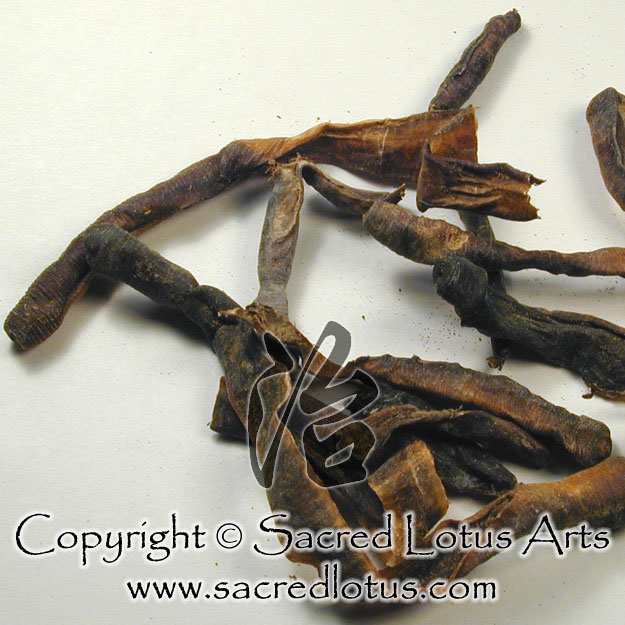
Materia Medica Data
- Temperature
- Cold
- Nature & Flavour
- Salty, Cold
- Channels Entered
- BL, LIV, LU, SP
- Latin (pharmaceutical)
- Lumbricus
- Chinese
- 地龙
- Tone Marks
- dì lóng
- Translation
- Earth Dragon
Chinese Herb Actions
What is Di Long (Earthworm) used for in Chinese medicine?
Di Long (Earthworm) is a salty, cold substance traditionally used to drain heat and extinguish internal wind that arises from heat — classically for high fever with convulsions, spasms, and tremors. Its cold nature and Liver-channel entry underlie this “extinguish wind” action, and it is unusual in its category for also calming wheezing, unblocking the channels, and promoting urination.
Its main traditional actions:
- Drains heat and settles wind / stops spasms — high fever with convulsions, spasms, and tremors framed as heat generating internal wind.
- Calms wheezing and clears the Lungs — wheezing and cough with a heat component (Lung-heat wheezing, bronchitis), classically combined with Ma Huang and Xi Xin.
- Unblocks the channels and collaterals — painful obstruction with a heat sign (“hot-Bi”) and wind-stroke sequelae such as hemiplegia with channel blockage; the basis for its use in Bu Yang Huan Wu Tang and Xiao Huo Luo Dan.
- Promotes urination — difficult or scanty urination, traditionally paired with Mu Tong.
- Directs downward / settles ascendant Liver-yang — the notes associate it with settling ascendant Liver-yang (traditionally attributed to “high blood pressure from Liver-yang rising”) and with external application for chronic leg ulcers and mumps.
Source: owner’s Five Branches notes (“Herbs that Stop Tremors” chapter). Traditional-use framing; the blood-pressure association is a traditional attribution, not a clinical claim.
Chinese Herb Dosage
What is the typical dosage of Di Long (Earthworm)?
2–5 qian (≈ 6–15 g) dried in decoction, per the owner’s notes; 3–6 qian when fresh; 0.3–0.6 qian (≈ 1–2 g) as powder; external use as needed. Available dried (whole or cut) and as powder, and used topically in some traditional preparations.
Source: owner’s Five Branches notes. Reference only — not a prescription.
Chinese Herb Contraindications & Cautions
Are there cautions for Di Long (Earthworm)?
The owner’s notes record no formal contraindication (“Contra: None”) and no toxicity. Standard practitioner-level caution nonetheless applies to a cold, draining substance: it is generally not indicated for wind or wheezing arising from cold, or from deficiency without heat, and caution is reasonable where the Spleen/Stomach is weak and cold. Caution in pregnancy is prudent given its downward-draining, channel-moving character.
Source: owner’s Five Branches notes; the pregnancy caution is added on practice grounds (not stated in the notes) and flagged for practitioner confirmation.
Chinese Herb Toxicity & Overdose
Non-toxic at customary doses. The owner’s notes list no toxicity. As with all animal-derived materia medica, product quality and clean sourcing are the practical safety consideration — contamination, proper species identity, and processing.
Source: owner’s Five Branches notes; sourcing note.
Herb-Drug Interactions
No classical interactions are recorded in the owner’s notes. There is a theoretical, mechanism-based bleeding-risk caution: earthworm preparations contain fibrinolytic/antithrombotic enzymes (lumbrokinase and related proteases — see Research). On that basis, practitioner caution is reasonable alongside anticoagulant or antiplatelet drugs (e.g., warfarin, DOACs, aspirin, clopidogrel) or around surgery. This is a theoretical, mechanism-based caution, not an established clinical interaction. (Flagged for practitioner confirmation before publishing.)
Western / Biomedical Research
Chinese Herb Clinical Studies & Research
Provided as research context — a summary of published biomedical study, not a therapeutic or medical claim.
Is there modern research on Di Long (Pheretima / earthworm extract)?
Yes, but it is largely preclinical. Reported bioactive agents in earthworm extract include lumbrokinase (a group of fibrinolytic serine proteases), earthworm serine protease (ESP), the glycolipoprotein G-90, lysenin, antimicrobial peptides, and polyphenols.
- Comprehensive pharmacology review (2024). A review of earthworm-extract bioactives catalogues antithrombotic, anti-inflammatory, analgesic, antioxidant, antitumor, antiviral, antibacterial, wound-healing, antifibrotic, and hypoglycemic activities with proposed mechanisms, framing these as a basis for possible future clinical translation; the evidence summarized is predominantly preclinical (in vitro and animal).
- Antifibrotic effect (preclinical meta-analysis, 2022). A systematic review/meta-analysis of 13 animal studies (rat/mouse models of lung, liver, kidney, and cardiac fibrosis) found Dilong (Pheretima aspergillum) extract significantly reduced fibrosis markers TGF-β1 and α-SMA. The authors flag few studies, publication bias, non-uniform extraction methods, undefined exact composition, predominantly China-based research, and no human trials.
- Fibrinolytic/antithrombotic proteins. The best-characterized activity is the earthworm’s fibrinolytic enzyme system (“lumbrokinase”), which can degrade fibrin directly and enhance endogenous t-PA activity; oral lumbrokinase preparations are marketed for circulatory support in several countries. This is the mechanistic thread most relevant to the drug-interaction caution above.
Bottom line: modern interest centers on the earthworm’s fibrinolytic enzymes and antifibrotic/anti-inflammatory signals, but the human clinical evidence base is thin; most data are preclinical. Not a basis for treatment claims.
Note on naming: the database gives the pharmaceutical name as Lumbricus, but the dried body is sourced from several earthworm species — most commonly Pheretima aspergillum and related Pheretima spp. — and much of the modern literature is indexed under “Pheretima” rather than “Lumbricus.” Identity field kept as-is; variance flagged for the reviewer.
Sources: PMID 38957072 / DOI 10.1002/ame2.12465 (earthworm-extract bioactives review, 2024); DOI 10.3389/fphar.2022.1039553 (Pheretima aspergillum antifibrosis meta-analysis, 2022). Research context, not a therapeutic claim.
Chinese Herb Notes
How is Di Long different from the other wind-extinguishing herbs?
Di Long is the cold, heat-draining member of the “extinguish wind / stop tremors” group, so it is favored where the internal wind clearly arises from heat (high fever with convulsions) rather than from blood/yin deficiency. It is also unusual in the category for its channel-unblocking and wheezing-calming breadth.
How it compares within its category:
- Within “extinguish wind / stop tremors” — the cold, heat-draining member, best where wind arises from heat; also unusual for its channel-unblocking and wheezing-calming reach.
- vs the scorpion-class wind herbs (e.g., Quan Xie, Wu Gong) — those are warm/toxic, insect-derived spasm-stoppers weighted toward severe wind and pain with toxicity cautions; Di Long is non-toxic, cooling, and additionally drains heat, calms wheezing, and promotes urination.
Common combinations: with Ma Huang and Xi Xin for wheezing/cough with a heat or constrained-Lung component; with Mu Tong to promote urination; within Bu Yang Huan Wu Tang (the classic qi-and-blood formula for post-stroke hemiplegia, where Di Long unblocks the collaterals); and within Xiao Huo Luo Dan for wind-damp-phlegm-stasis painful obstruction.
Source: owner’s Five Branches notes (differentiation & combinations); Sacred Lotus (Bu Yang Huan Wu Tang & Xiao Huo Luo Dan formula listings).
Sources & References
Compiled and edited by Thomas Dehli, Founder & Editor, Sacred Lotus Updated
The information here is referenced from numerous sources — teachers, practitioners, class notes from Five Branches University, the books below, and the published research literature, with citations given as resolvable PubMed identifiers. Where sources disagree, I have flagged the discrepancies directly. If facts couldn't be verified, I have left them out. How we source our content.
Reference information for students and practitioners — not medical advice. Consult a qualified practitioner. Terms of use.
Chinese Herbs Books & References
 https://amzn.to/3WfB3DK
 https://amzn.to/3DR1VUh
 https://amzn.to/42aMz73
 https://amzn.to/3PuD4bt