

Actions
What does Ji Chuan Jian do?
Ji Chuan Jian warms and tonifies Kidney yang, augments essence and blood, and moistens the intestines to unblock the bowels — without resorting to a harsh purgative. Its name, “Benefit the [River] Flow,” is a metaphor from its author Zhang Jingyue: like a river that needs enough water to carry a boat along, the bowels need Kidney yang and moisture to move stool, not force. The formula’s signature is tonifying while unblocking — it rebuilds the deficiency that caused the constipation rather than just driving the stool out.
The six ingredients divide by role:
- Chief: Rou Cong Rong warms and tonifies Kidney yang and nourishes essence and blood, moistening the intestines in a way that is rich but not cloying.
- Deputies: Dang Gui nourishes blood and moistens the intestines; Huai Niu Xi tonifies the Liver and Kidney, strengthens the lower back and knees, and helps guide the formula’s action downward.
- Assistants: Ze Xie drains dampness and turbidity through urination, keeping Rou Cong Rong’s richness from stagnating the Spleen; Zhi Ke regulates qi and directs it downward, since qi must descend for stool to move.
- Paradoxical assistant (envoy-like): a small dose of Sheng Ma raises clear yang — the opposite direction from the formula’s purpose. This embodies the classical principle “to promote descent, first raise the clear” (yù jiàng xiān shēng): lifting clear yang helps turbid yin descend in turn, the same logic used elsewhere to open a stuck bowel by first opening the “lid.”
Source: Sacred Lotus sources & references + Bensky & Barolet, Formulas & Strategies (chief/deputy/assistant analysis; classification under formulas that moisten the intestines/warm purgatives). Traditional-use framing; not medical advice.
Indications
What is Ji Chuan Jian used for?
Ji Chuan Jian treats constipation caused by Kidney yang and essence deficiency — classically seen in the elderly, in the postpartum period, or after any illness that depletes yang and essence. The stool is difficult and often dry, but the presentation is one of cold/deficiency, not heat: there is no thirst, fever, or red tongue driving the dryness.
Its classic clinical presentation:
- Bowel signs: constipation with difficult, often dry stool despite straining or a felt urge; some patients pass stool without much difficulty but simply infrequently.
- Kidney-deficiency signs: sore, weak low back and knees, cold limbs or general cold intolerance, clear and copious urination.
- Population: commonly the elderly, postpartum women, or anyone with underlying Kidney yang/essence deficiency and an otherwise unremarkable digestive picture.
Tongue and pulse: pale tongue with a thin white coat; a deep, thready (or deep and slow) pulse, often notably weak at the rear/chi position reflecting Kidney deficiency.
Source: Sacred Lotus sources & references/identity + Bensky & Barolet, Formulas & Strategies (Zhang Jingyue, Jing Yue Quan Shu). Traditional-use framing; not medical advice.
Western Uses:
What is Ji Chuan Jian used for in modern practice?
In modern practice Ji Chuan Jian is referenced for functional and slow-transit constipation, particularly in older adults and postpartum women — the population it was traditionally aimed at. It is generally reserved for constipation without heat signs, where a gentler, warming, tonifying approach fits the presentation better than a stimulant laxative.
This biomedical correlate is offered as a reference to the formula’s traditional use, not as a claim that it treats any disease. Contemporary study of it is a genuinely active preclinical research area — animal models of slow-transit and loperamide-induced constipation, plus network-pharmacology work — alongside a small amount of older clinical research (see research). Any use for a diagnosed condition belongs with a qualified practitioner and appropriate medical care.
Source: traditional-use correlate summarized from Bensky & Barolet, Formulas & Strategies; reference only, not a treatment claim.
Ingredients
6 substances in Ji Chuan Jian — each links to its full herb monograph.
 Rou Cong Rong6-9 gTonify Yang
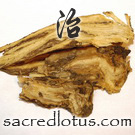 Dang Gui9-15 gTonify Blood
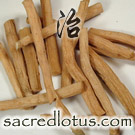 Huai Niu Xi6 gInvigorate Blood and Remove Stagnation
 Ze Xie4.5 gRegulate Water and Drain Dampness
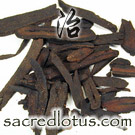 Zhi Ke3 gRegulate the Qi
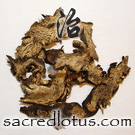 Sheng Ma1.5-3 gCool, Spicy Herbs that Release the Exterior
Preparation & dosage
How is Ji Chuan Jian prepared?
Ji Chuan Jian is prepared as a water decoction (jian) of the six herbs together, traditionally taken warm. As with most classical decoctions, herbs are simmered in water and the strained liquid is drunk; individual practitioners adjust cook time and herb proportions to the patient.
Source: Sacred Lotus sources & references + Bensky & Barolet, Formulas & Strategies (standard decoction preparation for this formula class).
Decoction (jian). Reference relative amounts, per Sacred Lotus sources & references: Rou Cong Rong 6-9 g; Dang Gui 9-15 g; Huai Niu Xi 6 g; Ze Xie 4.5 g; Zhi Ke 3 g; Sheng Ma 1.5-3 g (kept low relative to the other herbs, consistent with its paradoxical, small-dose role of raising clear yang rather than tonifying). Reference only.
Safety — read before use
What are the cautions for Ji Chuan Jian?
Ji Chuan Jian is a warming, tonifying formula for deficiency-type constipation, so it is inappropriate for constipation from heat or excess. Dry stool with thirst, a red tongue with yellow coat, or other heat signs calls for a different strategy (e.g., a moistening formula built around cooling, yin-nourishing herbs); Kidney yang-warming herbs would aggravate heat rather than help it.
- Not for excess-type constipation from food stagnation or qi stagnation without underlying Kidney deficiency.
- Contains Dang Gui, a blood-invigorating herb — as with most formulas containing it, use in pregnancy only under professional guidance.
- Root-treating, not a standing laxative: the formula addresses the underlying deficiency: once bowel function normalizes it is typically adjusted or stopped, and persistent constipation should be re-evaluated rather than treated indefinitely with any single formula.
Source: Bensky & Barolet, Formulas & Strategies (cautions for warm-purgative/moisten-the-intestines formulas). Traditional-use framing; not medical advice.
Originally Appeared In:
- Collected Treatises of Jing Yue (Jing Yue Quan Shu)
Notes:
How is Ji Chuan Jian different from Ma Zi Ren Wan and Run Chang Wan?
All three formulas “moisten the intestines,” but they treat different root causes of dry, difficult stool. Matching the pattern to the formula matters more than the shared symptom of constipation.
- vs Ma Zi Ren Wan: Ma Zi Ren Wan treats Stomach/intestinal heat drying the stool (thirst, possible fever, yellow tongue coat) with a mildly purgative, cooling strategy; Ji Chuan Jian treats Kidney yang/essence deficiency with a warming, tonifying strategy — the two patterns (heat-excess vs. yang-deficiency) are essentially opposite.
- vs Run Chang Wan: Run Chang Wan addresses blood and yin deficiency drying the intestines (more purely nourishing/moistening, without Ji Chuan Jian’s yang-warming and downward-guiding herbs); Ji Chuan Jian is chosen when Kidney yang deficiency and cold signs (sore low back, clear urine, cold limbs) are prominent alongside the dryness.
Common modifications: for more pronounced cold, Rou Gui or Fu Zi may be added to strengthen the warming action; for more pronounced qi deficiency, Ren Shen or Huang Qi may be added; the dose of Rou Cong Rong is often increased when essence deficiency is marked.
Source: Bensky & Barolet, Formulas & Strategies (formulas that moisten the intestines, comparative analysis and standard modifications).
Clinical Studies & Research:
Is there modern research on Ji Chuan Jian?
Yes — an older clinical study plus a growing body of preclinical mechanistic research, mostly in slow-transit constipation models. Direct, larger-scale randomized clinical trial evidence remains limited; most recent work is animal and network-pharmacology based.
- Clinical (cathartic colon/chronic laxative-abuse constipation): a study of Jichuanjian in cathartic colon reported improved defecation frequency, reduced time to bowel movement, and improved quality-of-life scores versus baseline (PMID 27252927).
- Slow-transit constipation (preclinical, mechanism): Ji-Chuan decoction improved slow transit constipation in mice by promoting intestinal motility, raising acetylcholine, reducing enteric inflammation, and reducing enteric glial cell apoptosis, with quercetin implicated as an active compound acting via AKT signaling (PMID 36160643; PMC 9494937).
- Loperamide-induced slow transit constipation (preclinical): Jichuan decoction, especially combined with its volatile oil fraction, improved transit time and fecal water content in rats via the cAMP/PKA/AQPs pathway while reducing inflammatory markers and restoring gut microbial diversity (PMID 38192758; PMC 10771987).
- Network pharmacology + rat model (preclinical): an integrated network-pharmacology and experimental study identified MTOR and PTGS2 as core targets and found Jichuan decoction suppressed PI3K/Akt/mTOR pathway phosphorylation while improving loperamide-induced constipation in rats (DOI 10.1038/s41598-026-42428-9, Scientific Reports).
Sources: PubMed 27252927; PubMed 36160643 / PMC 9494937; PubMed 38192758 / PMC 10771987; DOI 10.1038/s41598-026-42428-9 (Scientific Reports). Research context, not a therapeutic claim; clinical trial evidence remains limited.
Sources & References
Compiled and edited by Thomas Dehli, Founder & Editor, Sacred Lotus Updated
The information here is referenced from numerous sources — teachers, practitioners, class notes from Five Branches University, the books below, and the published research literature, with citations given as resolvable PubMed identifiers. Where sources disagree, I have flagged the discrepancies directly. If facts couldn't be verified, I have left them out. How we source our content.
Reference information for students and practitioners — not medical advice. Consult a qualified practitioner. Terms of use.
Chinese Formulas Books & References
 https://amzn.to/4fYI3f8
 https://amzn.to/4j55NRA
 https://amzn.to/4gMROyv
 https://amzn.to/4h7msSK