
Radix Achyranthis Bidentatae Achyranthes Root
Also known as Niu Xi
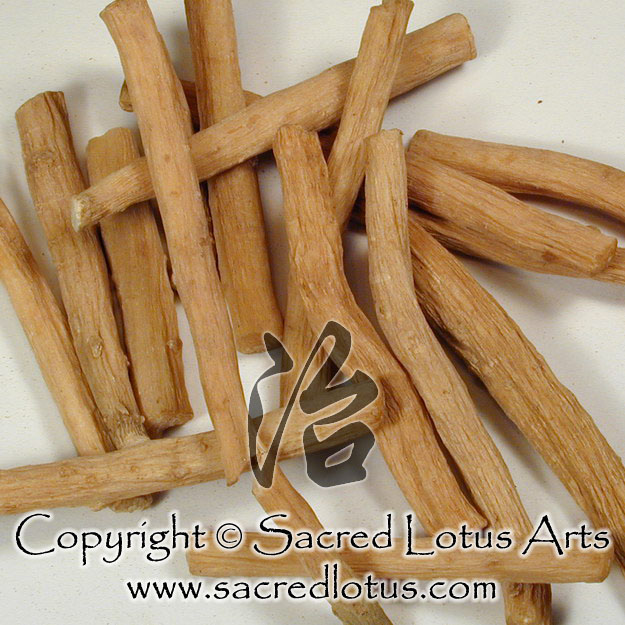
Materia Medica Data
- Temperature
- Neutral
- Nature & Flavour
- Bitter, Sour, Neutral
- Channels Entered
- LIV, KID
- Latin (pharmaceutical)
- Radix Achyranthis Bidentatae
- Chinese
- 懷牛膝
- Tone Marks
- huái niú xī
- Also Known As
- Niu Xi
- Translation
- Ox Knee from Huai
Chinese Herb Actions
What is Huai Niu Xi (Achyranthes Root) used for in Chinese medicine?
Huai Niu Xi is traditionally used to invigorate the blood, tonify the Liver and Kidney to strengthen the sinews and bones, and guide blood and fire downward. It is best known for chronic lower-back and knee weakness and pain, and for blood-stasis gynecological patterns such as irregular menses. Bitter, sour, and neutral, it also clears damp-heat from the Lower Burner and, as a downward-directing herb, redirects reckless heat and blood rising in the upper body.
Its main traditional actions:
- Invigorates blood & expels blood stasis — irregular menses and blood-stasis pain.
- Tonifies Liver & Kidney, strengthens sinews and bones — chronic sore, weak lower back and knees, wind-damp Bi of the lower body.
- Clears damp-heat and promotes urination in the Lower Burner — painful/bloody urinary dysfunction and stony Lin (urinary) patterns with low-back pain.
- Directs blood and fire downward — a guiding herb for upward-reckless heat: nosebleed, vomiting blood, toothache, bleeding gums, and headache/dizziness from Liver yang rising on a yin-deficient base.
Source: owner’s Five Branches notes (Herbs that Regulate/Invigorate Blood); confirmed against the Sacred Lotus Sacred Lotus sources & references record (Radix Achyranthis Bidentatae; bitter, sour, neutral; LIV, KID). Traditional-use framing; not medical advice.
Chinese Herb Dosage
What is the typical dosage of Huai Niu Xi?
Roughly 9–15 g in decoction (owner’s notes give 3–5 qian, the classical unit corresponding to this range). It is often prepared unraw (wine-fried) to emphasize blood-invigorating and tendon-strengthening actions.
Source: owner’s Five Branches notes; standard materia medica ranges. Reference only — not a prescription.
Chinese Herb Contraindications & Cautions
Are there cautions or contraindications for Huai Niu Xi?
Huai Niu Xi is contraindicated in pregnancy and during excessive menstrual bleeding, and is used with care in Spleen deficiency with loose stools (its downward-moving, blood-invigorating nature can aggravate both). Owner’s notes also record a traditional caution against combining it with Bai Qian.
Source: owner’s Five Branches notes (Invigorate Blood cautions; Niu Xi entry). Traditional-use framing.
Chinese Herb Toxicity & Overdose
Low. No significant toxicity is reported for Achyranthes bidentata root at normal therapeutic doses; the classical toxicity note for the Niu Xi group records “none noted.” Caution in use is based on its downward-directing, blood-moving actions (see cautions) rather than on toxicity.
Source: owner’s Five Branches notes (Chuan Niu Xi: “Toxicity — none noted”); no toxicity signal in the reviewed research.
Herb-Drug Interactions
No well-established clinical herb–drug interactions are documented for Huai Niu Xi. Given its traditional pregnancy contraindication, practitioner caution around use in pregnancy takes priority. (Flagged for practitioner confirmation — absence of documented interactions is not proof of safety.)
Western / Biomedical Research
Chinese Herb Clinical Studies & Research
Provided as research context — a summary of published biomedical study, not a therapeutic or medical claim.
Is there modern research on Achyranthes bidentata (Huai Niu Xi)?
Yes, but it is largely preclinical and concentrated on bone, joint, and cartilage models — which parallels the traditional sinew-and-bone use. The most-studied constituents are Achyranthes bidentata polysaccharides (ABPS): in cultured chondrocytes, ABPS promoted cell proliferation in a dose- and time-dependent way by advancing the G1-to-S cell-cycle transition, suggesting cartilage-supportive activity relevant to osteoarthritis. A network-pharmacology analysis of the root mapped flavonoid constituents (e.g. quercetin, kaempferol, baicalein) onto inflammation and cell-survival pathways in osteoarthritis. Human clinical evidence remains limited.
Sources: PMID 23340819 (Achyranthes bidentata polysaccharides induce chondrocyte proliferation via the G1/S transition, Mol Med Rep 2013); PMC 7171799 / PMID 32316966 (network-pharmacology mechanism of Radix Achyranthis Bidentatae in osteoarthritis, BMC Complement Med Ther 2020). Preclinical research context, not a therapeutic claim.
Chinese Herb Notes
What is the difference between Huai Niu Xi and Chuan Niu Xi?
Both are “Niu Xi” (Ox Knee) and both invigorate blood and direct action downward, but Huai Niu Xi tonifies the Liver and Kidney and strengthens the sinews and bones more, while Chuan Niu Xi invigorates blood and drains downward more strongly. Huai Niu Xi (Radix Achyranthis Bidentatae) is the everyday choice for chronic weak, sore lower back and knees; Chuan Niu Xi (from Cyathula) is favored when the priority is breaking blood stasis or forcefully directing fire, blood, and damp-heat downward.
The Niu Xi differentiation from the owner’s notes:
- Huai Niu Xi — more tonifying to Liver/Kidney and sinews/bones; the more commonly used form.
- Chuan Niu Xi — more strongly invigorates blood and drains/directs downward (one of the stronger herbs for blood-stasis gynecology and for guiding damp-heat out through urination).
- Tu Niu Xi — treats sore throat, invigorates blood, and treats Lin (urinary) patterns.
Common combinations: as a downward-directing guiding herb, Huai Niu Xi is added to lead other herbs’ actions to the lower body and legs; per the owner’s category notes it pairs with qi-regulating herbs when qi stagnation drives blood stasis, and with wind-damp herbs for Bi pain of the low back and knees.
Source: owner’s Five Branches notes (Niu Xi differentiation: Huai vs Chuan vs Tu; category combination rules) and Chuan Niu Xi actions note.
Sources & References
Compiled and edited by Thomas Dehli, Founder & Editor, Sacred Lotus Updated
The information here is referenced from numerous sources — teachers, practitioners, class notes from Five Branches University, the books below, and the published research literature, with citations given as resolvable PubMed identifiers. Where sources disagree, I have flagged the discrepancies directly. If facts couldn't be verified, I have left them out. How we source our content.
Reference information for students and practitioners — not medical advice. Consult a qualified practitioner. Terms of use.
Chinese Herbs Books & References
 https://amzn.to/3WfB3DK
 https://amzn.to/3DR1VUh
 https://amzn.to/42aMz73
 https://amzn.to/3PuD4bt