
Da Zao Wan
Great Creation Pill
- Category
- Formulas that Tonify
- Subcategory
- Formulas that Nourish and Tonify the Yin
- Ingredients
- 9 herbs
Actions
What does Da Zao Wan do?
Da Zao Wan (Great Creation Pill) nourishes Kidney and Lung yin, anchors floating yang, and drains the deficient fire that yin depletion allows to rise. It is a rich, tonifying pill built for long-term restoration of depleted essence and fluids rather than for acute illness — the "great creation" (great re-formation) of the body's foundational yin.
How the nine ingredients work together, by conventional formulary role:
- Chief — Sheng Di Huang (by far the largest amount in the Sacred Lotus record): nourishes yin, cools the blood, and generates fluids, supplying the formula's core yin-nourishing bulk.
- Co-chief — Zi He Che (Placenta Hominis, used in a comparatively small proportion): tonifies Kidney essence and both qi and blood at their source; despite its small weight relative to the other herbs, it is central enough to the formula that it is also traditionally known as "He Che Da Zao Wan" (Placenta Great Creation Pill) after this ingredient.
- Deputies — Gui Ban, Tian Men Dong & Mai Men Dong: Gui Ban nourishes Kidney yin and anchors yang that has floated upward from yin deficiency; the two "Men Dong" herbs moisten and nourish Lung and Kidney yin and generate fluids, addressing the dry cough and thirst of yin-deficient consumption.
- Assistants — Huang Bai & Huai Niu Xi: Huang Bai drains the deficient ("empty") fire that surfaces once yin can no longer anchor yang — the steaming-bone/tidal-fever pattern; Huai Niu Xi nourishes Liver and Kidney, strengthens the low back and knees, and directs the formula's action downward to the Kidney.
- A touch of yang within the yin — Du Zhong: a Kidney-yang and essence-tonifying herb included in comparatively small amount, reflecting the classical principle that yin tonification is more effective when a little yang is added so the yin has a warmth to transform against, rather than relying on cold, static yin herbs alone.
- Ren Shen: tonifies source qi so the body can transform the rich, heavy yin tonics into usable essence and blood, and helps offset the cloying, digestion-slowing quality that a formula this rich in moistening substances can otherwise have.
Source: Sacred Lotus record (composition, category, origin); role/strategy analysis cross-referenced against multiple online sources summarizing standard Yin-tonification formulary logic, in our own words. Traditional-use framing; not medical advice.
Indications
What is Da Zao Wan used for?
Da Zao Wan is used for Kidney and Lung yin deficiency with deficient fire — the consumptive, wasting-type presentation classical medicine calls xu lao (vacuity taxation) or, when it centers on the Lung, fei lao (Lung consumption). It is a slow-acting restorative pill, not a formula for acute complaints.
- Chronic cough, sometimes with blood-streaked sputum, from Lung yin deficiency.
- Tidal (afternoon) fever, malar flushing, and night sweats — the classic "steaming bone" deficient-fire pattern.
- Emaciation, general weakness, and a sore, weak low back and knees.
- Seminal emission (spermatorrhea) and, historically, difficulty conceiving attributed to depleted Kidney essence.
- Dry mouth and throat, and a generally depleted, "worn down" constitution following prolonged illness.
Source: Sacred Lotus formula category ("Formulas that Nourish and Tonify the Yin") and actions record; cross-referenced against multiple online sources for the classical Kidney/Lung-yin-deficiency presentation. Reference only, not a diagnosis.
Ingredients
9 substances in Da Zao Wan — each links to its full herb monograph.
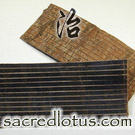 Du Zhong45 gTonify Yang
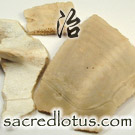 Gui Ban60 gdeep-friedTonify Yin
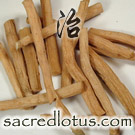 Huai Niu Xi36 gInvigorate Blood and Remove Stagnation
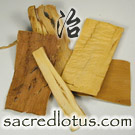 Huang Bai45 gClear Heat and Dry Dampness
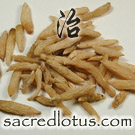 Mai Men Dong36 gTonify Yin
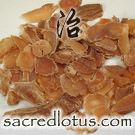 Ren Shen30 gTonify Qi
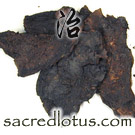 Sheng Di Huang150 gCool the Blood
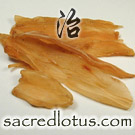 Tian Men Dong36 gTonify Yin
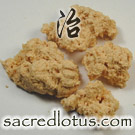 Zi He Che0.9 gTonify Yang
Preparation & dosage
How is Da Zao Wan prepared?
Prepared as a honey pill (mi wan), not a decoction. Per the Sacred Lotus record, all nine ingredients are ground into an even powder and bound with honey into pills — the traditional method for a slow-acting, long-course tonic meant to be taken over weeks to months rather than a fast-acting decoction. Gui Ban is processed by deep-frying before grinding, per the Sacred Lotus composition record, which is consistent with the standard practice of processing turtle-shell/plastron substances before powdering to make them friable and easier to extract.
Source: Sacred Lotus preparation and composition record.
Safety — read before use
What are the cautions for Da Zao Wan?
Da Zao Wan is a rich, cloying tonic meant for a confirmed yin-deficiency-with-fire pattern, not a general-purpose remedy. As with other heavy yin-tonifying pills, it is traditionally avoided or used cautiously in several situations.
- Active exterior illness: heavy tonics are traditionally withheld during an acute cold, flu, or other exterior invasion, since they can "lock in" a pathogen rather than letting the body expel it.
- Spleen/Stomach deficiency: the rich, moistening ingredients can be difficult to digest and are traditionally used cautiously with a person who has a poor appetite, loose stools, or a weak digestion, notwithstanding the ginseng included to help offset this.
- Damp or damp-heat accumulation: the formula's richness can aggravate dampness; it is not indicated for damp-heat or phlegm-damp presentations.
- Zi He Che (Placenta Hominis) sourcing: as a substance derived from human placenta, its sourcing, screening, and availability are subject to modern regulatory and infection-control standards that vary by country and pharmacy; this is a public-safety/regulatory note, not administration guidance.
Source: cross-referenced against multiple online sources for standard cautions on rich Yin-tonifying pills; Sacred Lotus composition record for Zi He Che. Traditional-use framing; not medical advice.
Originally Appeared In:
- Exquisite Formulas for Fostering Longevity (Fu Shou Jing Fang)
Notes:
What is the classical source of Da Zao Wan, and how does it relate to other tonic pills?
Da Zao Wan is recorded in the Sacred Lotus record as originating from Fu Shou Jing Fang (Exquisite Formulas for Fostering Longevity), a Ming-dynasty longevity-and-tonification formulary. Its combination of an animal essence-substance (Zi He Che) with a rehmannia/ophiopogon/asparagus-root yin-nourishing base places it in the same family as other Kidney/Lung yin-tonifying pills, though Da Zao Wan is distinguished by centering the formula on Placenta Hominis for essence restoration.
- vs Liu Wei Di Huang Wan (Six-Ingredient Rehmannia Pill): Liu Wei Di Huang Wan is the foundational Kidney-yin tonic without an animal essence substance or a Lung-nourishing pair; Da Zao Wan is a heavier, more specialized formula for advanced consumptive wasting with a Lung component.
- vs Da Bu Yin Wan (Great Tonify the Yin Pill): Da Bu Yin Wan shares the yin-nourish-and-drain-fire strategy (rehmannia, tortoise plastron, phellodendron-family drainage) but is built around Zhi Mu and Gui Ban without Placenta Hominis or a Lung-specific pair, and is generally used for a narrower Kidney-fire pattern.
Source: Sacred Lotus origin record; cross-referenced against multiple online sources for comparison with related Yin-tonifying formulas.
Clinical Studies & Research:
Is there modern research on Da Zao Wan?
Direct clinical research on the full formula is sparse; the available evidence is older and ingredient-focused rather than a modern clinical trial of the pill itself. A 1985 Chinese study examined the effect of He Che Da Zao Wan (this formula, under its alternate name) on granulocytic progenitor cell populations, a laboratory angle consistent with the formula's traditional role in restoring depleted blood and essence. Separately, modern research on the ingredient Du Zhong (Eucommia ulmoides bark) found that Du-Zhong cortex extract prevented bone-density loss and improved trabecular bone microarchitecture in ovariectomized rats, offering ingredient-level support for the formula's traditional low-back/knee-strengthening indication.
Sources: PubMed 2938825 ("An observation on granulocytic progenitor cells affected by he che da zao wan," Zhong Xi Yi Jie He Za Zhi, 1985); PubMed 18835589 ("Du-Zhong (Eucommia ulmoides Oliv.) cortex extract prevent OVX-induced osteoporosis in rats," Bone, 2009). Research context on the formula and one of its ingredients, not a therapeutic claim; no modern clinical trial of the full formula was found.
Sources & References
Compiled and edited by Thomas Dehli, Founder & Editor, Sacred Lotus Updated
The information here is referenced from numerous sources — teachers, practitioners, class notes from Five Branches University, the books below, and the published research literature, with citations given as resolvable PubMed identifiers. Where sources disagree, I have flagged the discrepancies directly. If facts couldn't be verified, I have left them out. How we source our content.
Reference information for students and practitioners — not medical advice. Consult a qualified practitioner. Terms of use.
Chinese Formulas Books & References
 https://amzn.to/4fYI3f8
 https://amzn.to/4j55NRA
 https://amzn.to/4gMROyv
 https://amzn.to/4h7msSK